If you thought you’d seen every flavor of true-crime retelling, Monster: The Ed Gein Story flips the formula on its head. It isn’t just another grim stroll through crime-scene snapshots and confessions; it’s a mirror held up to our own morbid curiosity. The finale dares to ask a queasy question: who’s the real monster, the killer or the culture that keeps resurrecting him?
In this breakdown of the Monster: The Ed Gein Story ending, we’ll peel back the layers of the finale’s haunting imagery, its meta-Hollywood twist, and that chilling last line. No spoilers just yet, only the promise that what starts as a crime story ends as something disturbingly self-aware.
The Unmasking: Plainfield’s Quiet Nightmare
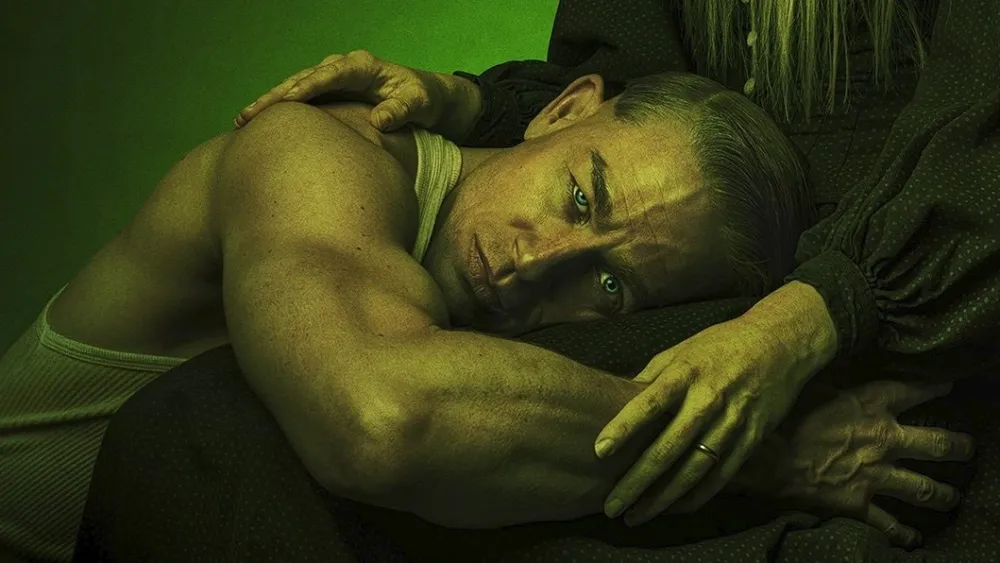
Monster: The Ed Gein Story begins with not a scream but silence, the kind that falls over a town realizing it’s been living next to hell. In November 1957, Ed Gein (a haunting Charlie Hunnam) was unmasked in Plainfield, Wisconsin.
The episode’s brilliance lies in restraint. Instead of reveling in gore, director Carl Franklin frames horror through reaction. When Sheriff Holloway (Tom Hollander) and journalist Martha Keane (Vicky Krieps) enter Gein’s farmhouse, the camera lingers on their faces, not the horrors around them. Every gasp, every trembling hand, becomes a moral inventory.
Bernice Worden’s body is found. The human “artifacts” are catalogued. And yet the focus remains psychological. The Monster: The Ed Gein Story ending insists that the true horror isn’t crime, it’s the ordinariness of the man who committed it.
When Gein confesses, it’s almost polite. Detached. “I never meant to hurt anyone,” he murmurs. “I just wanted to be with my mother again.” In that line lives the entire pathology, a broken mind trying to stitch together love, loss, and madness with literal thread.
For the townspeople, this revelation detonates everything. Their quiet neighbor wasn’t eccentric; he was the abyss. The ending of Monster: The Ed Gein Story shows Plainfield not as a crime scene but as a wound that will never fully close.
The Hollywood Echo: When Tragedy Turns Into a Franchise
The series could have ended there, justice served, monster caged. But the ending of Monster: The Ed Gein Story twists the knife. The final act shifts gears into something far more sinister: commentary.
As Gein is transported to a psychiatric facility, newspapers start multiplying like flies. Local headlines morph into national tabloid smears. “Butcher of Plainfield!” “Skin Collector”, each headline louder, dumber, and more profitable than the last.
Cut to a parallel scene where a young writer is leafing through wire-service clippings, eyes gleaming. He’s not horrified, he’s inspired. “That’s a picture show,” he whispers. With that, Monster: The Ed Gein Story births another monster, the entertainment machine.
The montage that follows is genius. Typewriter click. Film reels spin. Somewhere, a studio exec drafts a pitch that will become Psycho, Texas Chainsaw Massacre, Silence of the Lambs. The show suggests that from Gein’s crimes grew an entire cinematic genre and a lifelong cultural addiction to “true horror”.
Meanwhile, Gien shuffles through institutional intake. The doctor notes his calm, his emptiness, his detachment from reality. Outside, his story grows louder; inside, the man fades.
The Monster: The Ed Gein Story ending becomes a funhouse mirror that reflects both the killer’s unraveling and our fascination with it.
The Final Scene: When the Monster Becomes the Mirror
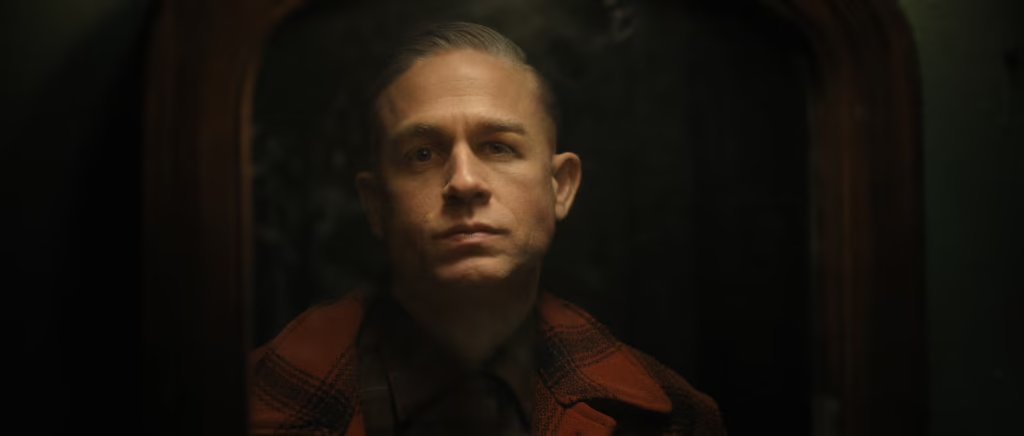
Then comes the big gut punch!
Months later, Gein sits alone in his padded cell. Pale light filters through barred windows. He’s motionless, harmless, and even pitiful. The door opens. A man in a crisp suit enters. He’s a Hollywood producer, briefcase in hand, the smell of opportunity thick in the air.
“Mr. Gein,” he says lightly, “we’d like to put your story on the big screen. We’re going to make you… a monster.”
For the first time in the entire series, Gein looks up. His eyes are sharp. The meekness is gone. He stares directly at the camera, at us, and says, “ Tell me who you want me to be.”
Cut to black. That single line turns the entire Monster: The Ed Gein Story ending inside out. It isn’t a finale; it’s an accusation.
Also, read After the Hunt Ending Explained: Truth, Lies & the Monster in the Mirror
Why It Works: The Monster We Made
Here’s the twisted brilliance of the Monster: The Ed Gein Story ending: it doesn’t end with Gein, it ends with us.
In that final exchange, Gein stops being a man and becomes a reflection. The show argues that while he was shaped by isolation, repression, and abuse, “The Monster” we know today was shaped by culture. By journalists chasing headlines. By filmmakers chasing Oscars. By the audience chasing chills.
When he says, “Tell me who you want me to be,” he’s not offering confession; he’s offering customization. Do you want him as Norman Bates? Leatherface? Buffalo Bill? He can be any of them. Because we’ve already written the script.
Monster: The Ed Gein Story ending suggests a grim symbiosis: Gein’s madness provided raw materialism, but society provided the market. Horror becomes capitalism’s guilty pleasure, a morality tale that we consume between ad breaks.
The genius is in the gaze. Gein’s final look into the camera collapses every safe distance between viewer and subject. We aren’t just watching; we’re participating. And that, more than any skull lamp or flesh suit, is the real horror.
The Anatomy of a Cultural Obsession
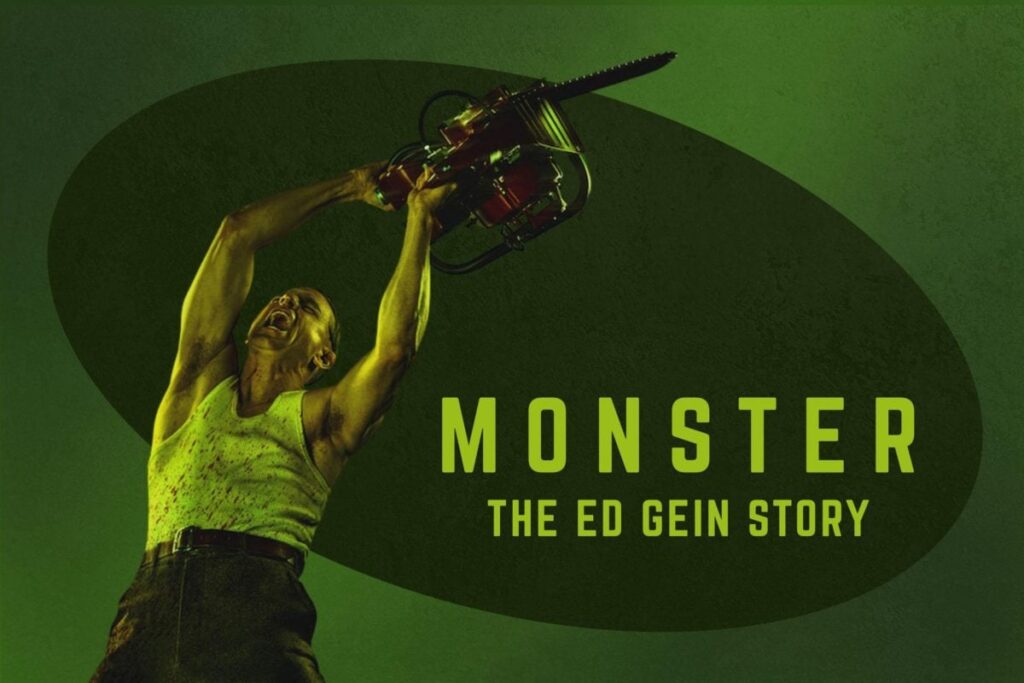
Beyond shock value, Monster: The Ed Gein Story ending exposes how crime mutates into myth. The moment Gein’s story hit the presses, the victims’ names vanished. What remained was the brand: Ed Gein.
This transformation, from man to myth, from tragedy to trope, is what the finale dissects. Each cutaway to a screenplay draft or film reel feels like an autopsy of our collective conscience. The series isn’t condemning horror movies, it’s interrogating the appetite that keeps them fed.
By the time credits roll, you can almost hear the echo: the true crime podcast intro, the Netflix “ta-dum,” the next dramatization being green-lit. The Monster: The Ed Gein Story ending isn’t closure, it’s recursion. The cycle continues.
Also, read Hell House LLC: Lineage Ending Explained – Haunting That Never Ends!
Conclusion: When the Story Outlives the Souls
Monster: The Ed Gein Story ending closes not with catharsis but corrosion. Plainfield’s fields are quiet again, but the noise has moved online, into studios, into our steaming queues.
Elisabeth Sparkle wanted to perfect herself; Ed Gein wanted to preserve his mother; we just want the next shocking story. Different obsessions, same disease.
By letting Gein’s ghost stare us down, the finale turns entertainment into an indictment. It’s saying: you can’t look away, and maybe you shouldn’t. Because every time we retell the tale, the Monster lives again, not in Wisconsin, but in the mirror of our fascination.
That’s the cruel genius of Monster: The Ed Gein Story ending: it makes sure that when the lights go out, we’re still being watched.
Frequently Asked Questions
1. What happens at the end of Monster: The Ed Gein Story?
The Monster: The Ed Gein Story ending shows Gein’s arrest, his institutionalization, and a chilling meta-scene where a Hollywood producer offers to buy his life rights. Gein then breaks the fourth wall, asking, “Tell me who you want me to be.”
2. What is the meaning behind the Monster: The Ed Gein Story ending?
It highlights society’s role in turning real-life horror into entertainment. The ending suggests Gein’s myth was co-authored by media, filmmakers, and viewers hungry for fear.
3. Why does Gein break the fourth wall?
His direct gaze implicates the audience, turning them from observers into collaborators. It’s a reminder that consuming tragedy can be its own form of participation.
4. Is the ending based on true events?
While dramatized, the Monster: The Ed Gein Story ending draws from real history; Gein’s crimes did inspire multiple horror classics. The fictional producer scene symbolizes Hollywood’s ongoing fascination with him.