Christmas films usually love warm hugs, gentle lessons and cookies by the fire. Dear Santa serves the cookies, but they come with a side of mischief from the underworld. Leo, a shy sixth-grader who struggles with dyslexia, thinks he is mailing a request for help from Santa. But one missing letter changes everything. Instead of Santa, he summons Balthazar, who is a demon with a corporate quota and a pitch for soul acquisition wrapped in red ribbon.
The film blends heartfelt coming of age moments with chaotic humor, gross-out gags and a surprisingly deep emotional core. It asks what happens when a kid uses magic to fix the parts of himself he feels most ashamed of. And the Dear Santa ending proves that the most powerful miracle is learning to accept who you are.
So, if you are ready to unwrap what really happened beneath the horns and Christmas lights, this is where the truth hides.
⚠️Spoiler Alert: The holiday spirit gets messy from here. You have been jingled and warned.
What Starts as a Wish Turns Into a Trap

Leo’s first two wishes come from fear and insecurity. He wishes for perfect reading skills. He wishes for romantic attention. Dear Santa ending shows why these wishes backfire. His dyslexia is “fixed” but books and signs begin glitching and warping reality. His crush notices him, but in a way that turns school into disaster theater. Every quick solution turns into a new humiliation.
The problem is not the magic. The problem is what Leo believed he must “fix” to be worthy of happiness.
Balthazar, meanwhile, drools at the thought of claiming one more soul for his Christmas Souls Acquisition Division. His contract is sloppy. His confidence is high. His success rate is zero. He is the kind of demon who could lose a battle to a candy cane if the candy cane had proper paperwork.
When The Devil is Actually a Terrible Employee
The big twist in the Dear Santa ending reveals that Balthazar is not the Devil at all. He is a mid-level bureaucratic demon with a terrible job title and a worse attitude. His mission depends entirely on tricking children who make spelling mistakes. He talks about a big game. He has no real power unless someone signs on the dotted line.
Leo realizes something important. That “Satan” is not unstoppable. He is just desperate.
The Wish That Cancels All Wishes
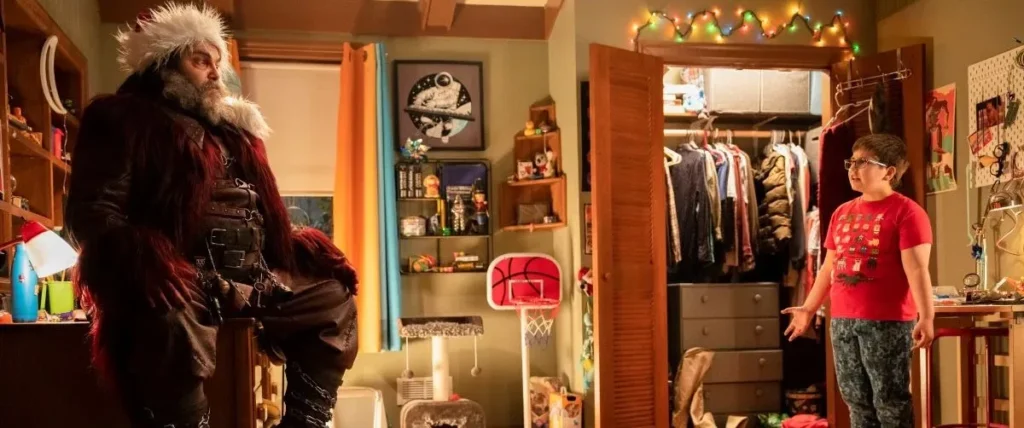
Balthazar pressures Leo to use his final wish. He wants the boy to panic, to slip and to give away his soul without thinking. Instead, Leo does something brilliant. He uses the fine print to beat the devil at his own game.
He wishes he never wrote the letter in the first place.
The wish erases the entire contact. If the letter never existed, the deal could never begin. The whole nightmare evaporates like smoke from a burnt gingerbread house.
Balthazar is sucked back to the underworld in a swirl of failed paperwork and angry shrieks. He leaves behind one flicker of sulfur scented proof that this all really happened.
Leo keeps his soul. The demon keeps his unemployment.
Also, read Krampus Ending Explained: Is the Engel Family Trapped Forever?
Interpretation and Themes: The Miracle was Never Magic
The ending of Dear Santa is not really about devils or loopholes. It is about a boy realizing that the things he hates about himself are not the flaws. They are features. His dyslexia does not make him broken. It makes him brave. It makes him try harder. It makes him ask for help and connect with the people who truly care.
The ending shows that confidence created by a wish is fake confidence. The real kind of confidence comes with embarrassment. It comes with confidence and honesty. Dear Santa ending encourages every kid who feels “different” to stop apologizing and start shining.
Magic cannot turn weakness into strength. But accepting yourself can.
Final Thoughts on Dear Santa Ending
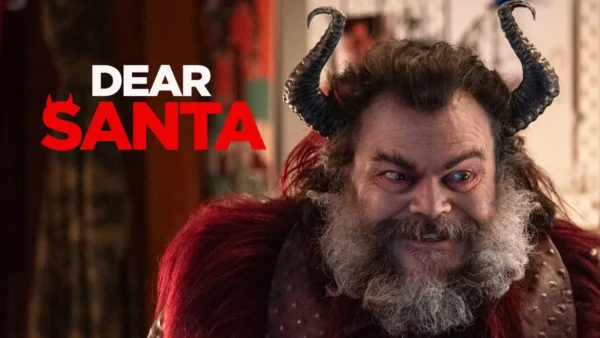
The ending of Dear Santa does not wrap Leo’s life in perfection. Instead, it gives him a gift that is far more meaningful than magical wishes ever could. It gives him the strength to finally believe in the boy he already is. Leo has spent so much of his life feeling behind and hiding the parts of himself he fears others will judge. After everything he goes through, he realizes that courage is not granted by magic, but is created by vulnerability.
For the first time, he approaches his crush without a spell to boost his confidence. He stumbles through the conversation, nervous but real and that makes it matter more. He asks for help with his reading instead of pretending he does not need it. He stops trying to be the perfect version of himself and begins embracing the beautifully imperfect one who has been there all along.
His dyslexia does not disappear. His challenges remain the same. But so does his determination.
Dear Santa ending reminds us that true transformation does not come from demons or deals. It comes from self-acceptance, from small, brave steps. From choosing to love the life you have, not the one you wish into existence.
Somewhere in the snow, the real Santa smiles. Because the greatest miracle is a child who finally sees his own light.
FAQs on Dear Santa Ending
1. Is Balthazar the real Devil in the Dear Santa Ending?
No. He is a low-rank demon who works in a bureaucratic division and completely botches the job. His failure is played for comedy and relief.
2. Why does Leo remember everything after the timeline resets?
The emotional lessons remain even though the supernatural events are erased. His growth is real, even if the chaos is not.
3. What is the message of the Dear Santa Ending?
It teaches that shortcuts do not fix identity. True change comes from self-acceptance and effort, not magic.
4. Does Santa actually exist in this universe?
Yes. The ending hints at real Santa through a heartfelt gift or message, confirming that goodness was watching all along.