Some films thrill you, some scare you and then we come across films that stare directly into the uncomfortable places society pretends not to see. After the Hunt (2025) falls firmly into that last category. Instead of choosing simple villains or tidy solutions, it asks a terrifying question “What happens when the truth isn’t convenient for anyone?”
The story unfolds in a world where reputations matter more than accountability, where silence can be deadlier than any weapon and where the line between protection and complicity is razor-thin. Few movies dare to tackle the fragile ecosystem of power, academia and the unspoken rules that determine who gets believed and who gets buried.
That’s exactly why the After the Hunt ending stays with you long after the credits fade. It forces us to look at the cost of maintaining the status quo, who gets sacrificed to preserve it and how easily justice can become just another rumor.
⚠️ Spoiler Alert: Before we move any further, consider this your warning. Some truths don’t unravel quietly. Past this point, academic careers may be harmed. Proceed with caution and at your own risk.
The Final Accusation: Alma vs. The Truth
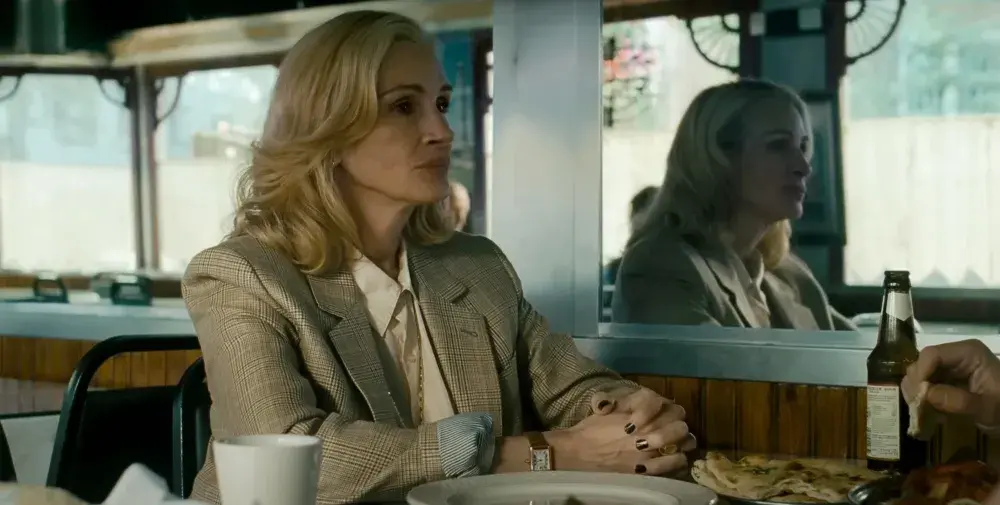
Throughout the film, Alma insists she is simply a dedicated professor caught in the political crossfire of campus activism. She claims her only goal is to protect the integrity of scholarship, even when that means defending her close colleague, played by Andrew Garfield, who has been accused of sexual misconduct by a young student.
But the After the Hunt ending begins when those lies start to crack.
Ara (Ayo Edebiri), the student who refuses to stay silent, insists Alma isn’t defending the truth rather covering up a predator. And slowly, painfully, flashbacks reveal that Alma is not the bystander she pretends to be. She benefited from her colleague’s behaviour. She ignored warning signs and protected the institution at the cost of a vulnerable student.
The hunt wasn’t for justice, it was for silence.
Academic Morality: Soapbox or Safety Net?
As investigation tightens its grip, Alma’s entire world contracts like a closing fist. The hallways that once echoed with respect now fell like traps. Students gather outside her office. They are not there for any study meeting rather they are there to accuse her. Administrators who once praised her brilliance now speak in cold, rehearsed sentences. And the colleague who helped create this nightmare? He twists the narrative, casts doubt on her every word, then disappears into the shadows as if she never existed.
Overnight, Alma transforms from an esteemed academic to campus pariah, swallowed by the very institution she once defended.
And that’s where the ending of After the Hunt hits with devastating clarity. Alma spent years believing she could outthink the system, that she knew every loophole, every power play, every rule. But the machine she once controlled turns on her with clinical precision. She is no longer a protector of the narrative. She is the narrative, a cautionary tale who is stripped of dignity and labeled a risk. In the end, she doesn’t just lose trust. She becomes the one thing academia cannot tolerate, a liability.
The Climax: Memory Isn’t Evidence, Until It Is
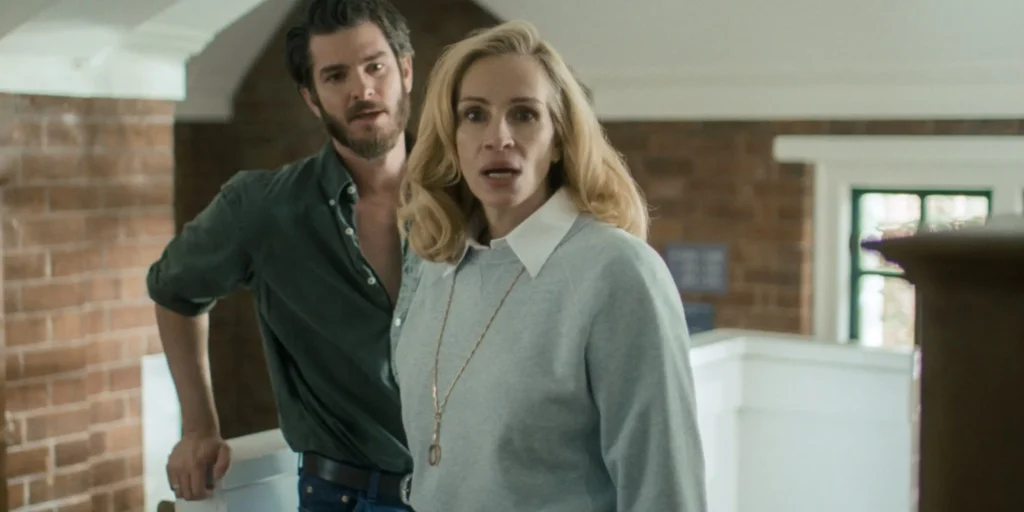
The film’s most difficult scene arrives when Alma is forced to confront a locked-away memory. Guadagnino crafts the moment with chilling intimacy. It’s quiet, breathless and painfully slow.
Alma remembers a night she buried years ago, a student in distress, begging for help and Alma turning away. Not actively harming, not participating, but allowing damage to happen. And that silence was violence too.
After the Hunt ending makes one thing clear that the bystander is not innocent. They are simply quieter.
Also, read A House of Dynamite Ending Explained: When Silence is the Loudest Explosion
The Final Choice: Survival or Accountability
Cornered by the truth, Alma is given an ultimatum. She can either cooperate with the investigation and publicly denounce the colleague she once protected or lose everything.
At first, she agrees to sign statements, attend hearings and play the system like she always has. But something stops her. It was her guilt that finally outweighed her fears.
In the conference room, surrounded by lawyers, demand and HR representative, Alma confesses that she knew.
She knew the rumors, she knew the warning signs, she knew the student was telling the truth. And she lied.
Her colleagues stare in horror, not because she did wrong, but because she admitted it. In academia, honesty is the most dangerous weapon.
Her confession doesn’t redeem her. It just removes her shield.
After the Hunt Ending Explained: Why Alma Walks Into the Woods
Instead of a firing or an arrest, After the Hunt ending takes a quieter, more symbolic turn,
Alma leaves the campus. She removes her faculty badge and she walks alone into the nearby forest where the film began.
The forest is more than scenery. It represents the place where Alms once hid her first denial, the moment she let harm pass unchallenged. The location is metaphor and crime scene both.
There, she finds the student whose life changed forever. Not physically, but in the form of memory.
No dialogue, just recognition.
A moment that says, “You hunted me to erase your fear. Now you must live with mine”.
Alma breaks down, not with some dramatic movie tears, but the silent collapse of someone who has finally run out of lies to tell herself.
After the Hunt ending isn’t about punishment delivered by others, it’s about the punishment that waits when excuses run dry.
What After the Hunt Says about Power
The film leaves us with a brutal truth that Power protects itself, until it doesn’t. Alma thought she was defending academia, but she was defending a predator. And After the Hunt ending forces viewers to ask a question: Who are institutions really built to shield? The vulnerable who come forward? Or the powerful who fear the fallout?
The movie does not preach an answer. It forces us to stare straight into the tension and realize how unsettling the truth can be.
Why After the Hunt Ending Matters
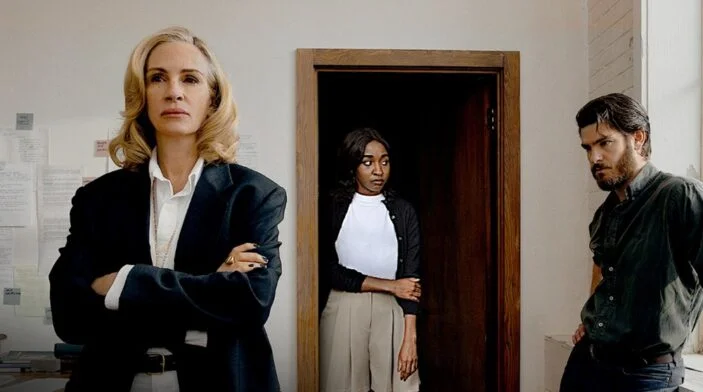
The After the Hunt ending hits hard because it does not pretend that trauma fits inside clean resolutions. There’s no triumphant court scene, no cinematic justice. No applause. The story doesn’t celebrate truth, it exposes how truth can leave jagged edges no one knows how to hold. In the end, every secret that was buried finally comes up for air, but fresh oxygen doesn’t heal old wounds. It stings.
So what happens now? When the truth hurts everyone involved? When silence itself becomes the villain? Alma doesn’t get the gift of redemption, nor the release of total ruin. She must live the wreckage her world has become, fully aware and unable to turn away anymore.
After the Hunt ending leaves us in the messy aftermath, where accountability is not a dramatic punishment, but waking up every day knowing exactly what you did and who you can no longer pretend to be.
Also, read Eenie Meanie Ending Explained: Love, Loyalty, and a Bullet in the Heart
Final Thoughts: The Hunt Never Really Ends
The final image of Alma walking deeper into the trees is haunting. She disappeared from the frame, not to hide again, but because she is finally confronting the part of herself she haunted hardest.
After the Hunt ending reminds us that the worst predators are often the ones we trust. The ones who speak softly, the ones who call themselves good. The ones who convince themselves that silence keeps the peace.
But silence only protects the wolf and never the wounded. Alma’s story warns us that when you protect the wrong person, you become the threat.
Frequently Asked Questions
1. Is Alma the villain in After the Hunt?
Not in a traditional sense. She isn’t malicious, she is complicit. The film argues that indifference can be just as harmful as cruelty.
2️. Why does Alma walk into the forest at the end?
It symbolizes her reckoning with the moment she first failed to act. The forest is where denial was born and where guilt finally wins.
3. Does the colleague face consequences?
Yes, but off-screen. The focus is less on him and more on the system that allowed him to operate without question for years.
4️. Does Alma redeem herself?
She begins to but redemption isn’t granted instantly. Her confession is only step one in a lifelong struggle to truly take responsibility.