The Crystal Cuckoo isn’t your usual ghost-heavy Netflix thriller. There are no jump scares, no haunted mirrors, and no spirits rattling chains. Instead, this Spanish miniseries sneaks up on you. It starts quietly, with a heart transplant, and ends by exposing a village built on silence, lies, and inherited violence.
If that final scene left you staring at the screen, unsure whether to feel relieved, disturbed, or both, you’re not alone. The Crystal Cuckoo ending is subtle, unsettling, and very intentional. Let’s break it all down in plain language, no overthinking, no spirals, just what actually happened and why it all matters.
⚠️Spoiler Alert: From here on, we’re taking full-series spoilers, including the ending of The Crystal Cuckoo. If you haven’t finished all six episodes, this is your cue to stop reading and come back later.
The Setup: A New Heart That Leads to Old Secrets
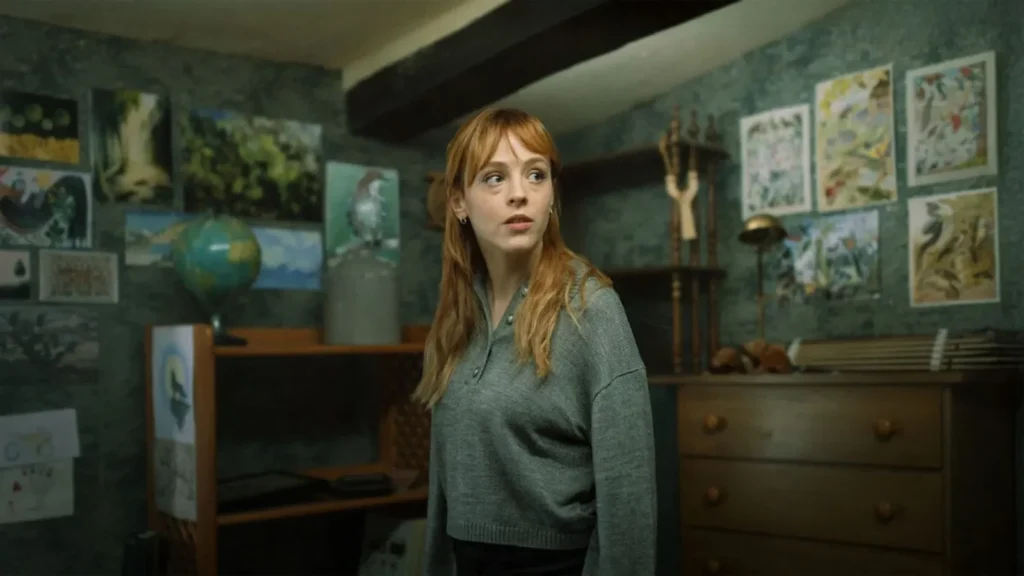
Clara Merlo is a doctor from Madrid who nearly died from heart failure. Her life is saved by a transplant; her donor is Carlos Ferrer, a young man from a quiet village called Yesques. Most people would move on. Clara doesn’t.
She becomes curious about Carlos. Who was he? What kind of life did he live? And why does she feel so emotionally connected to someone she never met?
That curiosity pulls her into Yesques, a place that looks peaceful on the surface but feels wrong almost immediately. People avoid questions. Children have gone missing. Locals perform strange “cuckoo” dances that feel more ritualistic than celebratory. Carlos’s family seems welcoming, but guarded:
– Marta, the mother, is kind but tense
-Juan, the father, is distant and evasive
-Rafa, the brother, is charming in a way that feels rehearsed
-Gabriel, the grandfather, is suffering from dementia and muttering unsettling things
Clara believes her new heart is guiding her. Not in a supernatural way, but emotionally. She’s picking up on Carlos’s pain, fear, and unfinished story.
The Truth Behind the Village and the Family
As Clara digs deeper, the truth slowly comes into focus, and it’s brutal. Carlos didn’t just die. He took his own life after uncovering horrifying truths about his family.
At the center of it all is Gabriel, the grandfather. Long before dementia took over, he was violent. He murdered Miguel and Silvia, two villagers whose disappearances were brushed aside as bad luck.
Then there’s Rafa.
Rafa isn’t just Carlos’s brother; he’s Gabriel’s secret son. Raised in violence. Trained to continue it, he helps cover up murders and kidnaps a baby, Manuela, believing the family’s twisted legacy must survive.
Juan knew, as Martha suspected. Everyone stayed silent. The so-called “cuckoo” traditions weren’t folklore; they were a cover. A way to disguise violence as culture. The village isn’t cursed by spirits. It’s poisoned by people.
Also, read Playing Gracie Darling Ending Explained: When The Ghost is Just the Past Refusing to Stay Buried
The Finale: Confrontation and Collapse
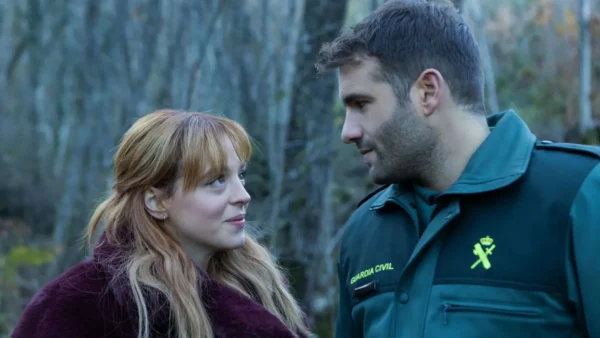
In The Crystal Cuckoo ending, everything comes apart. Rafa kidnaps Clara and confesses everything. Carlos discovered the truth and couldn’t live with it. Rafa planned to raise Manuela as the next link in the chain.
But the cycle finally breaks. Clara escapes. Marta shoots Rafa in self-defense. Gabriel wanders off, lost in his dementia. Juan is arrested, and Manuela is rescued.
There’s no dramatic victory, just relief mixed with devastation.
The Final Wolf Scene: What It Really Means
As Clara drives away from Yesques, a wolf appears in the road and meets her gaze. Instead of panic or dread, she smiles, and the reaction says everything. This moment isn’t about possession, curses, or lingering evil. It’s about acceptance. Clara has finally confronted the truth behind Carlos’s life and death, carried the weight of his pain, and found a way to release it.
The restless pull she once felt from his heart is gone, replaced by a calm she hasn’t known since the transplant. The wolf becomes a quiet symbol of survival and freedom, a reminder that healing doesn’t erase scars, but it does loosen the chains that once held her back.
Also, read ‘Monster: The Ed Gein Story’ Ending Explained – When Horror Looks Back at Us
Final Thoughts on The Crystal Cuckoo Ending
The Crystal Cuckoo ending doesn’t rely on ghosts to haunt you. It uses something far more unsettling: family secrets and learned violence.
The ending hurts because it’s real. Evil doesn’t always look monstrous. Sometimes it looks like tradition. Silence. Protected disguised as love.
Clara doesn’t save the village. She saves herself, and that’s enough.
It’s a quiet, unsettling finale that stays with you long after the screen fades to black.
Frequently Asked Questions
1. Is the show supernatural?
No. The heart connection is emotional and psychological, not paranormal.
2. Why did Marta shoot Rafa?
He attacked her. It was self-defense and the only way to stop him.
3. What does Clara’s smile mean?
Closure. She’s no longer carrying Carlos’s pain.
4. Does the cycle end?
Yes. With Rafa and Gabriel gone, the violence stops.