Some films devastate you in the moment and then just let you go. Hamnet, however, does the quite opposite. Chloé Zhao’s quiet, aching adaptation of Maggie O’ Farrell’s novel doesn’t rush its emotions or soften its silences. It lingers in the spaces grief usually occupies, between words, between glances, between the living and the dead.
Set in plague-shadowed 16th century England, Hamnet is not a biopic of Shakespeare. It’s something far more intimate; it’s a story about what it means to lose a child and what it costs to survive that loss.
By the time the credits roll, the Hamnet ending doesn’t just close a narrative. It transforms sorrow into something enduring, almost sacred.
⚠️Spoiler Alert: The following article contains major spoilers for Hamnet ending. If you haven’t seen the movie yet and want to experience it fresh, this is your moment to hit pause and go back!
A Family Before The Tragedy
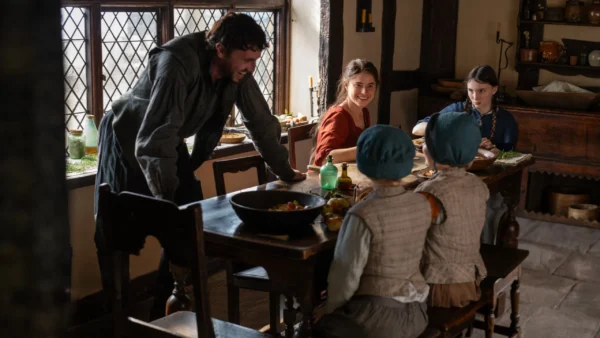
Before Hamnet becomes a film about loss, it is deeply a film about life.
Agnes (Jessie Buckley) is the emotional center of the story. She’s intuitive, grounded, and quietly powerful. She lives close to the land, close to her children, and close to things unseen. William Shakespeare (Paul Mescal) is her opposite in many ways. He’s curious, ambitious, pulled toward language and the wider world. Together, they build a life that feels tender, fragile, and real.
Their twins, Hamnet and Judith, are inseparable. Hamnet, being gentle and observant, carries a gravity beyond his years. Judith is sharper and more fiery. Their bond is the kind that feels unbreakable, until the plague arrives.
The ending of Hamnet draws much of its power from how fully the film allows us to know this family before it breaks.
Hamnet’s Death and the Fracture It Creates
Hamnet dies suddenly, devastatingly, as a result of illness, fate, and possibly something more mystical. The film leaves room for interpretation: did Hamnet knowingly absorb the sickness meant for his sister? Was it a sacrifice, a coincidence, or Agnes’s grief shaping meaning after the fact?
What matters is not the medical truth, but the emotional one.
Hamnet’s death shatters the household completely. Agnes is consumed by grief that has nowhere to go. William, absent in London pursuing his work, becomes the focus of her rage. She does not forgive him easily or quickly for not being there when their son needed them the most.
The ending of Hamnet grows out of this fracture. The film never rushed reconciliation, because grief does not operate on a timetable.
Winning as Survival, Not Escape
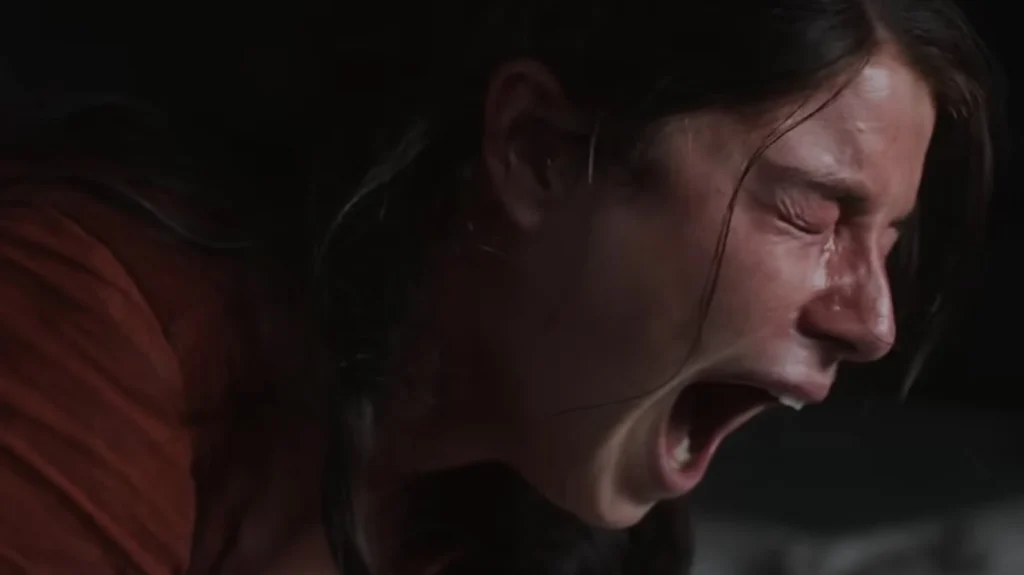
William’s response to loss is creation.
He writes, he shapes words, he builds worlds. But for Agnes, this feels like betrayal. She sees his writing not as mourning, but as exploitation, turning their son into material.
This tension is crucial to understanding the Hamnet ending. The film does not suggest that art automatically heals. It asks whether creation can coexist with pain without diminishing it.
When William begins working on Hamlet, the connection feels obvious to the audience long before it does to Agnes. The name itself, Hamnet, Hamlet, echoes like a wound that refuses to close.
The Globe Theatre: Where the Ending Truly Begins
The final act of Hamnet unfolds not in Stanford but at the Globe Theatre in London. Agnes travels there reluctantly, still carrying years of unspoken anger. She sees the playbill and on that the title: Hamlet. And in that moment, something shifts.
The Hamnet ending is built around recognition, not just names, but of intention.
As the play begins, Agnes watches William step onto the stage as the Ghost of Hamlet’s father. When he calls to the young boy playing Hamlet, the sound of his voice collapses time. For Agnes, the actor’s blond hair, his posture, and his vulnerability, it feels as if Hamnet has been summoned back into the world.
The Hand Reached Across Time
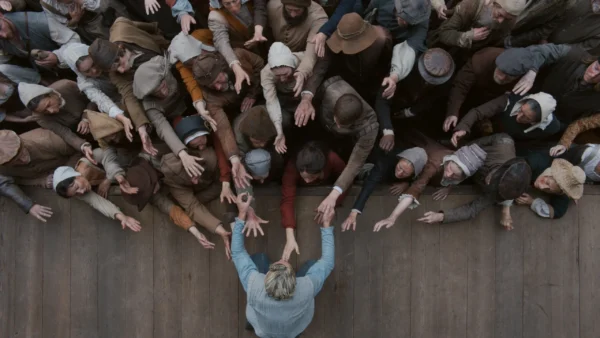
The most powerful moment of the Hamnet ending arrives quietly.
When Hamlet dies onstage, Agnes reaches out and takes the actor’s hand. It’s instinctive, unplanned, and grief made physical.
Then something extraordinary happens. Other audience members, strangers, groundlings, and witnesses all begin to reach out as well. Hands touch hands, and loss becomes shared. What was once private agony transforms into communal mourning.
This is not a spectacle. It’s a ritual. In this moment, Hamnet ending reveals its deepest truth that art does not erase loss, but it does allow others to hold it with you.
Agnes and William: Understanding, Not Erasure
From across the theatre, Agnes and William lock eyes. There is no dramatic embrace. No tearful apology, just understanding.
Agnes finally sees what William has done, not turned their son into a story, but given him a form that cannot die. Hamlet is not Hamnet replaced. Hamlet is Hamnet remembered, carried forward, spoken aloud again and again.
The Hamnet ending does not pretend that this fixes their marriage. It suggests something more realistic, that grief can soften into recognition and rage into acceptance.
What The Hamnet Ending is Really About
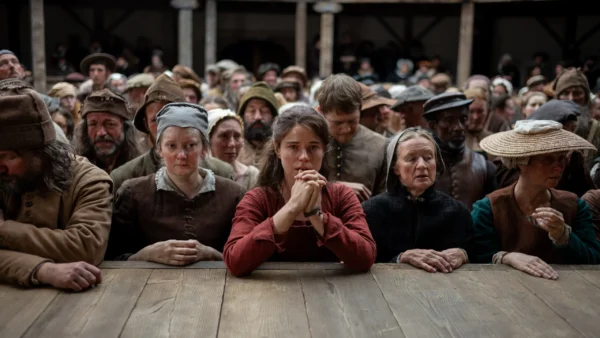
At its heart and core, the Hamnet ending is about alchemy. Pain becomes language. Private loss becomes a collective memory. A boy lost to plague becomes a figure who will live for centuries.
Chloé Zhao frames this transformation gently. There are hints of the supernatural throughout the film, including Agnes’s visions and Hamnet’s connection to unseen forces, but the ending resists simple answers. Whether magic is real matters less than emotional truth.
Hamnet lives because he is remembered. And remembrance, the film suggests, is a kind of resurrection.
Final Thoughts on the Ending of Hamnet
The Hamnet ending is devastating, beautiful, and quietly hopeful.
It doesn’t offer closure in the most conventional sense. Hamnet is still gone. Agnes still carries that absence. But the ending allows grief to move outward, forward, and into the world.
Rather than ending with silence, the film ends with shared breath, shared touch, shared understanding. It’s a reminder that stories are not escapes from pain, but vessels for it.
While watching Hamlet, Agnes does not lose her son again. She finds him alive in language, alive in memory, and alive in every voice that speaks his name.
And somehow, that feels like enough!
More Endings Worth Decoding
- We Live in Time Ending Explained: Why the Goodbye isn’t the End
- Train Dreams Ending Explained: How a Quiet Life Finds Its Peace
- All I See is You Ending Explained: When Love Turns Into a Cage
Frequently Asked Questions
1. Is Hamnet based on a true story?
Yes, loosely. William Shakespeare did have a son named Hamnet who died at age 11. The film is a fictionalized exploration of how that loss may have shaped his work, particularly Hamlet.
2. Did Hamnet really inspire Hamlet?
There is no historical proof, but the similarity in names and timing has long fascinated scholars. Hamnet imagines that connection emotionally rather than academically.
3. Is Agnes meant to be supernatural?
The film leaves this ambiguous. Agnes’s visions and intuition may suggest something mystical, but they can also be read as expressions of deep emotional awareness and grief.
4. Do Agnes and William truly reconcile at the end?
They don’t reconcile in a traditional sense. Instead, they reach a place of understanding. The Hamnet ending values recognition over resolution.