Some love stories are about holding on. But Bones and All is about consuming completely and asking if that’s devotion or destruction.
Directed by Luca Guadagnino, Bones and All looks like a road-trip romance at first. There are open highways, stolen moments, and two young people trying to outrun something unnamed. But the film is never really about where Maren and Lee are going. It’s about what they are and what truth demands from anyone who chooses to stay.
The story blends horror, tenderness, and coming-of-age grief into something unsettlingly intimate. Cannibalism here isn’t shocking; it’s language, inheritance, hunger standing in for desire, shame, and the fear of being unlovable. By the time the Bones and All ending arrives, the film isn’t asking whether love can survive monstrosity. It’s asking whether love is a monstrosity.
⚠️Spoiler Alert: From this point on, we break down the ending of Bones And All, in full, including its final moments. If you haven’t taken this road trip yet, now’s the time to turn back.
Who Maren is Before the Road Begins
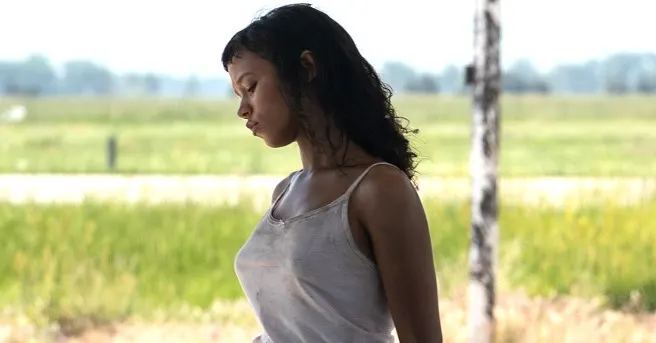
Maren grows up learning two things at once. One, she can’t stay anywhere for long. Two, she eats people.
Her father loves her, but not enough to stay. After Maren fully consumes a girl at a sleepover, he leaves behind cassette tapes instead of answers. Each tape explains a little. None of them explains enough. What Maren learns quickly is that her hunger isn’t a phase. It’s a condition. So she leaves, not to escape it, but to understand it.
The journey puts her face-to-face with the truth she has been avoiding: that she isn’t alone. There are others like her, and not all of them are gentle.
Meeting Lee: A Story With Teeth
Lee enters Maren’s life like a calm before the storm. He’s soft-spoken, observant, and careful with his hunger. Where Maren is raw and searching, Lee is practiced and resigned. He knows what they are. He’s made peace with it, or something close.
Together, they form a version of normal. They share meals, rules, and they share silences that feel safer than words. For the first time, Maren isn’t explaining herself. She’s understood.
That’s what makes their bond dangerous. Because in Bones and All, being understood doesn’t mean being saved. It means being seen clearly enough to be ruined together.
The Shadow Named Sully
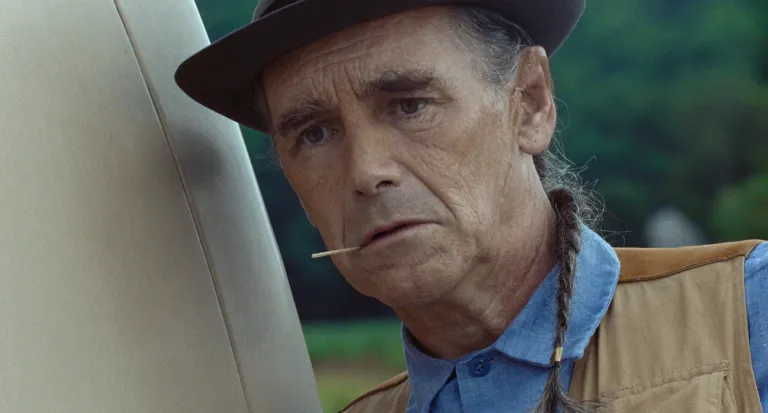
Every road movie needs a threat. Sully is that threat with a bright smile. Mark Rylance plays him as quiet, lonely, and profoundly unsettling. Sully doesn’t just eat people; he wants companionship, ownership, and permanence. He sees Maren as a future, not a person.
Where Lee represents shared survival, Sully represents what happens when hunger replaces humanity completely. He’s a mirror Maren doesn’t want to look into, and a warning she can’t ignore.
By the time Sully reappears later in the film, it’s clear he’s not passing through. He’s circling.
The Moment Everything Breaks
After trying, briefly, to live something like a normal life, Maren and Lee are pulled back into violence. Sully finds them. The confrontation is brutal and messy. Lee kills Sully, but not without cost.
He’s badly wounded. This is where Bones and All stops being a road movie and becomes a reckoning.
Lee knows what happens next. Hospitals lead to questions, questions lead to cages and half-measures, and in this world, that leads to rot. He asks Maren for something no one should ever have to give. He asks her to eat him, completely. Bones and all!
The Bones and All Ending Explained

Maren agrees. Not quickly, not lightly, but she does it. The film doesn’t linger on the act. It doesn’t sensationalise it. Instead, it cuts away, leaving us with the aftermath. An empty apartment, blood and silence.
And then, the final image. Maren imagines, or remembers, or dreams, that Lee is alive again. Whole, smiling. Two of them, naked and unafraid, on a mountain top, wrapped around each other like the world never existed.
Is it heaven? A hallucination? A metaphor?
The Bones and All ending refuses to lock itself into one answer. What it gives us instead is emotional truth. For Maren, loving Lee meant accepting all of him. Even the part that destroyed him. Even the part that destroyed her.
What the Bones and All Ending Really Means
At its core, the ending isn’t about cannibalism. It’s about intimacy taken to its extreme. This is a film that believes love isn’t proven through survival, it’s proven through surrender.
Maren doesn’t consume Lee out of cruelty; she does it because he asks to be known completely. No hiding, no leftovers, no half-love. In their world, being eaten fully is the closest thing to peace.
The tragedy isn’t that Maren eats Lee. The tragedy is that this is the only way they know how to stay together.
Love, Hunger, and Inheritance
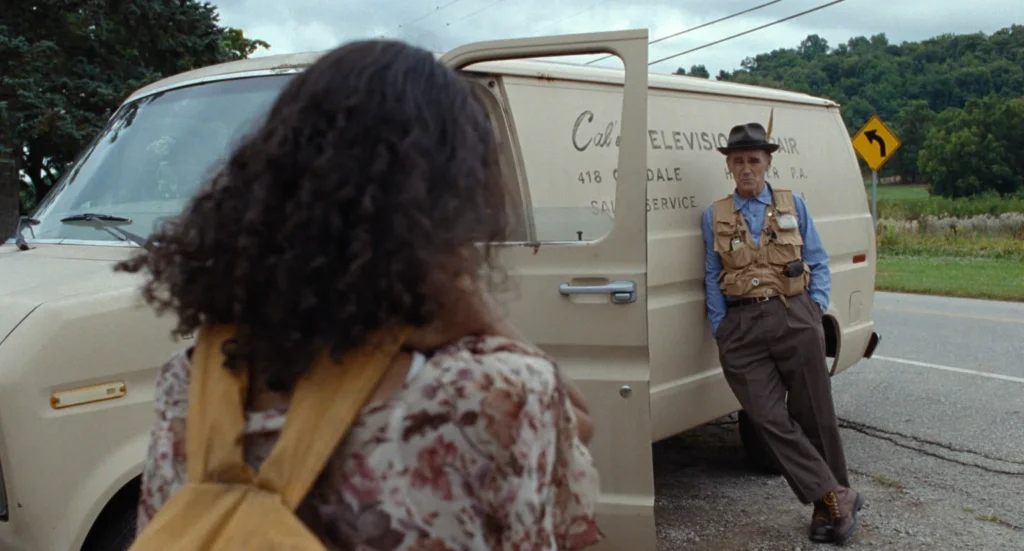
Bones and All treats monstrosity like a family trait. Something that’s passed down. Something learned, something you can’t scrub off with good intentions. Maren’s mother shows her what happens when hunger is abandoned to instinct. Sully shows her what happens when hunger replaces connection.
Lee exists somewhere in between.
The Bones and All ending suggests that Maren hasn’t escaped her fate, but she’s changed how she carries it. Love doesn’t cure her. It gives her meaning. Whether that’s salvation or damnation is left up to us.
Why the Ending Hurts on Purpose
There’s no redemption arc here. No cue, no final girl victory. The film ends where it must, with loss wrapped in tenderness.
Guadagnino doesn’t want the audience to feel safe. He wants us to feel complicit. To understand why Maren says yes. To understand why love sometimes asks for everything.
The final embrace isn’t comforting; it’s devastating. And that’s exactly the point.
Final Thoughts on the Bones and All Ending
The ending of Bones and All lingers because it refuses to moralize. It doesn’t judge Maren. It doesn’t excuse her. It simply lets her love the only way she knows how.
This isn’t a romance trying to fix each other. It’s a romance about being ruined together and choosing that anyway. Messy, tender, horrifying, and human.
Love, as the film suggests, doesn’t make monsters human. Sometimes, it just teaches them how to grieve.
Other Endings Worth Decoding
- Marty Supreme Ending Explained: When Winning Feels Like Losing (And Ping-Pong Breaks Your Heart)
- Wish Upon Ending Explained: The Creepy Twist You Didn’t See Coming
- Die My Love Ending Explained: When Freedom Feels Like Madness
Frequently Asked Questions
1. Why does Maren eat Lee at the end of Bones and All?
Because Lee asks her to. In their world, being eaten fully is an act of trust, love, and release, not violence.
2. Is the final mountain scene real or imagined?
It’s intentionally ambiguous. It can be read as a hallucination, a symbolic afterlife, or Maren’s memory creating peace where none exists.
3. Is Bones and All a love story or a horror film?
Both. The film uses horror to explore intimacy, shame, and belonging in ways romance alone couldn’t.
4. Does Maren survive emotionally after the ending?
The film doesn’t answer that. It suggests survival isn’t the goal, but the connection is.