Taika Waititi’s 2019 anti-hate satire takes one of the darkest chapters in history and filters it through the terrified, confused, imaginative mind of a child raised on propaganda. By the time we reach the Jojo Rabbit ending, the movie has shifted from absurd comedy into something deeper, a painfully hopeful message about breaking free from hate and choosing love instead. It is one of those films that try to make you cry and laugh at the same time and sticks the landing.
In this breakdown of Jojo Rabbit, we’ll explore Jojo’s emotional journey, the final confrontation with his imaginary version of Adolf, and what that last dance with Elsa truly means. Expect humor, heartache, and healing.
Grab your imaginary friend (preferably not Hitler), and let’s unpack this beautifully strange finish.
The Final Battle: Jojo’s World Falls Apart
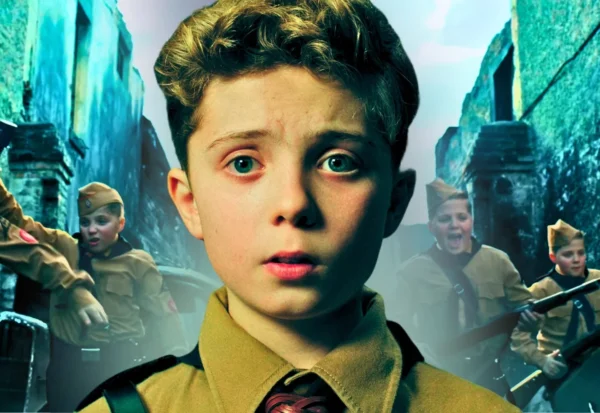
The ending of Jojo Rabbit begins during the chaotic collapse of Nazi Germany. Jojo, once proud to wear his Hitler Youth uniform, sees reality in full color, and it isn’t flattering.
Nazis are losing. The town is crumbling. Fear is everywhere.
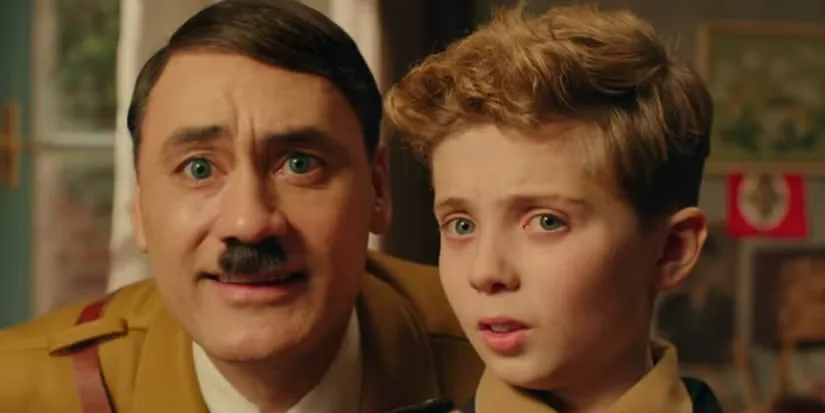
His imaginary friend Adolf, who once gave silly pep talks and tried to boost Jojo’s confidence, now appeared frantic and pathetic. This version of Adolf represents the ideology Jojo swallowed whole, now rotting from the inside.
Even Jojo’s goofy fantasy can’t protect him anymore.
The battlefield changes him. He sees violence without glory. He sees neighbors turning on each other. And he sees his mother’s message, love is stronger than fear, finally coming alive inside him.
The ending of Jojo Rabbit begins the moment Jojo decides who he really wants to be.
The Goodbye to Adolf: Jojo Kicks Out Hatred
One of the most powerful moments in Jojo Rabbit is surprisingly funny. Jojo confronts Adolf in his room. The imaginary dictator is desperate, shrill, and downright pathetic now.
Jojo looks at him, sees the bully behind the mask, and tells him off, “You’re not a hero. You’re not even a good friend.”
Then he kicks Adolf right out of the window. It’s goofy and absurd. But symbolically, it’s liberation.
That kick represents Jojo breaking free from indoctrination, fear, and hate, rejecting the twisted teachings he once clung to for identity.
Goodbye, imaginary Hitler. Don’t let the window hit you on the way out.
The Truth About Elsa: The Heart of Jojo Rabbit Ending
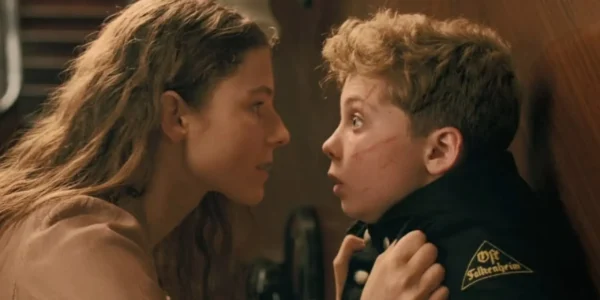
Throughout the movie, Elsa challenged him, scared him, confused him, and completely transformed him.
At first, Jojo treated Elsa, the Jewish girl hiding in his walls, as the monster the Nazis claimed she was. But gradually, he learned that she laughs, cries, hurts, and dreams. She is a person. The Jojo Rabbit ending is about Jojo choosing empathy over fear. Love over propaganda, truth over lies.
When he loses his mother, Elsa becomes the only bit of family he has left, even if he’s not ready to say that out loud.
Also, read After the Hunt Ending Explained: Truth, Lies & the Monster in the Mirror
Rosie’s Legacy Lives On
Jojo’s mother, Rosie, was the secret heartbeat of the story.
Her belief in hope, even when surrounded by cruelty, lit the oath Jojo would eventually walk. Her shoes, literally shown hanging when Jojo discovers her death, become a symbol. Nazi can silence people, but they cannot silence love.
The Jojo Rabbit ending reflects her message: Live. Love. Choose kindness even when the world doesn’t.
Jojo may be alone, but he’s not lost. Because Rosie taught him how to find his way back to humanity.
The Lie That Meant Love
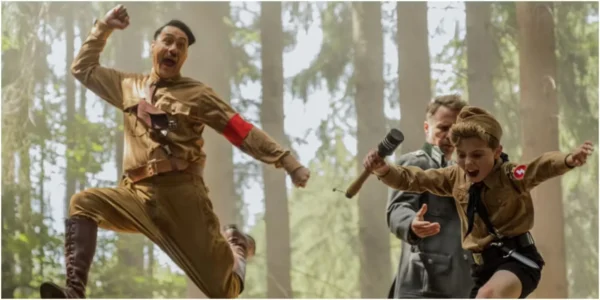
After the war ends, Jojo tells Elsa a lie; he says Germany won, she is still in danger, and needs to stay. Why? Because Jojo is terrified of losing the last person he loves.
The Jojo Rabbit ending shows him acting out of fear, but this time it is fear of abandonment and not hatred.
Elsa sees through it. Her silence says everything. She knows his heart isn’t trying to control her; it’s trying to keep her safe.
The Jojo Rabbit Ending Dance Scene Explained
The world has finally gone quiet. The war is over. No uniforms, no chants, no venomous slogans, just two kids standing in the sunlight, unsure where to go from here. When Elsa asks Jojo what he plans to do now, he gives the only honest answer someone rebuilding their life can give: “I don’t know.” It’s vulnerable. It’s real.
So, they dance. Not smoothly, not like trained performers, just free, clumsy movement from two souls who’ve earned the right to feel joy again. In the Jojo Rabbit ending, this dance becomes the symbol of everything the war tried to destroy: survival, rebirth, hope, and the messy, imperfect nature of freedom itself. As they sway to Bowie’s “Heroes,” the moment reminds us that healing doesn’t start with certainty. It starts with taking a step, even one that stumbles.
Why The Jojo Rabbit Ending Matters
The Jojo Rabbit ending doesn’t tie everything up with a shiny, Hollywood bow. Trauma doesn’t vanish. The world isn’t instantly fixed. But it does hand out two scrappy survivors something incredibly powerful: a big, slightly dented chance.
Jojo and Elsa aren’t magically healed just because the bad guys lost. They still don’t fully understand what comes next, but for the first time, the future isn’t terrifying; it just seems possible.
The Jojo Rabbit ending leaves us with a message loud enough to kick imaginary Hitler out a window again: nobody pops out of the womb hating people. That’s learned. And if you can learn it, you can unlearn it, one awkward dance step at a time.
Also, read Don’t Worry Darling Ending Explained: Untangling Victory’s Perfect Lie
Final Thoughts on Jojo Rabbit Ending
The Jojo Rabbit ending sticks to your ribs, not because it’s flashy, not because everything suddenly turns into sunshine and unicorn confetti, but because it dares to be real. Healing isn’t a magic trick. Hate doesn’t evaporate just because the people who spread it lost the war. But when a kid who was taught to hate looks at the world again and chooses love instead? That’s where revolutions sneak in, quiet, small, and wrapped in awkward preteen feelings.
So Jojo and Elsa dance badly, adorably, and courageously right into a future that’s still messy and confusing. Their smiles don’t say, “We’re fine now.” They just say, “We’re here. We’re still trying”. And honestly, that’s the kind of hope that feels earned. The Jojo Rabbit ending reminds us that surviving is only step one. Learning to live again? That’s the real battle. And if it starts with goofy dance moves, even better.
Frequently Asked Questions
1. Is the Jojo Rabbit ending happy or sad?
Both. It’s bittersweet. The Jojo Rabbit ending shows the weight of loss but also the promise of a hopeful future.
2️. Why does Jojo kick Adolf out the window?
It symbolizes Jojo finally rejecting the hateful ideology he once believed. The Jojo Rabbit ending uses this moment as emotional liberation.
3️. Are Jojo and Elsa a couple in the Jojo Rabbit ending?
Not necessarily. They are two survivors who become chosen family. The Jojo Rabbit ending focuses on emotional connection, not romance.
4️. What is the meaning behind the dance in the Jojo Rabbit ending?
It’s a celebration of freedom and a return to joy. The Jojo Rabbit ending uses dance as a metaphor for healing and moving forward.