The thing about Jackie Peyton is simple: she never crashes quietly. Even in the final moments of Nurse Jackie, she makes sure the world is watching. One second, she’s walking through the ER like she owns the place, and the next, the entire series shifts into a question mark. The crowd. The pills. The fall. The whiteout. Fans have been arguing about the last shot ever since.
This article breaks down and discusses everything the finale leaves hanging in the air. What actually happens in those final minutes? Why the Nurse Jackie ending still ignites debates? What it says about Jackie’s addiction, her choices, and the frantic heartbeat of All Saints. And most importantly, we talk about why the ambiguity feels painfully brilliant for a character who never took the easy way out!
By the end, you’ll see the final from different povs. It’s raw, honest, and exactly as complicated as Jackie herself.
⚠️Spoiler Alert: Things are about to get painful, honest, and very Nurse Jackie. If you haven’t watched the Nurse Jackie finale, now’s the time to!
Jackie’s Final Spiral Begins
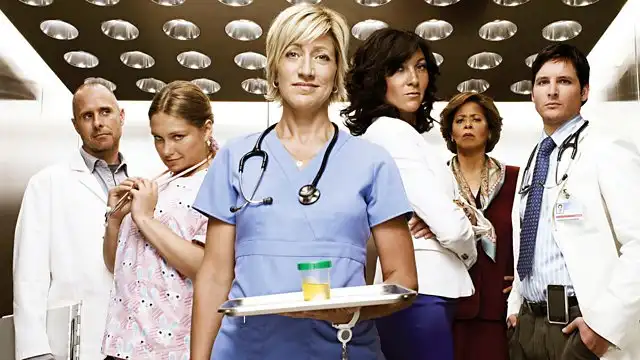
The Nurse Jackie ending starts with Jackie trying, like really trying, to stay sober. Rehab, probation, regular testing, tight supervision. She plays the hospital’s game because she wants her job back. She wants her daughters back. She wants control again.
But sobriety under pressure is its own kind of war. Jackie’s entire support system is tired, suspicious, and waiting for the next collapse. She feels it too. The weight and the watchful eyes show the fear that her past is always one step behind her.
So when she returns to All Saints, the hospital doesn’t feel like home. It feels like a battlefield with fluorescent lights!
The Party, the Envelope, the Trigger
The final trigger for the ending of Nurse Jackie happens during Dr. Cooper’s farewell celebration. Cooper is California-bound, the ER is buzzing, and the staff is half-celebratory and half-exhausted.
While all of this is happening, Jackie finds it. An envelope, a few leftover pills, and a perfectly timed temptation.
It’s almost cruel how casually she finds them. No dramatic music and no slow build. Just a quiet moment in a chaotic room where her addiction taps her on the shoulder and whispers, “Remember me?”
Jackie looks at the pills the way she looks at a crashing trauma case, with total focus, total need, and total surrender.
The Relapse in Plain Sight
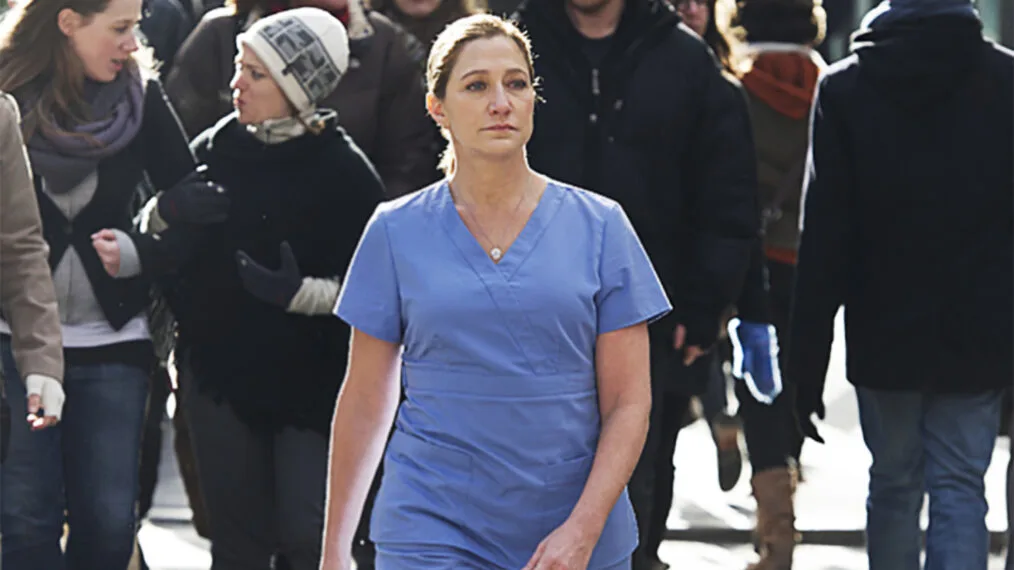
One of the most striking moments of the Nurse Jackie ending is that she doesn’t hide. No bathroom stall, no locked door. Jackie just swallows the pills right in the middle of the hallway, surrounded by people who trust her, fear her, and love her.
This is the truth of her addiction. It doesn’t care who’s watching.
For Jackie, the ER is both her sanctuary and her battlefield. She takes the drugs there because that’s where she feels alive. Where she feels needed, where she can disappear into the noise.
But this time, the noise swallows her whole.
Also, read ‘Untamed’ Ending Explained: Grief, Guilt, and the Ghosts We Carry
The Collapse That Stops Everything
Seconds after the pills hit her system, Jackie collapses, and suddenly, the ER everyone depends on loses its center.
The staff rushes in. Dr. Roman shouts orders. People scramble for equipment. It’s ironic and brutal; these are the people who save strangers every single day, but they can’t save the person who has been saving them for years.
The camera closes in on Jackie’s face. There’s no panic, no regret. Just peace. It’s chilling because it shows the truth: the drugs gave her the calm she couldn’t find anywhere else.
Then everything dissolves into white. A choice that still haunts fans.
The White Screen: What It Means
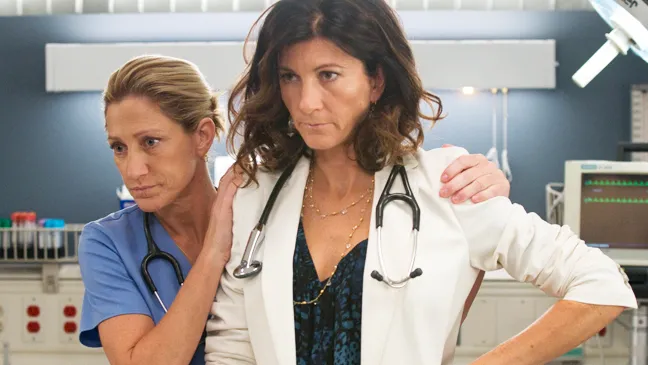
The biggest question surrounding Nurse Jackie ending is simple: Did Jackie die?
The show never really tells us. But it shows us enough to let both possibilities exist.
The fade to white is intentional. It’s not a blackout. It’s not a cliffhanger. It’s an emotional blackout, her emotional blackout. A visual representation of where addiction takes her.
Let’s break down both the interpretations.
Interpretation One: Jackie Dies
The most widely accepted reading of the ending of Nurse Jackie is that she dies on the ER floor. She took an unpredictable amount of opioids after years of release, withdrawal, tolerance imbalance, and physical strain. It was a deadly dose. She knew it. Her colleagues knew it.
If she dies, the poetic brutality is hard to miss.
She dies where she lived, surrounded by chaos, saving others, unable to save herself. She dies with peace on her face, the same peace she chased her entire life. She dies in plain sight, the addiction finally louder than her lies.
The ending is tragic, but it’s brutally honest. Addiction destroys even the strongest. Even the brilliant. Even the beloved.
Interpretation Two: Jackie Survives, But Barely
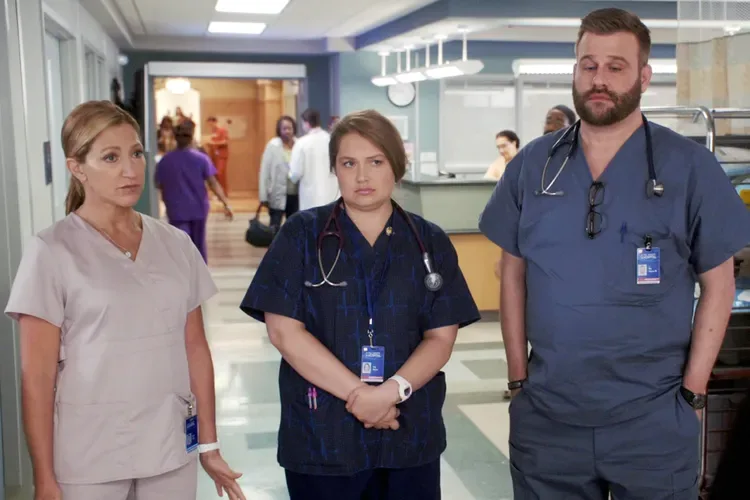
The alternate reading of the Nurse Jackie ending is that shelves.
The ER team is skilled, quick, and used to miracles. She collapses in the place with the highest survival odds. And the fade to white could represent her slipping into unconsciousness rather than death.
If she survives, the meaning is darker than the death version.
Because survival means that the cycle continues, the relapse wins again. Rock bottom wasn’t rock bottom after all.
This is the show’s reminder that addiction has no neat resolution. No easy redemption arc. Jackie may survive, but she’ll wake up facing the same battle she has fought since season one, only now everyone knows exactly how far she’s fallen.
Also, read The Terminal List Ending Explained: Revenge, Betrayal, and the Calm After the Kill
The Real Message Behind Nurse Jackie Ending
Here’s the brutal truth of the Nurse Jackie ending. It’s really about whether she lives or dies. It’s about what addiction does to a life, to a family, to a career, and to people who watch it unfold.
Jackie is a phenomenal nurse. Jackie is also an addict. Both things are true, and neither cancels out the other one.
The ambiguity forces us to face the uncomfortable reality that addiction stories don’t get clean endings. They don’t wrap up in bows. They don’t turn into inspirational TV moments.
They are messy, ongoing, painful, and full of small victories and enormous setbacks
The Nurse Jackie ending is powerful because it mirrors real life. It’s not neat. It’s not pretty. It is unresolved, just like addiction.
Frequently Asked Questions
1. Does Jackie die at the end of Nurse Jackie?
The show leaves her fate open. The Nurse Jackie ending can be read as her death or as a near-fatal overdose. The ambiguity is intentional.
2. Why did Jackie relapse in the final episode?
Her addiction was never cured. Stress, pressure, and emotional exhaustion pushed her back toward the only escape she trusted.
3. Why did the finale fade to white instead of black?
The white-out symbolizes an overdose from Jackie’s perspective, an emotional blankness, a loss of consciousness, and a moment suspended between life and death.
4. Is Nurse Jackie ending faithful to real addiction stories?
Yes. The lack of closure reflects how addiction rarely ends cleanly. It’s ongoing, unpredictable, and resistant to neat storytelling.