⚠️Spoiler Alert: Major twists from 56 Days ending are revealed in the article. If you haven’t watched the series yet, it is best to stop here; the 56 Days ending is meant to be discovered firsthand.
At first, 56 Days feels almost comforting and warm. You know, two strangers meeting at a bar, a pandemic begins, the world shuts down. And instead of facing isolation alone, they decide to quarantine together. It sounds like the start of a romance, the kind of romance people joked about during the lockdown. What could possibly go wrong if you found someone just before everything closed?
Quite a lot, actually! Because 56 Days isn’t really about romance. It’s more about proximity. About what happens when two people with dark secrets are trapped in the same space long enough that pretending becomes something impossible. The show quietly builds dread while everything still looks very normal and cute with the shared groceries, awkward mornings, and polite conversations. Then it tells you that something is very wrong with a decomposing body found in the apartment 56 days later.
And suddenly, every sweet moment you watched becomes suspicious.
Plot Recap: A Love Story Told Backwards

The show works through two timelines. There’s the “Then” timeline and the “Now” timeline.
“Then” shows Ciara and Oliver meeting just before the lockdown. They hit it off instantly and decided to stay together during the quarantine period. What begins as a short arrangement slowly becomes a relationship. They cook together, share fears about the pandemic, and grow emotionally dependent on each other.
“Now” begins with a welfare check. Police enter the apartment and discover a corpse in the bathtub.
The tension comes from the gap between these timelines. We already know that something terrible happened; we just don’t know how people who looked so normal ended up connected to a murder.
Little details start to feel off. Oliver seems anxious, Ciara seems to be hiding things, and anonymous notes appear. The apartment feels less like a home and more like a sealed container slowly building pressure.
The First Twist: Oliver’s Past
Oliver reveals that he was involved in a tragedy during his teenage years. He and his friend Shane fought with a classmate, Paul Sparling, near a river. And during the struggle, Paul drowned.
Oliver’s wealthy father bribed the authorities so that Shane took the blame and went to prison for 20 years, while Oliver only served 5 years in juvenile detention.
The guilt from this incident never left Oliver. His life since then has been built on silence.
Ciara reacts with surprising calmness. She is too calm, actually. Later, we learn that Ciara isn’t who she really claims to be.
Ciara’s Real Identity

Ciara isn’t really who she says she is. She is Megan Martin, Shane’s sister. The same guy who was framed in the drowning episode in their teenage years.
Her relationship with Oliver began as a form of revenge. She tracked him intentionally, wanting answers for what happened to her brother and her family. But at that moment, something changed in her.
She didn’t just understand Oliver, she fell in love with him. And that’s when the situation becomes dangerous, which changes the scenario in the 56 Days ending.
Dan Trocler: The Real Catalyst
Oliver slowly opens up to his therapist, Dan Troxler, and tells him everything. He talks about the river, Paul’s death, and the lie that sent Shane to prison!
But Dan is not there to help him. He keeps a letter that could have proved Shane’s innocence and uses what he knows as leverage. He pressures the family, squeezes Oliver’s father for money, and hangs the truth over their heads like a threat.
The tragedy doesn’t begin with the murder. Rather, it begins when the one person meant to help decides to profit from their guilt.
The Murder
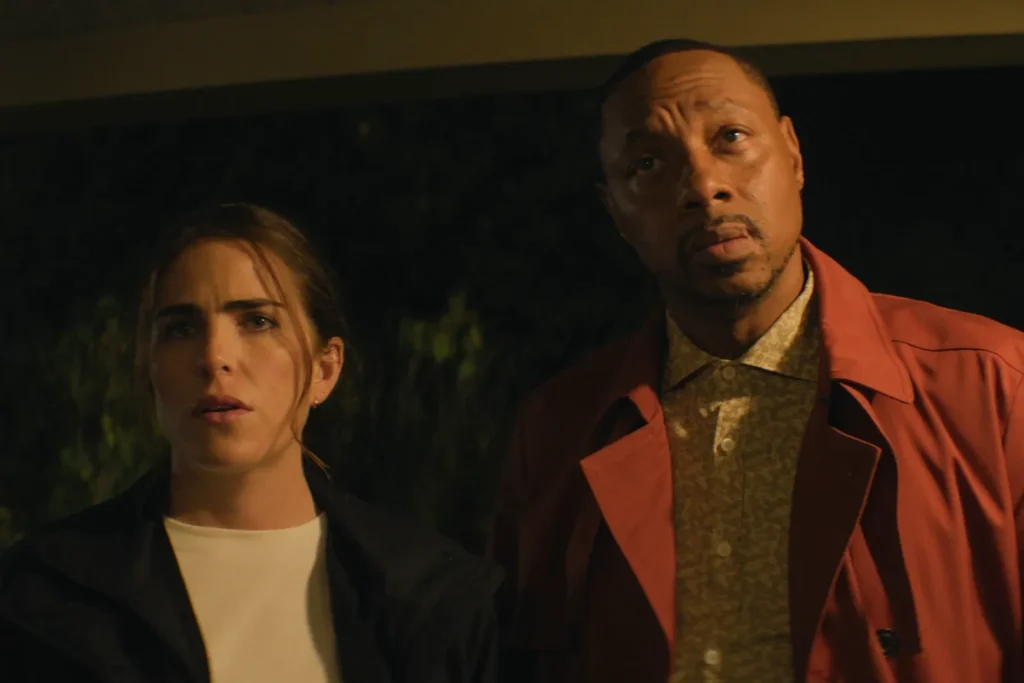
Ciara goes to confront Dan, hoping she can stop him before he destroys everything.
The conversation there turns ugly very fast. He pushes her, she snaps, and in a burst of fear and anger, she grabs a sculpture in Oliver’s apartment and hits him. The impact is fatal. Dan collapses, and the body we saw at the very beginning ends up in that same bathtub.
The killing happens in the moment. What they choose to do afterward doesn’t.
The Cover Up
Oliver is left with a choice. He could either report Ciara or stand beside her. He chooses her.
Ciara’s sister, Shyla, gets involved too, helping them clean up and cover their tracks. They clean and wipe down the apartment, removing anything that could raise suspicion and point back to them, and slowly build a story that might hold up if anyone starts asking questions.
For a moment, Oliver does the right thing. He even goes to the police station, all ready to confess. But he can’t go through with it. He walks out and goes back to Ciara.
After this, their relationship isn’t just a romance anymore. They’re tied together by what they know and by what they’ve done.
The 56 Days Ending Explained
The investigation looks serious on the surface, but it never really reaches the truth.
The detectives eventually closed the case by pinning it on someone else. They lean on loose clues and convenient assumptions, steering the blame toward a local drug dealer who had nothing to do with it, really. The story fits well enough, so no one digs deeper.
What actually happened remains buried. Ciara and Oliver walk away untouched. In 56 days ending, we see them far from the city, living quietly somewhere warm, raising a baby they named Shane, as a tribute to the brother whose past set everything in motion.
Final Thoughts: When Survival Looks Like Guilt
56 Days ending doesn’t leave you shocked; it leaves you feeling unsettled. It stays with you because it doesn’t tell you what to think. It leaves you asking whether love excuses wrongdoing or simply hides it better.
The show isn’t about murder. Of course, the murder matters. But the real story is the decision afterward. They could have told the truth. Instead, they chose a life together built on a lie, and somehow it looks like a happy ending.
And that’s what makes the ending of 56 Days linger. Not because justice failed. Because emotionally, you understand why they did it.
More Endings Worth Decoding
- His and Hers Ending Explained: Love, Lies, and the Most Dangerous Kind of Loyalty
- ‘Malice’ Ending Explained: How Revenge Wins, Loses, and Leaves Nothing Behind
- ‘Untamed’ Ending Explained: Grief, Guilt, and the Ghosts We Carry
Frequently Asked Questions
1. Whose body was in the bathtub?
The body in the bathtub was that of Dan Troxler, Oliver’s therapist, who tried to blackmail them.
2. Did Ciara plan the murder?
No. She planned revenge initially, but the killing itself happened impulsively during a confrontation
3. Why didn’t Oliver confess?
He almost did. He went to the police station but ultimately chose Ciara over the truth.
4. Are they meant to be seen as villains?
The show avoids labeling them. It presents two damaged people who make terrible choices but remain emotionally believable.