Rian Johnson’s mysteries have a habit of pulling the rug out from under you when you think you’ve found solid ground, and Wake Up Dead Man: A Knives Out Mystery might be his strangest playground yet. This time, Benoit Blac steps into a world of incense, locked doors, whispered prayers, and a crime that feels less like a murder and more like a bad omen.
The film leans heavily into the atmosphere, blending classical whodunnit mechanics with questions about faith, performance, and what people are willing to fake when belief becomes profitable. By the time the credits roll, you’re not just wondering who did it; you’re questioning why you ever trusted the story being told. The Wake Up Dead Man ending doesn’t rush to explain itself. It waits, and then it lands quietly, leaving you unsettled in the best way.
⚠️Spoiler Alert: From here on out, we’re opening the tomb. Everything below contains full spoilers for Wake Up Dead Man ending. If you haven’t watched the film yet, now’s your cue to step away politely. If you stay, don’t blame Benoit Blanc for being several steps ahead.
The Setup That Makes the Ending Hit Harder
The case begins with an almost theatrical impossibility. Monsignor Jefferson Wicks is discovered murdered during a Good Friday service, stabbed with a ceremonial knife, and locked inside a church closet. No escape routes, no witnesses, and soon, no body.
Then the story takes a sharp turn. The corpse disappears, and a tomb is opened. Footage emerges that seems to show Wicks alive again. At first glance, the film feels like it’s daring you to abandon logic. But Knives Out: Wake Up Dead Man ending knows exactly what it’s doing. Every miracle has backstage lighting. Every resurrection needs a sponsor. By the time the Knives Out 3 ending starts to make sense, it’s obvious that faith was never the goal. Control was!
The Fake Miracle That Fueled Everything
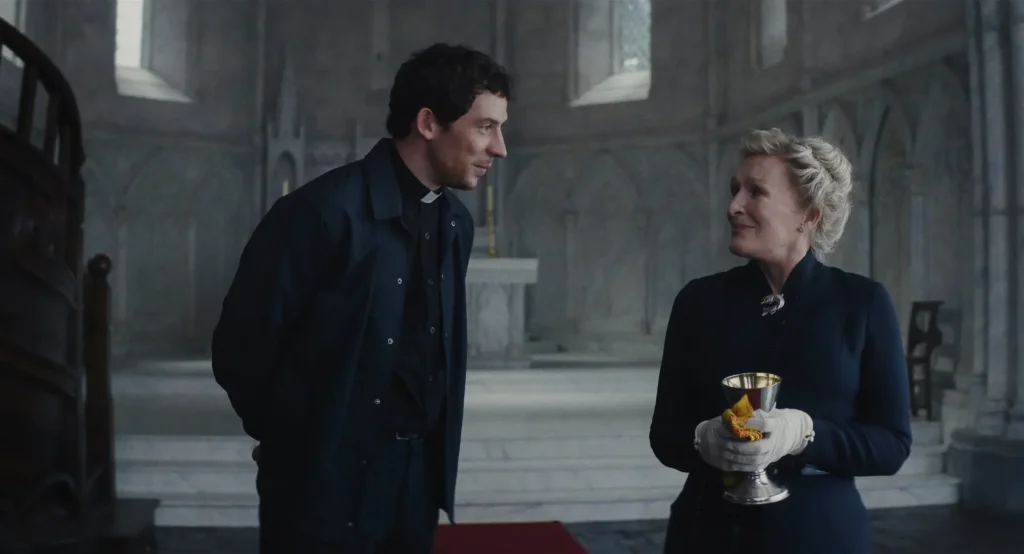
The core of the ending of Wake Up Dead Man rests on the resurrection scam. Wicks was never meant to stay dead. His “murder” was carefully staged. A tranquilizer slipped into his flask. A devil-head knife swapped from a decorative bar piece. Fake blood, perfect timing, all of it designed to sell a single narrative — the divine intervention.
The real objective? Stage a miracle, revive a failing church, and keep the attention away from the money. Simple!
But cons always collapse under their own weight.
The man who “rises” from the tomb isn’t Wicks at all. It’s Samson, a body double used to sell belief. Once the footage spreads and the faithful are convinced, Samson becomes disposable. He’s killed without any ceremony, quickly and quietly. This is simply because greed had no patience for loose ends.
This is where the Knives Out 3 ending shifts from a clever misdirection into something far uglier.
The Diamond That Corrupted Everyone
At the center of the chaos sits Eve’s Apple, an $80 million diamond hidden years earlier by the church’s founder. Every major player orbits it, whether they admit it or not.
Nat Sharp wants the diamond as an exit strategy. Martha Delacroix sees it as a way to rebuild power, and Wicks clings to it to stay relevant.
The diamond isn’t cursed because it’s mystical. It’s cursed because it exposes what people become when belief turns profitable. Once real bodies start dropping, the miracle doesn’t matter anymore. Money takes control of the story.
Wake Up Dead Man: A Knives Out Mystery ending makes one thing painfully obvious: faith was just the packaging.
Also, read The Thursday Murder Club Ending Explained: Secrets, Love and a Double Dose of Justice
The Chain of Deaths Nobody Planned For
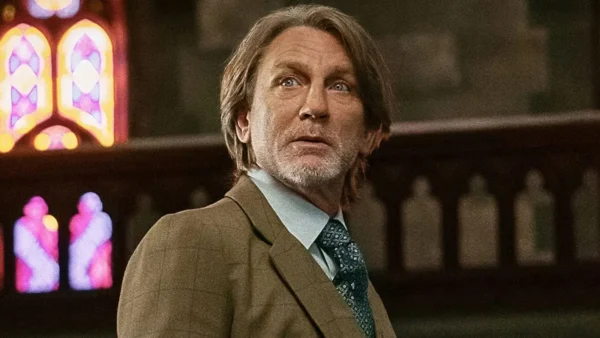
When the resurrection spirals out of control, the consequences stack up fast. Samson is murdered to protect the illusion, while Nat is poisoned after trying to outmaneuver Martha. All the bodies vanish, and the evidence dissolves. At that moment, there are no confessions; they come in only when they’re too late to save anyone.
Martha’s final move is the most chilling of all. She poisons herself, confesses all of it publicly, and lets the truth explode in real time. She isn’t asking for forgiveness. She wants exposure. For her, the confession is still control.
And that’s when Benoit Blanc does something unexpected.
Benoit Blanc’s Most Unusual Choice
In the Wake Up Dead Man ending, Blanc knows everything before the final confession finishes. He has the pattern, the motive, and the proof.
But he doesn’t deliver a grand speech. Instead, he lets the truth come out on its own. This is the quiet genius of Knives Out 3. Blanc recognizes that no arrest, no flourish, and no courtroom victory will restore what’s been corrupted. The story itself must collapse under its own weight.
He refuses the diamonds. He walks away from applause, and he leaves the church to reckon with the consequences of its own performance.
For a detective built on spectacle, this restraint is the loudest statement he’s ever made.
What Does the Ending of Wake Up Dead Man Really Say?
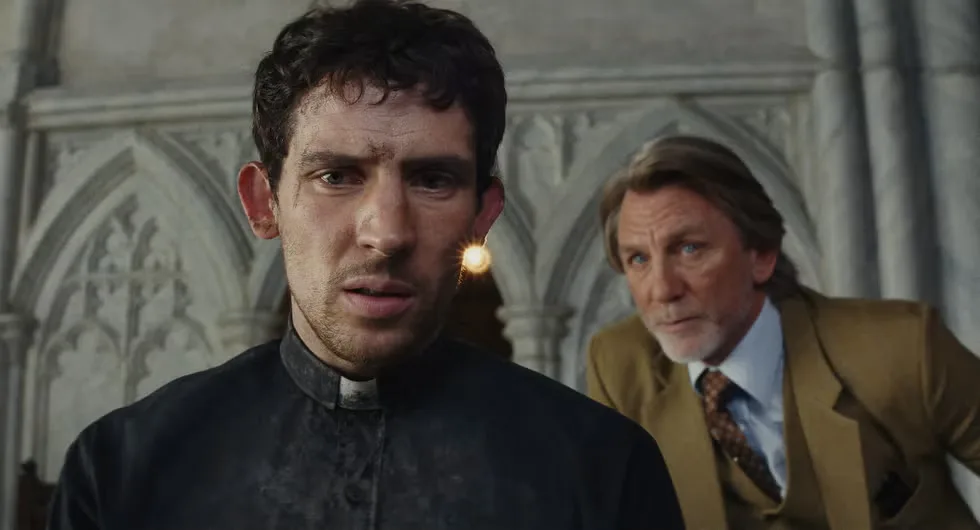
TheWake Up Dead Man ending isn’t about who held the knife. It’s about how easily belief can be staged and sold.
Faith vs. Performance: Every “holy” moment is choreographed. The lighting, the angles, and the cameras. The miracle exists because people want it to.
Greed Disguised as Salvation: Nobody is saving souls. They’re protecting assets.
Mercy Over Victory: Blanc’s silence isn’t weakness, it’s judgment. He allows truth to replace triumph.
This is why Knives Out 3‘s ending feels heavier than earlier films. Justice arrives, but without any celebration. Truth wins, but nobody cheers.
Why This Ending Feels Different From Other Knives Out Films
Earlier entries thrived on fireworks and jaw-dropping reveals. Wake Up Dead Man slows everything down. It lets the ending breathe. It trusts the audience to sit with discomfort.
The Wake Up Dead Man ending works because it denies easy catharsis. There’s no victory lap. No satisfying wrap-up. Just the quiet realization that belief, once exploited, leaves scars that don’t fade.
That’s why it lingers.
Also, read I Know What You Did Last Summer Ending Explained: Secrets, Hooks, and One Last Scream
Final Thoughts on Wake Up Dead Man Ending
The Wake Up Dead Man: A Knives Out Mystery is Rian Johnson at his most restrained and confident. It strips the genre of comfort and replaces it with consequences. The ending of Knives Out 3 doesn’t beg for applause. It asks you to think.
Benoit Blanc solves the case. The truth comes out. But the bigger question remains that how many people would accept a lie if it felt holy enough?
That question sticks long after the screen fades to black.
Frequently Asked Questions
1. Who is the real killer in Wake Up Dead Man?
Multiple murders occur, but the conspiracy centers on Nat Sharp and Martha Delacroix manipulating events to protect the staged resurrection and secure the diamond.
2. Was the resurrection ever real in Wake Up Dead Man?
No. The miracle was entirely staged using drugs, body doubles, and filmed theatrics. The Wake Up Dead Man ending makes this unmistakably clear.
3. Why does Benoit Blanc stay silent at the end?
Blanc chooses mercy over spectacle. He understands that exposure matters more than courtroom theatrics.
4. How does this connect to earlier Knives Out films?
The Knives Out 3 ending continues the franchise’s focus on dismantling power structures, but with a darker, more reflective tone.