What happens when you take a beloved horror game, throw out the slasher-with-a-twist setup, and replace it with a sinister time loop, a sadistic therapist and an exploding coffee mug? You get the Until Dawn movie. It’s a reimagining that isn’t afraid to play with your expectations. While the original game had balanced slasher tropes and supernatural horror, the film goes bonkers and cranks up the psychological torment by trapping its characters in a nightmare they can’t wake from.
If you walked out of the theater feeling both relieved and unsettled, you’re not alone. The Until Dawn ending doesn’t just tie up the film’s events; it connects back to the game in a way that reframes everything. Think of it less as a straight adaptation and more as a creepy origin story for the horrors of Blackwood Mountain.
So, let’s unpack the time loops, Dr. Hill’s twisted plan, and what that final whistle means.
The Endless Night: Death, Reset, Repeat
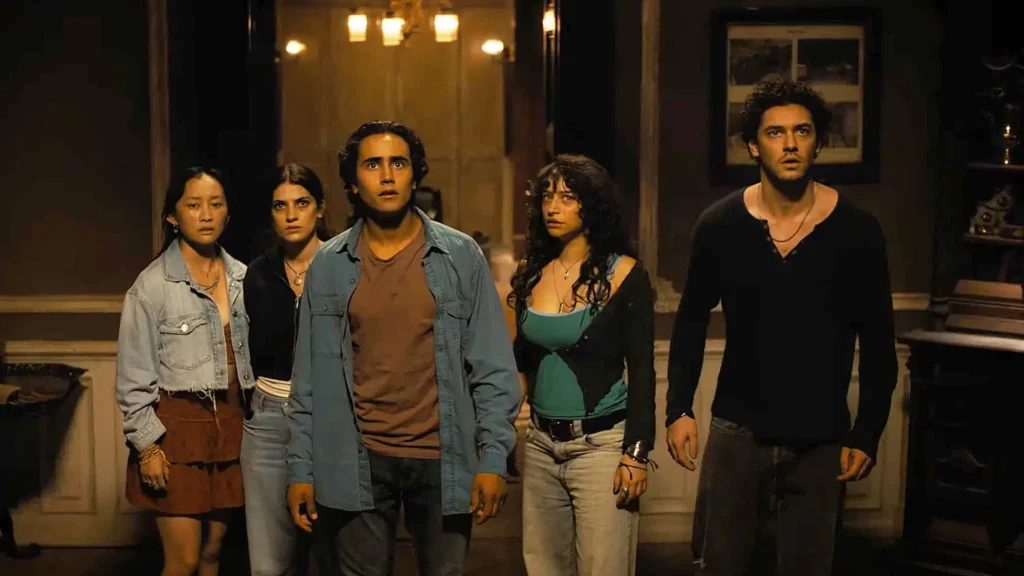
Until Dawn movie introduces us to a group of friends who are stranded in a mysterious valley. Sounds familiar, right? But instead of a simple slasher setup, the nightmare here is cyclical.
Every time a character dies, whether they are mauled, stabbed to death, or blown up, they wake up again at the start of the night. The valley traps them in an endless loop of terror, forcing them to relive their deaths over and over. The result feels like Groundhog Day got hijacked by a horror director.
At first, the group thinks they’re cursed and that’s why all of this is happening. But as we reach the ending of Until Dawn, it becomes clear that someone is orchestrating this.
Enter Dr. Hill: Therapist or Mad Scientist?
If you’ve been a fan of the game, you will recognize Dr. Hill, the unnerving therapist who probed Josh Washington’s fragile mind. In the film, he’s not a hallucination but all flesh and blood. And also way more sinister.
Dr. Hill is revealed as the true antagonist, a sadistic researcher using the valley’s curse to experiment on people. He is not a monster or a killer in the traditional sense. His cruelty comes from his scientific fascination with human trauma. He’s revealed to be a sadistic researcher who traps people in the valley’s time loop to observe their psychological unraveling and hoping they become Wendigos. He’s playing god, treating the characters as lab rats in a twisted experiment.
This reframes the time loop. It isn’t random, and it isn’t supernatural punishment. It’s an experiment designed to study suffering.
Clover Vs. Hill: Coffee Break From Hell
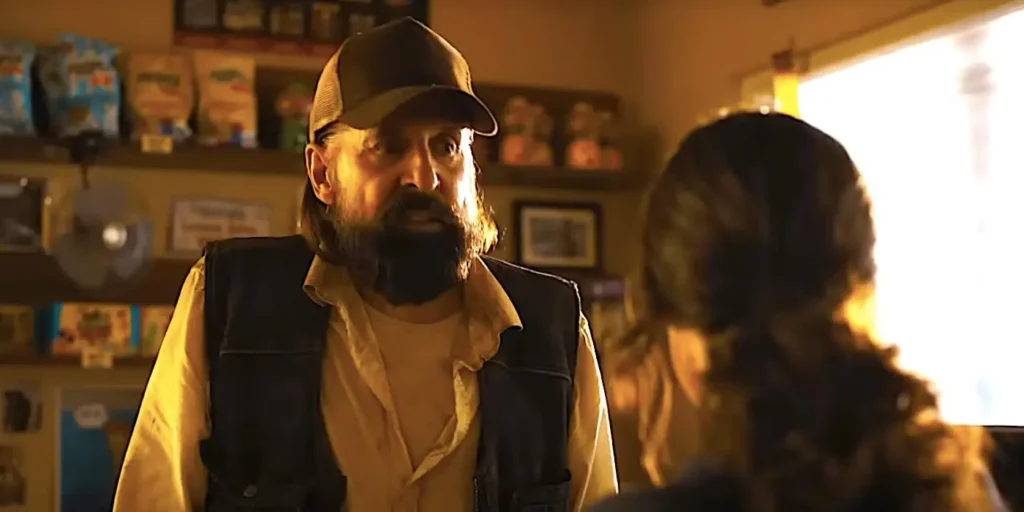
The climax shifts from the valley back to Dr. Hill’s office, where Clover, who is the film’s protagonist, finally confronts him.
Hill taunts her, insisting the horrors were all in her head, manifestations of her trauma. But Clover is sharper than he thinks. She’s pieced together the valley’s secret. She now knows that its water is cursed, capable of causing horrific bodily explosions.
In a moment of sly brilliance, Clover positions Hill’s coffee mug under a leaking pipe. Oblivious, he takes a sip which leads to one of the goriest endings of 2025. Dr. Hill explodes in his own office, undone by his own arrogance.
It’s grotesque, shocking, and oddly satisfying. It’s a cathartic release after watching him manipulate the group all night.
Also, read Wall to Wall Ending Explained: Noise, Neighbors and the Price of a Dream
Breaking Free, or So They Think
With Hill dead, the time loop finally breaks. Clover and surviving friends pile into a car, shaken but relieved. For the first time in the film, they believe the nightmare is over. They are in their car with the valley behind them. The cycle is done and the freedom is theirs.
All looks right at the Until Dawn ending. Or does it?
The Final Twist: Back to the Mountain
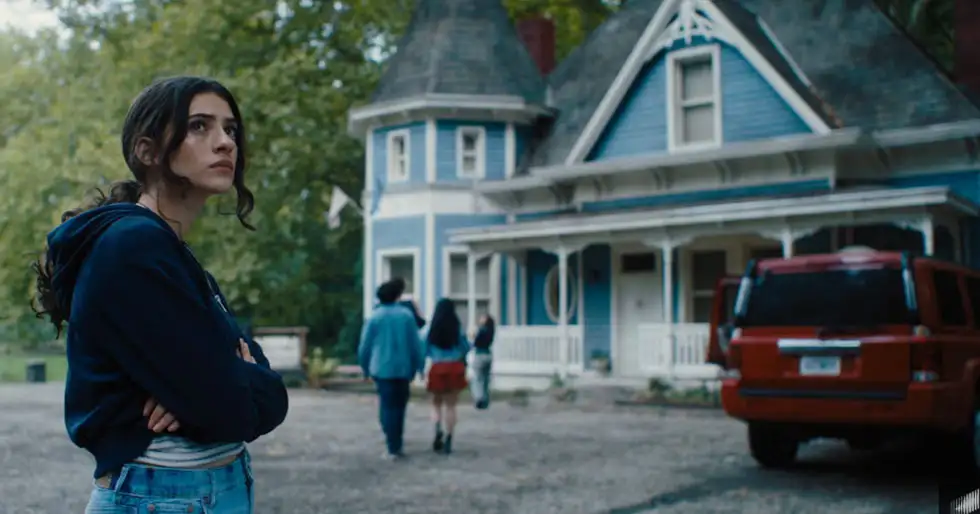
Just when you’re ready to exhale, the Until Dawn ending delivers one last gut punch. The camera drifts back to Hill’s office. The security monitors which were once showing the group’s repeated ordeals start to flicker and change.
Now, they display the snowy Blackwood Mountain lodge from the original Until Dawn game. And then, chillingly, Dr. Hill’s unmistakable whistling is heard off-screen.
The implication is clear: Hill’s work isn’t over. The film isn’t just a reimagining, rather it’s a prequel. The horrors of the time loop were only the beginning. Hill is moving on to his next test subjects: the game’s cast of teens.
It’s a bold move, reframing the movie not as an adaptation but as the origin of the nightmare we already know.
The Bigger Picture: Trauma, Cycles and Control
Just like the game, the movie uses horror to explore the theme of trauma. The time loop is a perfect metaphor for this, representing how trauma can feel inescapable and repetitive. For Clover, her victory is not just about surviving, but about breaking free and taking back control from a cycle designed to destroy her.
Hill’s role as the puppet master reinforces another theme that how institutions or in this case, twisted authority figures tend to exploit people’s suffering for their own ends. The Wendigo curse is terrifying, but Hill’s experiments are worse because they strip victims of agency.
Also, read The Sixth Sense Ending Explained: Seeing What Wasn’t Said
Until Dawn Ending: When Horror Never Ends
The Until Dawn ending succeeds because it blends psychological horror with pure spectacle. Dr. Hill’s gaslighting manipulation of Clover is intellectual horror perfection, but his explosive death gives it the disgusting conclusion. It’s an ending that walks the tightrope between mind games and monstrous killing and will leave you shaken on both fronts.
But the gut punch comes from the prequel twist. By connecting Hill’s experiments to the Blackwood Mountain events, the film recontextualizes everything we thought we learned from the game. Josh, Hannah, Beth, they were not victims of bad luck, they were test subjects in Hill’s ongoing sadistic cycle.
Clover might’ve broken free of the time loop, but the finale reveals one unmistakable fact: Hill’s legacy is hardly over. The nightmare does not perish with the man, it merely reinitializes, just waiting for the next unfortunate group to wander into it.
Frequently Asked Questions (FAQs)
1. Is the Until Dawn movie connected to the game?
Yes, though not in the way fans expected. The film serves as a prequel to the game, showing Dr. Hill’s earlier experiments in the valley. The final twist, with the monitors switching to the Blackwood Mountain lodge, directly sets up the events of the original Until Dawn.
2. Why was Dr. Hill experimenting with the time loop?
In the movie, Dr. Hill is portrayed as a sadistic researcher who traps victims in a repeating nightmare to study human trauma. His goal is to see if extreme psychological pressure can drive people into becoming Wendigos, tying into the game’s lore about cannibalism and transformation.
3. Does Clover actually break the cycle in the Until Dawn ending?
On the surface, yes, Clover kills Dr. Hill with the cursed water, and the surviving friends escape the loop. But the post-credit reveal makes it clear that Hill’s influence is far from over. His experiments continue elsewhere, meaning Clover’s survival may just be one chapter in a much larger horror cycle.