If you’ve watched Liam Neeson punch, kick, shoot, and emotionally breakdown his way through thrillers for the last decade, you already know, The Marksman isn’t just another action movie. It’s a road-trip Western wrapped in grief, grit, and a reluctant bond between two people who never planned to depend on each other.
The film follows Jim Hanson, a retired Marine sniper who’s just trying to stay afloat in Arizona while the world keeps taking the little he has left. When he crosses paths with Miguel, a boy running from a cartel, Jim gets pulled into a journey he didn’t choose, but desperately needs.
This breakdown explores everything the movie builds towards: Jim’s final stand, his promise to Miguel’s mother, the truth behind his sacrifice, and what The Marksman ending really says about redemption. Expect grit, emotion, and a surprising amount of tenderness from a film that begins with gunfire and ends with a whisper.
The Final Stand
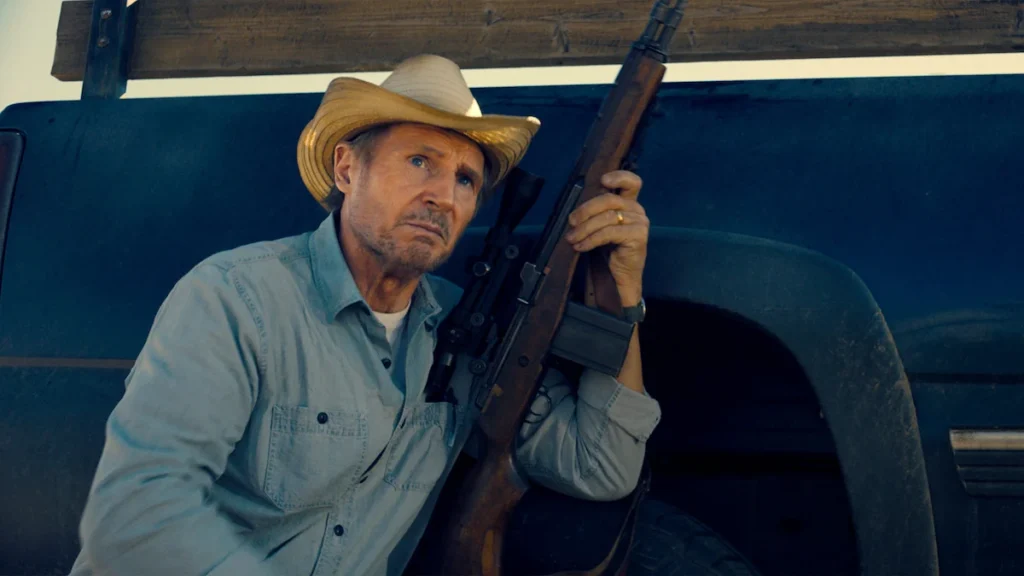
The tension that leads to The Marksman ending comes down to one truth: Jim can’t run forever; he knows it, Miguel knows it, and the cartel, too, knows it pretty well.
Jim and Miguel reach a remote, isolated area, a place that looks almost too peaceful to be the stage for a gunfight. But Jim picks it for a reason. It’s wide, quiet, and open enough for a sniper to control. It’s the kind of space where his old instincts can finally come alive again.
Jim sets a trap because he finally accepts that escape isn’t the plan anymore. Confrontation is. He can’t protect Miguel from every cartel member alive, but he can take out the men chasing them right now. He’s tired, injured, and outnumbered, but his resolve is steady. If this is his last stand, it will be on his terms.
The cartel arrives. The silence breaks. And the retired Marine becomes the sniper he used to be.
Mauricio’s Final Mistake
Mauricio, the cartel leader, enters the scene expecting an exhausted old man. Instead, he finds a Marine with perfect aim, a good hiding spot, and the kind of calm that only appears when someone has nothing left to.
Jim picks off the cartel members one by one, using strategy instead of strength. This isn’t brute force; it’s a skill honed through decades of experience.
The final confrontation with Mauricio is close-quarters and intimate, a fight between two men who both understand violence, but for entirely different reasons. Mauricio kills for power. Jim kills for a purpose.
In the end, Jim wins.
Mauricio falls, the threat is gone, and for a moment, the film lets us breathe. But The Marksman ending isn’t a victory story. Not really.
The Promise Finally Kept
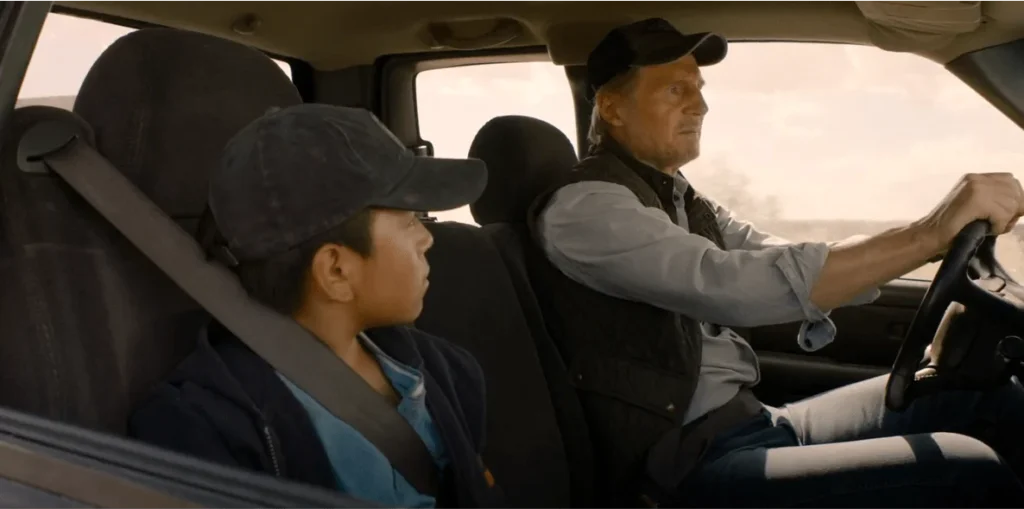
The moment Mauricio dies, the mission changes. Jim stops being a warrior and becomes a guardian again. He brings Miguel to the city where the boy’s relatives live. It’s not dramatic. It’s quiet and almost gentle.
At the bus station, Miguel doesn’t want to leave. He clings to Jim because in a short, brutal journey, Jim became the closest thing he has to family. Jim feels the same, but he forces himself to stay strong.
He hands Miguel money. He hands him a photograph, a tiny symbol of the family waiting for him.
The bus pulls away while Miguel keeps looking back for Jim. Jim just stands there, not moving, until the bus is completely gone. Only then does he sit down, tired and worn out, his breath unsteady and his face showing how exhausted he really is.
This is the emotional heart of the ending of The Marksman. A promise was made. A promise was kept. But promises cost something, and Jim’s cost is heavy.
Also, read No Country for Old Men Ending Explained: Why Evil Walks Away and the Good Man Sits Down
Jim’s Final Walk
Once Miguel is safe, Jim tries to stand. He barely can.
Throughout the final battle, he’s been bleeding. The wound was fatal. The adrenaline is gone now, and the pain hits all at once. Jim walks into a diner or restroom, any place with a final quiet corner. He’s alone, but not lonely. Not anymore.
He sits, he breathes, and slowly his eyes close.
Jim doesn’t die as a hero in glory; he dies a man who finally stopped running from grief. A man who found a purpose when he thought he no longer had one. A man who fulfilled a promise that redeemed a lifetime of regret.
The film doesn’t need to show anything more. The silence says enough.
This is where The Marksman ending shifts from action movie to modern Western tragedy, the kind where the hero saves someone else instead of himself.
Redemption Through Sacrifice
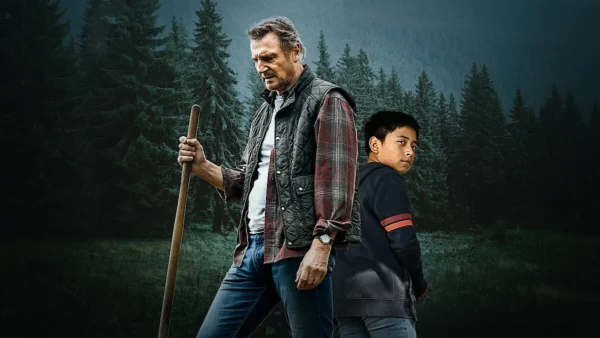
Jim’s death is not a twist, but a conclusion.
The entire film hints that Jim sees himself as broken. He lost his wife. He lost his land and lost the life he once understood. Protecting Miguel becomes a way for him to reclaim the part of himself that was lost in grief, the part that still believed he was useful, honorable, and capable.
He wasn’t just saving Miguel. He was saving the part of himself he thought had died.
By choosing Miguel over survival, Jim chooses meaning over existence. And that is what makes The Marksman ending feel final, emotional, and strangely hopeful.
A Boy Moves Forward
While Jim’s journey ends, Miguel’s life opens up. That contrast is what gives the ending of The Marksman its weight. Miguel isn’t defined by the violence he survived; he’s redirected by it. Jim’s sacrifice gives him the chance to be safe again, to grow up with family, and to reclaim a childhood that danger kept stealing from him. He carries the memory but not the burden.
It isn’t a dark ending, it’s a Western-style bittersweet one. The old hero doesn’t ride off into glory; he fades out quietly, knowing the world is better for the boy he protected. And in that quiet passing, the story becomes brighter for the one who still gets to live it.
What The Marksman Ending Really Means
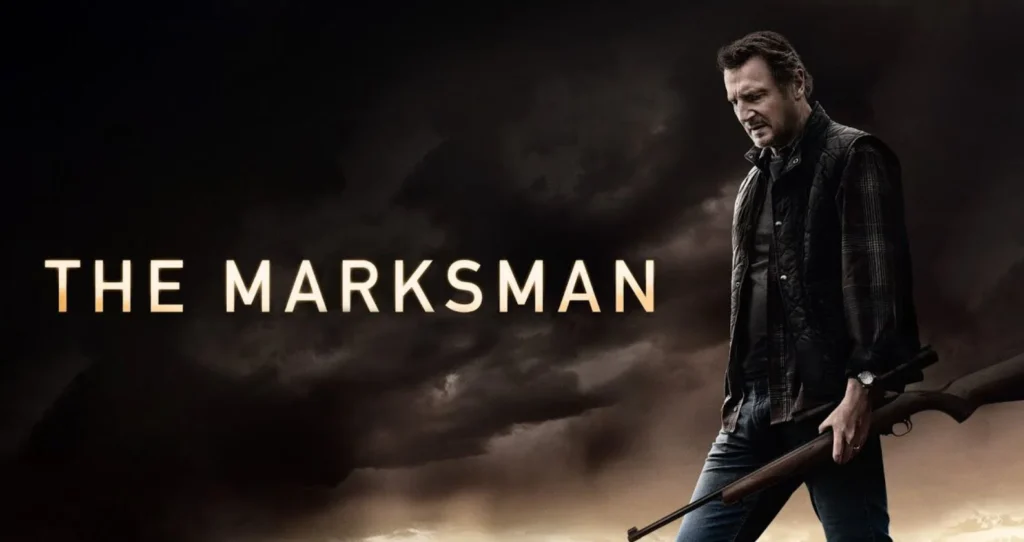
The final message of the film is simple, but powerful. Redemption doesn’t always look like survival; sometimes it looks like a sacrifice. Jim Hanson’s story closes when it began, in quiet loneliness, but this time, he leaves behind something really meaningful. Miguel’s survival is proof that Jim’s life still mattered, even when he believed it didn’t.
Jim dies in peace. Miguel walks away with hope. And that balance is what gives The Marksman ending its emotional punch.
Final Thoughts on The Marksman Ending
The Marksman ending is the kind of finale that stays with you long after the credits. Not because of the gunfight. Not because of the death. But because it is a rare action movie ending that chooses honesty over spectacle.
Jim doesn’t get a miracle. Miguel doesn’t get a perfect future. But both get something real. As Jim finds redemption, Miguel finds safety. And the story finds a way to honor both without cheapening either.
It’s a modern Western ending with a classic soul, tragic, tender, and exactly right for the story it tells.
More Endings Worth Decoding
- The Old Guard 2 Ending Explained: Immortality, Betrayal, and That Massive Helicopter Escape!
- Eenie Meanie Ending Explained: Love, Loyalty, and a Bullet in the Heart
- A Lot of Nothing Ending Explained: When Doing The Right Thing Goes Horribly Wrong
Frequently Asked Questions
1. Does Jim die at the end of The Marksman?
Yes. Jim succumbs to his injuries after ensuring Miguel reaches safety. His death completes his redemption arc.
2. Why was Mauricio chasing Miguel?
Miguel witnessed cartel violence and became a target. Mauricio’s mission was to eliminate loose ends, including Miguel.
3. Why does Jim help Miguel?
Jim promised Miguel’s dying mother he would protect him. It becomes a moral obligation that gives Jim a renewed sense of purpose.
4. Does Miguel get a happy ending?
Miguel reaches family safely, giving him a chance for a better life. It’s bittersweet, but hopeful.