Some finales slam to a halt; this one dims like sunset over a porch, steeped in color and ache. David Fincher’s The Curious Case of Benjamin Button is a lush, melancholy fable that treats time as a trickster and love as the one steady constant. What makes The Curious Case of Benjamin Button ending endure isn’t a gotcha twist but a hushed inevitability: a life moving backward finding a truth that points forward.
The tone mixes period romance with a meditation on mortality, with New Orleans brass, storm sirens, the hush of hospital corridors. The film doesn’t beg to be decoded like a puzzle; it asks you to notice its pattern. Its final stretch lowers the sound and raises the meaning. If you’ve come for The Curious Case of Benjamin Button ending, you’ve really come for a soft landing executed with exacting grace.
⚠️Spoiler Warning! If you haven’t seen this amazing movie, go back and watch it. Time runs both backward and forward from here on!
Quick Premise Refresher
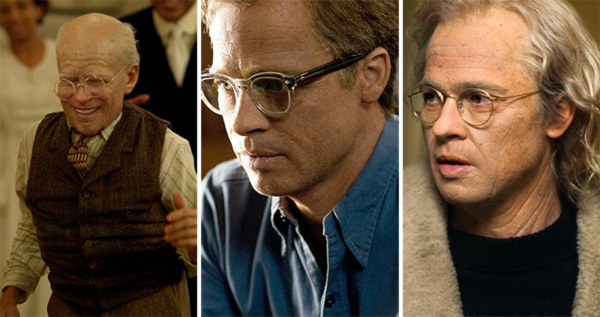
The story is based in New Orleans, from the early 20th century to post-Katrina. Benjamin Button (Brad Pitt) is born old and ages in reverse. Daisy (Cate Blanchett), a dancer, moves in a straight line through time. Their lives keep brushing past each other at different speeds, always trying to meet in the middle.
Surrounding them:
- Queenie (Taraji P. Henson), the caretaker who raises Benjamin with warmth and conviction.
- Thomas Button (Jason Flemyng), Benjamin’s father, who abandons him and later reappears.
- Elizabeth Abbott (Tilda Swinton), a fleeting love who shows him longing.
- And in 2005, an elderly Daisy asking her daughter Caroline (Julia Ormond) to read Benjamin’s diary aloud as Hurricane Katrina approaches.
The story becomes a love affair interlaced with a storm report and a ledger of time’s strange arithmetic.
The Curious Case of Benjamin Button Ending- What Really Happens
Here, the film stops ornament and plays straight: a diary, a storm, and a circle closing. The ending of The Curious Case of Benjamin Button unfolds in three clean movements; the pages Benjamin leaves behind, the place he drifts back to, and the goodbye Daisy chooses to make gentle.
Watch how the objects do the talking: ink thinning to fragments, the nursing home’s worn halls, a stubborn clock underwater. Together they turn a fantasy about time into a plain account of care.
- The Last Pages: Caroline reads Benjamin’s diary as he recounts leaving Daisy and their baby, knowing his reverse aging will eventually make him dependent. His writing shrinks from full sentences to fragmented notes as his memory dissolves.
- The Return: Daisy later finds Benjamin back where he started, at the nursing home, now a boy with vacant eyes. She takes him in, cares for him, reads to him, dresses him, until he forgets even how to stand.
- The Quiet Goodbye: The final image shows Daisy cradling Benjamin, now an infant, in her arms. He flickers with one last recognition before dying. Back in the hospital, Daisy exhales her last as the storm rages. Caroline, shaken by the love story she has inherited, looks out at the flooded city. Underwater, the old clock that once ran backward still ticks stubbornly, as if grief itself could bend fate.
The ending isn’t a twist. It’s a benediction.
Also, read Heretic Ending Explained: Faith, Fear and One Seriously Twisted Garden
The Curious Case Of Benjamin Button Ending – Interpretations
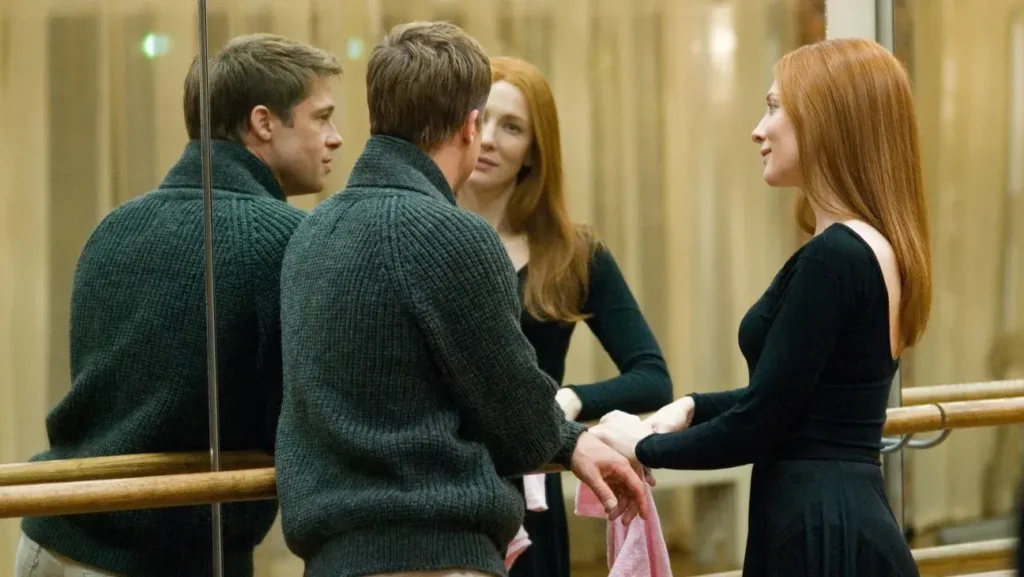
Before the big ideas, keep three simple images in mind: the fading diary, Daisy caring for a child who was her lover, and the backward clock. Seen through those, the ending of The Curious Case Of Benjamin Button breaks into four clear reads. Read on, one lens at a time.
1. Love is Timing—and Caregiving
They align only briefly; the rest is misaligned time and chosen duty. Daisy’s final act shows love as care across change, not fireworks.
2. Memory as Identity
Benjamin’s mind erases itself, but his body still recognizes Daisy. Selfhood, the film argues, is stored in gestures as much as in memory.
3. The Clockmaker’s Prayer
The backward clock is grief made mechanical, a futile wish to undo loss. Even when clock runs backward, time insists forward.
4. Ordinary Life, Extraordinary Frame
Strip away the fantasy and it’s the most common story: two people fall in love, meet in the middle, part, and die. The magic is just a lens that makes those ordinary beats shine.
Where Do They End Up?
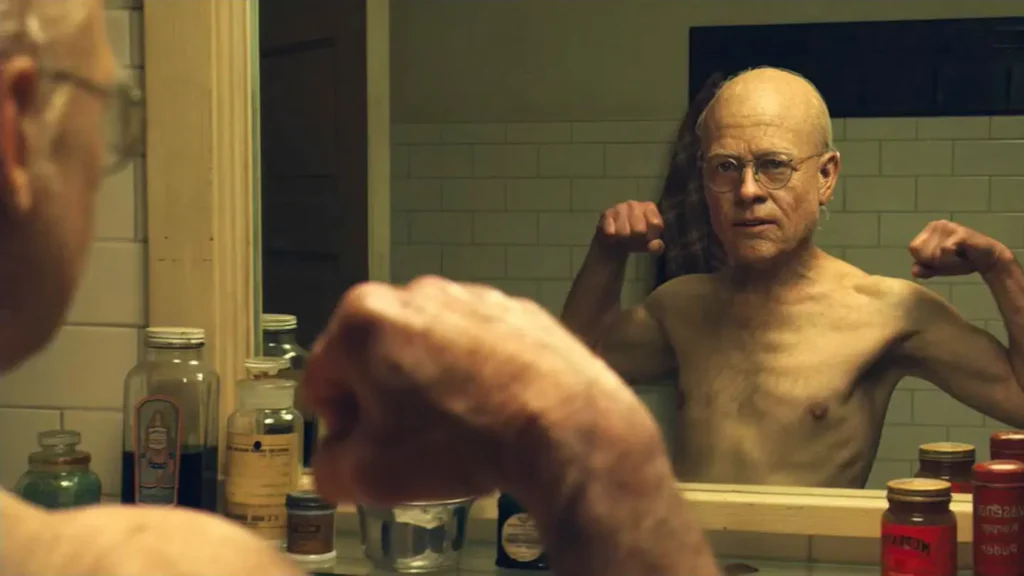
Benjamin dies as an infant in Daisy’s arms with all his memory gone, but loved to the last breath; Daisy follows years later in a New Orleans hospital as Katrina bears down, finding closure through the caregiving that defined her final chapter. Caroline discovers her true parentage and, through the diary, becomes a witness to a love that’s flawed and real rather than tidy. Queenie, sets the template for tenderness that Daisy later fulfills, turning a life into a long act of care. Thomas Button reaches for late redemption, but confession can’t rewrite a selfish past.
Also, read Inception Ending Explained: Welcome to The Ultimate Mind-Bender
Closing Thoughts
The ending is like a thesis on mortality: even reversed, a life still ends. What matters is presence. The Curious Case of Benjamin Button ending stays with us because it trades spectacle for witness Daisy holding Benjamin, Caroline holding the diary, and us holding the idea a moment longer.
The clockmaker’s parable circles back with its plain lesson: time won’t bend. Love is what you fit in the middle. The storm passes, the city stirs, and somewhere underwater, a backward clock keeps ticking. That’s us hoping, failing, caring anyway.
Frequently Asked Questions (FAQs)
1. Why does Benjamin leave Daisy and their daughter?
He knows his reverse aging will make him more dependent as time passes, eventually turning him into a child who can’t care for himself. By leaving, he hopes to spare Daisy and their daughter the burden of that decline, even though it breaks him to go.
2. Is Benjamin literally a baby when he dies?
Yes. Physically, in The Curious Case of Benjamin Button ending he regresses into an infant, and mentally he fades into near-infancy as well. Still, his last flicker of recognition toward Daisy shows that love can outlast memory, which makes the ending tender instead of bleak.
3. What’s the meaning of the backward clock?
Built by a grieving father who lost his son in war, the clock is a wish for time to reverse. Benjamin’s life tests that wish, but the ending shows time always moves forward. The clock’s final, submerged tick is grief’s refusal to give up, even when fate doesn’t bargain.