Not every horror starts with monsters. Sometimes it begins with comfort, routine, and the decision not to ask the questions. The Boy in the Striped Pajamas is that kind of film.
At first, the film feels almost disarmingly quiet — a child’s world, a new house, a fence that looks inconvenient rather than threatening. Through Bruno’s eyes, the world is still something to be explored and not feared. Adults never speak the full truth; rules appear without explanation, and somewhere beyond the backyard, something terrible exists without a name!
That innocence becomes the film’s sharpest weapon. Because while Bruno keeps asking questions, the grown-ups keep offering silence. What unfolds isn’t just a story about friendship or loss, it’s a slow dismantling of denial. By the time The Boy in the Striped Pajamas ending arrives, the film has stripped away every comforting illusion, leaving only the cost of looking away.
⚠️ Spoiler Alert: From this point on, we are discussing the ending of The Boy in the Striped Pajamas in full detail. If you haven’t watched the film yet, stop here. If you have, you already know where we are going.
A Story Built on Misunderstanding
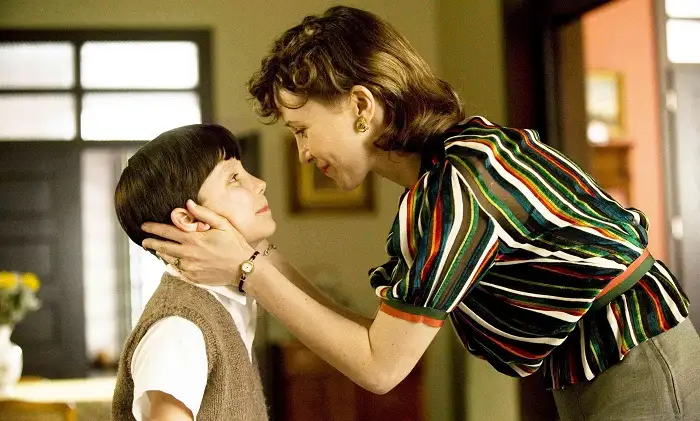
Bruno is an eight-year-old boy whose family moved from Berlin to the countryside. He believes this is happening because he is being punished for bad behavior. He doesn’t really understand titles, ranks, or politics. His father’s uniform means nothing beyond authority. His mother’s worry feels like background noise, and the massive fence behind their house? Just another inconvenience.
Bruno calls the camp “Out-With”. He calls prisoners’ uniforms “striped pajamas”. Here, language softens what reality cannot.
On the other side of the fence sits Shmuel, a boy the same age, wearing those pajamas for real. He is quieter, hungrier, and older in ways Bruno isn’t yet allowed to be. Their friendship grows in whispers and crumbs of food passed through wire. It feels pure. And that’s exactly why it’s dangerous.
Because the fence isn’t just physical. It’s moral.
The Lie Adults Tell Themselves
Every adult in the film knows more than Bruno, and every adult still chooses to do less. Bruno’s father runs the system while Bruno’s mother suspects that something is wrong but looks away. The soldiers obey the orders, and the people around them adjust.
Nobody steps in, and the machine keeps moving. The film doesn’t present this as evil, shouting its name. It shows evil doing its job, quietly, efficiently. And that’s what makes it so disturbing. The horror of The Boy in the Striped Pajamas ending isn’t a sudden shock. It’s the result of a routine carried out without question.
The Decision That Changes Everything
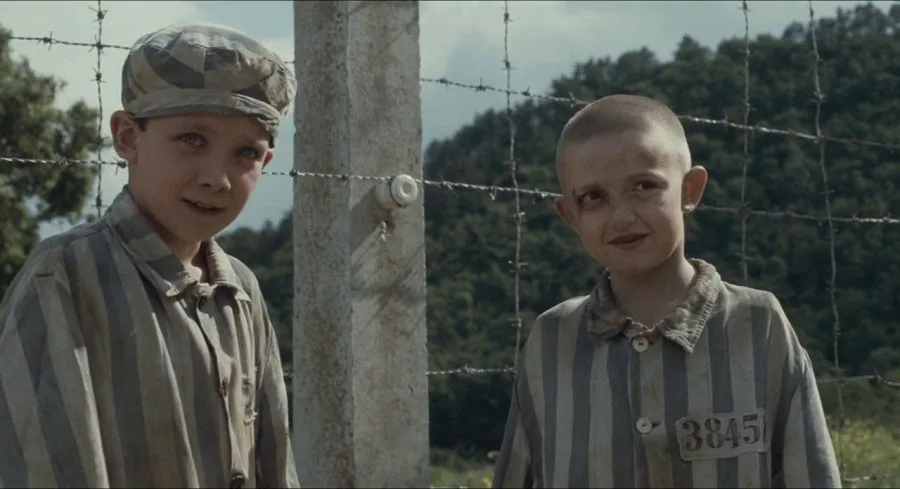
Shmuel’s father goes missing. Bruno, packing to return to Berlin, makes a promise that feels small at the time. One last adventure, one last game, one last act of loyalty before life returns to normal.
He shaves his head, steals a pair of striped pajamas, and crawls under the fence.
For the first time, Bruno steps into Shmuel’s world. And immediately, he understands that something is very wrong.
Mud replaces grass, fear replaces curiosity. Here, adults don’t explain things; they command. Bruno wants to leave almost instantly. But friendship, once chosen, becomes a responsibility.
So he stays.
Also, read The Rip Ending Explained: What the Final Beach Scene Really Means
Inside The Ending: When Innocence Meets the System
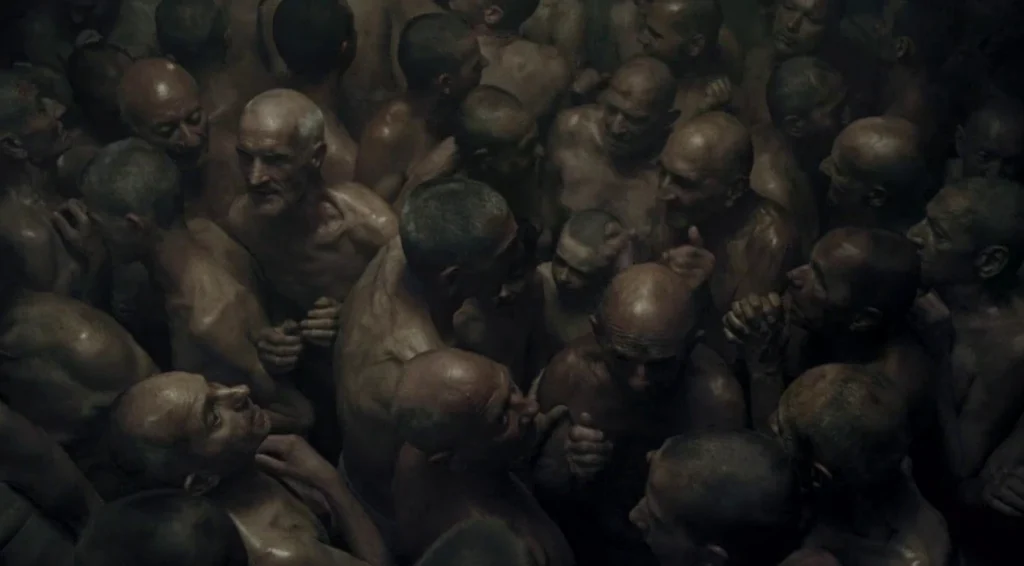
The boys are swept into a group and ordered to be herded forward with others. They’re pushed into a room and told it’s a shower.
Bruno doesn’t understand enough to be afraid. He does what he always does. He comforts Shmuel. He takes his hand. The camera stays tight on their face as the noise dulls, the space closes in, and the doors are shut.
Then comes the quiet. This is the ending of The Boy in the Striped Pajamas. No rescue, no last-second revelation, no mercy. Only a system completing its task.
Outside the chamber, the truth lands all at once. Bruno’s father knows instantly. His mother’s scream cuts through the air. The search ends because it was never a mystery.
By the fence, Bruno’s clothes lie folded neatly. The film doesn’t linger; it doesn’t need to.
What The Boy in the Striped Pajamas Ending Really Means
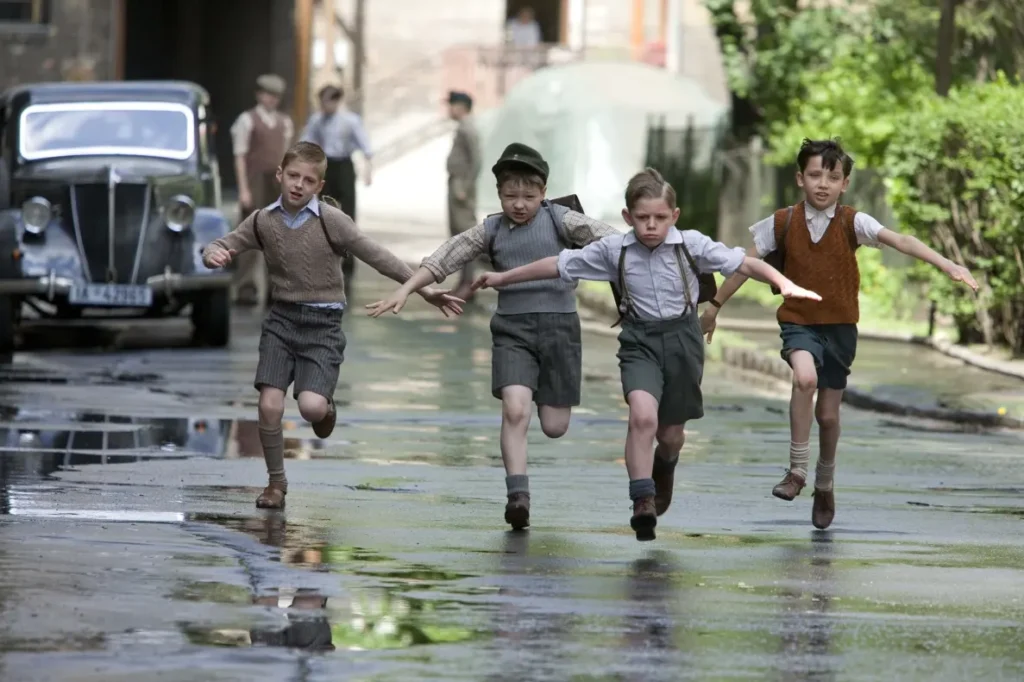
The film’s final moments don’t exist to shock. They exist to strip away every comforting excuse the story has quietly allowed until now. Once the ending lands, there’s no hiding behind childhood innocence, parental authority, or ignorance. Everything the film has been circling comes into sharp, devastating focus.
Innocence is Not Protection
Bruno’s goodness doesn’t save him. His ignorance doesn’t shield him. The ending makes one brutal point clear: morality means nothing inside a machine built to erase humanity. The system doesn’t pause to ask who deserves mercy. It only functions.
Irony is the Weapon
The commandant’s son dies the same way as the prisoners his father oversaw. This isn’t justice. Its exposure. The Boy in the Stripe Pajamas ending forces the horror back onto the people who believed they were safely outside it. Once you are inside the system, status disappears, names disappear, and power disappears.
Friendship was Always Real
Bruno and Shmuel’s bond isn’t naive or foolish. It’s the most truthful thing in the film. Their friendship exists without ideology, without uniforms, without lies. And that simple human connection outlasts the very system designed to destroy it.
Why The Ending Still Hurts
There is no villain monologue. No punishment scene. No moral bow tied neatly at the end. The Boy in the Striped Pajamas ending works because it refuses comfort. It denies the audience emotional distance. You don’t get to feel clever or relieved. You only get to feel implicated.
The tragedy doesn’t feel cinematic. It feels inevitable. And inevitability is the scariest word in history.
The Controversy Around The Boy in the Striped Pajamas Ending
The film has been criticized for historical inaccuracies. Children like Bruno were unlikely to enter camps unnoticed. Holocaust educators argue the story risks centering German suffering. These critiques matter.
But the emotional truth still lands. The film isn’t a documentary. It’s a warning. A parable about what happens when empathy is delayed until it’s too late.
Final Thoughts on The Boy in the Striped Pajamas Ending
The ending of The Boy in the Striped Pajamas doesn’t ask you to understand history. It asks you to understand the cost of ignoring it.
The ending isn’t meant to shock. It’s meant to haunt. Long after the screen goes dark, the image that remains isn’t violence; it’s two small hands holding on in a room that was never meant for children.
That’s why The Boy in the Striped Pajamas ending endures. Because it doesn’t scream. It remembers.
- Jojo Rabbit Ending Explained: Healing Through Humor And Heartbreak
- Der Tiger Ending Explained: War, Guilt, and the Tank That Never Escapes
- ‘Outrageous’ Ending Explained: When Loyalty, Love, and Politics Explode
Frequently Asked Questions
1. Why does Bruno die in The Boy in the Striped Pajamas ending?
Bruno dies because the system he lived beside does not recognize innocence. Once inside the camp, his identity no longer matters.
2. Did Bruno understand what was happening?
Not fully. Bruno senses fear but doesn’t grasp death. That confusion makes the ending more devastating.
3. Is the ending historically accurate?
The specific scenario is unlikely, but the atrocities depicted are real. The ending is symbolic rather than literal.
4. What is the message of The Boy in the Striped Pajamas ending?
That silence enables evil. And waiting to act is often the same as choosing not to.