Fire doesn’t ask who’s right. It only asks who’s left standing. The Abandons understands this better than most modern Westerns. It doesn’t deal in clean victories or heroic send-offs. It deals in land disputes that turn personal, power that hardens into cruelty, and women who refuse to disappear just because history expects them to. From its opening episodes, the series makes one thing absolutely clear: this frontier is not about taming the wild. It’s about surviving each other.
By the time the story reaches its final chapter, every promise of peace has rotted, alliances are brittle, blood has been spilled, and the idea of “progress” has become a threat rather than a future.
The Abandons ending doesn’t offer closure. It offers a reckoning — one shaped by fire, motherhood, and a single image that refuses to explain itself.
⚠️Spoiler Alert: The following article breaks down the ending of The Abandons, including the final confrontation, the fire, and the silhouette that has already split the internet in half. If you haven’t watched the finale yet, now’s the time to ride off into the sunset. If you stay, don’t expect mercy because this frontier has none.
The Road to Ruin: How Everything Catches Fire
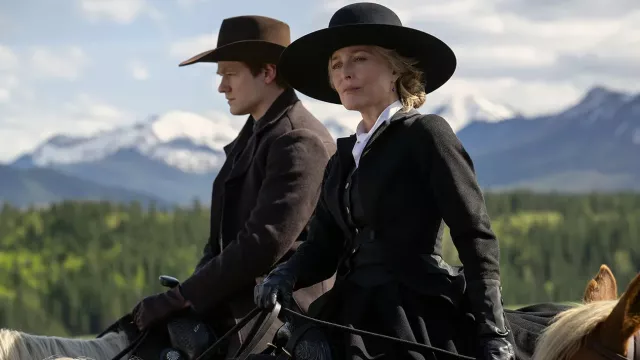
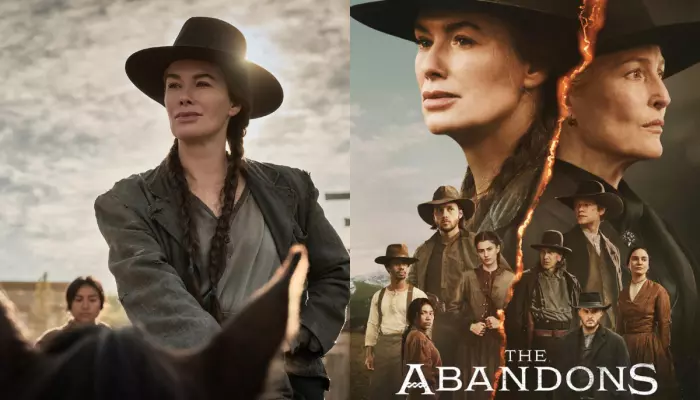
At the core, The Abandons is a class war wearing a Western coat. Fiona Nolan (Lena Headey) leads the “Abandons”, a rough, stubborn community of immigrants, outcasts, and people the system already gave up on. They live in the Hollow. They farm the land no one wanted. And they refuse to disappear quietly.
Standing in their way is Constance Van Ness (Gillian Anderson), railroad royalty wrapped in silk and steel. Her empire wants land, tracks, control, and she’s more than willing to break bodies to get it.
The breaking point comes early, and it’s personal. Constance’s son, Willem, assaults Fiona’s daughter, Dahlia. The Nolans kill him. They hide the body. And from that moment on, The Abandons stops being about property lines and is all about vengeance.
Constance does not want justice anymore; she wants eradication.
Enter the Red Masks. Enter kidnappings, betrayals, and a slow collapse of everything that once felt stable. By the time the finale begins, no one is clean. Not Fiona. Not Constance. Not the land itself.
The Kidnapping That Forces the Final Move
The trap is cruel and effective. Constance’s men kidnap Dahlia not as leverage, but as bait.
Fiona is told to surrender the ranch, alone. No weapons, no theatrics, just a mother choosing between her land and her child. She complies and drops her rifle, walks into the enemy territory with her spine straight and her heart in her throat.
What follows is less of a negotiation and more verbal warfare. Every insult cuts deep, every accusation lands. These women don’t speak like villains; they speak like people who have already decided the other is irredeemable.
And then the Abdandons strike back. Flaming wagons crash through the Van Ness estate. Red Masks scatter. There’s gunfire, chaos, and screams. The power imbalance finally tilts. And in the middle of all of it, Fiona runs into the fire.
The Inferno: Fiona vs. Constance
This is the heart of The Abandons ending. Inside the burning manor, Fiona and Constance collide. No speeches, no slow-motion heroics. Just fists, smoke, broken furniture, and two women who have lost too much to stop now.
It’s ugly, desperate, and intimate. They choke each other, slam into walls, collapse, rise and fall again.
Neither looks victorious, neither looks finished. And then the show cuts. We don’t see a death. All we see is a silhouette. A woman stumbles out of the flames, injured, burning behind her. Identity is deliberately obscured. Is it Fiona? Is it Constance? The Abandons ending refuses to tell you.
Also, read The Buccaneers Season 2 Ending Explained: Balls, Betrayals, and the Art of Losing Everything in Lace
What Actually Ends and What Doesn’t
Here’s what is clear. The Van Ness estate is gone, burned, and reduced to cinders. The railroad empire fractures. Heirs turn on each other. The Red Masks lose their grip. The Hollow still stands.
Material power collapses while the emotional war does not. Nobody is confirmed, no grave is shown, and that’s not an accident. The ending isn’t asking who won, it’s asking what survival costs.
If Fiona lives, she becomes something closer to myth than leader. If Constance lives, she becomes obsession without infrastructure. Either way, the feud doesn’t end. It mutates.
What The Abandons Ending Really Means
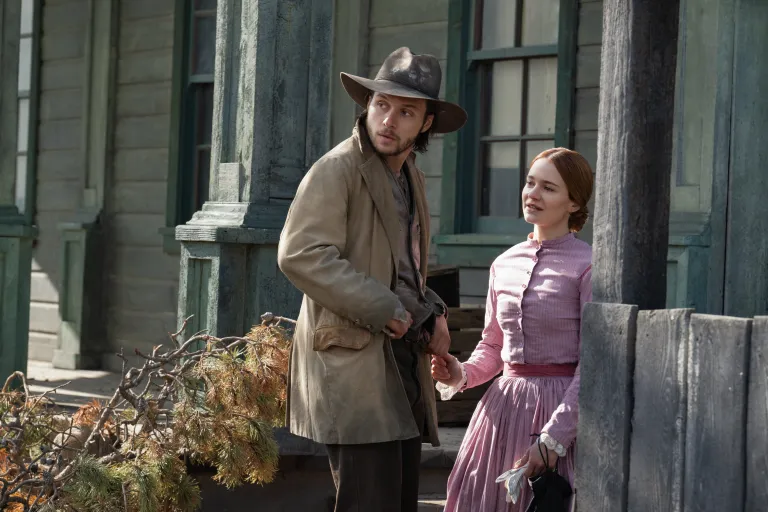
The genius of The Abandons ending is that it does not give you closure. This is not a story about justice being served; it’s about cycles continuing
Mothers as Weapons
Fiona and Constance are mirrors. Both act in the name of children, both justify cruelty as protection. The show never crowns one as morally superior. It lets their choices speak.
Progress as Violence
Railroads, expansion, and civilization all dress up as inevitability. The ending burns that lie to the ground. Progress here isn’t neutral; it’s predatory.
Survival isn’t Victory
Walking out of fire doesn’t mean you’ve won. It just means you weren’t finished burning. That silhouette isn’t hope. It’s more of a warning!
Why The Abandons Ending Works, Even If It Hurts
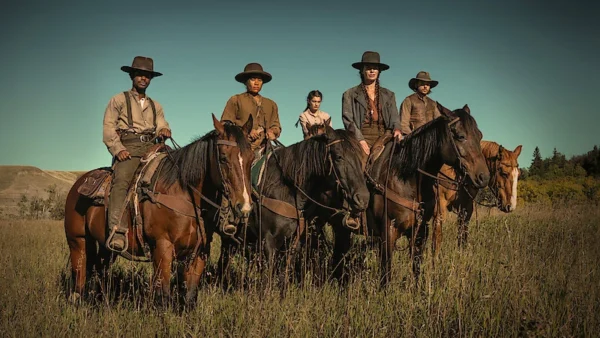
The Abandons ending lands because it does not soothe after the chaos.
There’s no courtroom justice, no heroic sacrifice framed as noble. No final speech explaining the lesson.
Just smoke, loss, and unfinished business. It understands something most Westerners forget — history doesn’t resolve itself neatly. It limps forward, scarred, dragging the past behind it.
And that final image with one woman walking away while everything else collapses, it stays with you because it refuses to explain itself. The West didn’t end. It just learned how to hide its wounds better.
Also, read House of Guinness Ending Explained: Power, Passion, and One Perfectly Timed Gunshot
Final Thoughts on The Abandons Series Ending
The Abandons doesn’t end with peace. It ends with survival and the uncomfortable knowledge that survival is not the same thing!
The Abandons ending trusts its audience enough to sit with ambiguity, to argue, to disagree, to replay the final seconds again and again, looking for answers that were actually never meant to be handed out.
In this world, land is temporary, power is fragile, and fire remembers everyone. The only real question left isn’t who walked out of the flames. It’s who’s still willing to chase them!
Frequently Asked Questions
1. Who survives the fire in The Abandons ending?
The series deliberately avoids confirming it. The final shot shows a single, injured silhouette escaping the burning Van Ness estate, but the identity is left ambiguous. It could be Fiona or Constance, and that uncertainty is the point.
2. Did Fiona kill Constance in The Abandons ending?
The show never confirms Constance’s death. Their fight ends off-screen, and nobody is shown. By refusing closure, The Abandons ending mirrors the endless nature of vengeance rather than offering a clean victory.
3. What happens to the Van Ness empire after the finale?
Even without a confirmed death, the Van Ness power structure collapses. The estate burns, the Red Masks scatter, and family loyalties fracture. Wealth survives, but authority does not.
4. What does the final silhouette symbolize?
The silhouette represents unresolved conflict. Whether it’s Fiona or Constance, The Abandons ending suggests that survival doesn’t equal peace. Someone walks away, but the war doesn’t end.