Opus doesn’t play fair and that’s the point. It starts like a luxe nightmare with a rookie reporter drawn into a recluse’s candlelit lair, the charm just thin varnish over rot. Then it flips the table. By the credits, you’re not chasing a killer, you’re watching the showrunner reveal the set list and the crowd queue for merchandise.
The Opus ending pulls the real trick: the massacre was staged, the cult was cast, and the “survivor” was the broadcast channel. Ariel’s escape is the marketing rollout; her bestseller turns fringe dogma into prime-time gospel. The prison interview isn’t closure, it’s a curtain call, Moretti tipping his hand while a TV host’s two pearl necklace whispers that the Levelists never left. The final wink stings: fame can scrub anything clean and the sharpest weapon isn’t a gun, it’s a story with perfect lighting.
⚠️ Spoiler Alert: This goes deep into the last act and the final stinger. If you haven’t seen it yet, save this for after the end credits and maybe after a deep breath.
A Love Letter to the Spotlight (Signed in Blood)

Ariel Ecton (Ayo Edebiri) heads to the remote estate of Alfred Moretti (John Malkovich), a retired stage king who can still bend the spotlight his way. She’s quick witted, driven and chasing the kind of story that could put her name on the map. Around him, the “Levelists” hover like flickering candlelight, warm at first glance, but with a heat that feels just a little too close to the skin. Dinner isn’t just a meal, it’s equal parts intimate salon, eerie séance and perfectly times stagecraft, every glance and gesture landing exactly where he wants it.
Then the performance curdles. By dawn, five journalists are dead, Ariel is the lone survivor and Moretti is immortalized as a cult leader whose disciples would die for his gospel. At least, that’s the story everyone’s ready to print.
The Night of the “Final Performance”
Ariel freezes as the glasses go up, crystal catching the light like a celebration, only the toast tastes like doom. In perfect sync, Moretti’s devotees tip back their “champagne”, their faces are serene and movements are rehearsed. One leans in and whispers the way out and Ariel runs. By the time the cops reach and flood the mansion. Moretti is seen at the piano, hands resting on the keys, wearing a look that’s half exhale and half final bow. His flock? They are all gone. The headlines scream massacre, then hedge with question marks.
For Ariel, the nightmare becomes a launchpad. She turns the whole chaos into a page-turner, does a whole talk show on it under the studio lights and is suddenly branded the one who made it out and is the survivor with the story everyone wants to hear.
Two Years Later: Fame, With a Catch

Ariel returns to Moretti for a prison interview, like the victory lap, the final bow, the “closure”. He slips her the key that unlocks her victory.
The Levelists didn’t really die. All the suicides were staged. The escape was all deliberate. And Ariel? She wasn’t chosen as a victim. She was really cast as a messenger. The Opus ending reveals that the real opus wasn’t an album or the massacre, it was a narrative. A meticulously staged event designed to smuggle the Levelist idea into living rooms and minds via the most trusted route which was a credible survivor with a bestselling book.
Moretti’s voice drops to a whisper: she did beautifully.
Also, read Joker 2 Ending Explained: The Joke’s on All of Us
The Necklace You Can’t Unsee
Live on air, Ariel spots the host’s necklace with two neat pearls, which was the Levelists sigil hiding in plain sight. Her stomach drops. If the emblem made it to daytime TV, the cult didn’t die, it learned to smile for the cameras. In a flash she understands that the story she sold didn’t sanitize the wound, it gave the infection a platform. The Opus ending leaves Ariel and us in shock and realizing that she didn’t expose the cult, she expanded its audience.
What The Opus Ending is Really Saying
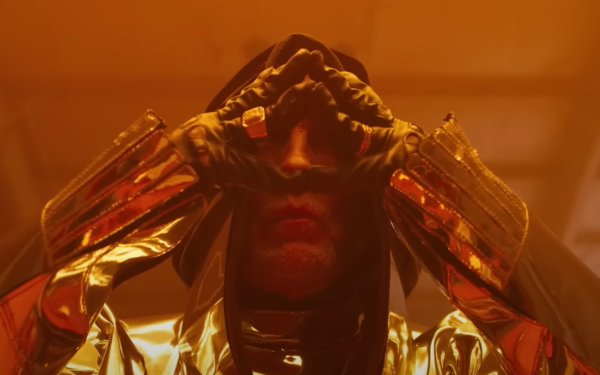
Let’s just discuss what the Opus ending is really telling us all:
Fandom as faith: Moretti’s followers aren’t casual admirers, they’re congregations. Opus traces the razor-thin line between devotion and radicalization and how charisma, when choreographed, can turn a fan club into a movement.
Ambition as an open door: Ariel isn’t a villain, she’s a person who’s chasing the byline that could change her life. The cruelty of the film is how it weaponizes that hunger, making her the perfect mouthpiece for a dangerous creed. The Opus ending doesn’t damn her but it warns us.
The quietest cults wear suits: They don’t chant in robes, rather they smile from morning show couches, talking about “elevating voices”. The pearls are a sly nod: influence moves fastest when it looks ordinary.
The performance is the product: Moretti’s “opus” is like a PR machine where you can stage the horror, plant the myth, crown a spokesperson and let the audience do the rest. It’s a satire on the scandal economy, with outrage as content and content as brand.
Truth vs. Reach: Ariel has facts, scars and the moral high ground. The Levelists have a symbol, a story and time. In a culture where virality outspaces truth, you already know who wins!
Also, read Wall to Wall Ending Explained: Noise, Neighbors and the Price of a Dream
Final Thoughts: The Aftertaste of Applause
Opus lures you with a house of horrors and finishes by holding up a mirror. The ending isn’t a puzzle, it’s a warning label. Can we tell the difference between exposing a cult and marketing one or do we prefer the version that sells? Ariel’s “win” cuts both ways with fame, a book tour and a mic blasting the very creed she tried to silence.
The cameras don’t sanitize, they turn up the volume. Viewers become shoppers, symbols turn into accessories and danger perfect its on air grin. Yes, the bodies fell. Yes, the book blew up. And somewhere under the studio lights, a movement hit its mark, practiced its grin and stepped even closer to the spotlight!
Frequently Asked Questions (FAQs)
1. Are the Levelists actually dead?
No. The “mass suicide” is staged. The cult goes to ground and blends into public life, the two-pearl necklace is the quiet tell.
2. Was Alfred Moretti really arrested?
Yes. The police raid and Moretti’s arrest are real. The fake part of the spectacle around the “deaths”, designed to seed a bigger story.
3. What is Moretti’s real “opus”?
A campaign. He engineers a blood-soaked performance to turn Ariel into the perfect messenger and spread Levelist ideology.
4. Is Ariel complicit?
Not on purpose. She survives, writes a book and becomes the face of the story, only to realize her success amplifies the cult’s signal.