Very few movie endings land as hard as Oldboy’s final scene. Park Chan-wook’s 2003 masterpiece does not just wrap up with a surprise, the whole sequence leaves you gasping, maybe even laughing nervously, at its sheer audacity. Even now, it stands as one of the most shocking endings in film history, more so not because of the bloody exposés but because of the sickening vagueness it is left with.
The Oldboy ending is more than a shocking twist. It’s a tangled mix of revenge, guilt, identity and the blurry line between memory and delusion. And while it may repel you to the very core, it’s that very trait that makes Oldboy a classic: the story denies you simple closure. It ensnares you in the very same moral quicksand that Oh Dae-su is in.
The Grand Reveal: A Revenge That Cut More Deeply Than Death
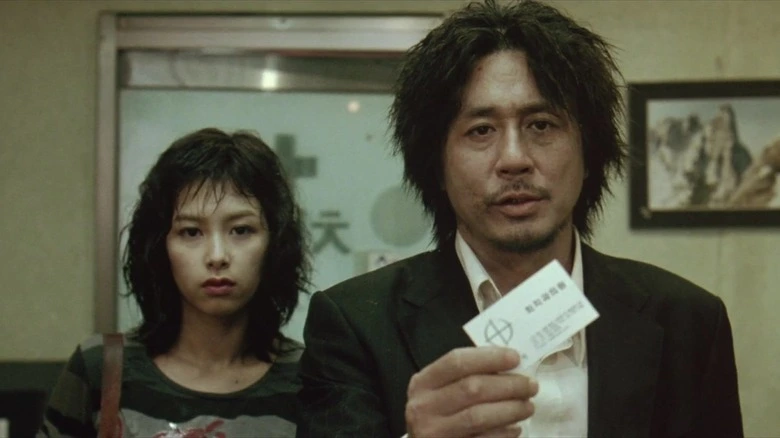
The first gut-punch of the Oldboy ending is the reveal of Woo-jin’s master plan. Oh Dae-su has been imprisoned in a secret cell for 15 years without reason before he is abruptly released one morning without warning. The why eats at him until he searches out Lee Woo-jin, his tormentor.
And then the bomb drops.
Mi-do, the woman Dae-su has come to love in the pursuit of his story, the woman of his life, the provider of hope, is none other than his daughter. Totally controlled by Woo-jin, the relationship between the two is no chance encounter. The villain has masterfully led Dae-su into an incestuous relationship as the ultimate revenge.
Why? Years ago, when Dae-su was a teenager, he had rumor-mongered to have seen Woo-jin with his sister, Soo-ah. That heedless rumor circulated and embarrassed Woo-jin and Soo-ah, and finally drove her to take her own life. Woo-jin has harbored that pain with him ever since, looking forward to the day that he would break Dae-su in the same unspeakable shame. The ending of Oldboy reveals that Woo-jin’s revenge isn’t about killing, it’s about breaking Dae-su completely.
The Hypnotist: Memory and the Prison
When the horrible truth is told, Dae-su is destroyed. Telling the truth to Mi-do would destroy her. Keeping the secret destroys him. Desperate, he goes in search of the hypnotist that once assisted Woo-jin. He implores her to erase from his mind that he is the father of Mi-do, to take from him the intolerable knowledge and allow him to exist with her with no knowledge of it having taken place.
This is where the Oldboy ending veers into its most unsettling territory. The hypnotist instructs Dae-su to consider the section of himself that has the truth in the form of a “monster.” If that monster is killed, he might live in serenity forever. It is a mental bet to wipe out the memory or be killed by it.
The setup is for one of the cinema’s most ambiguous final shots.
The Last Scene: The Smile that Haunts Us
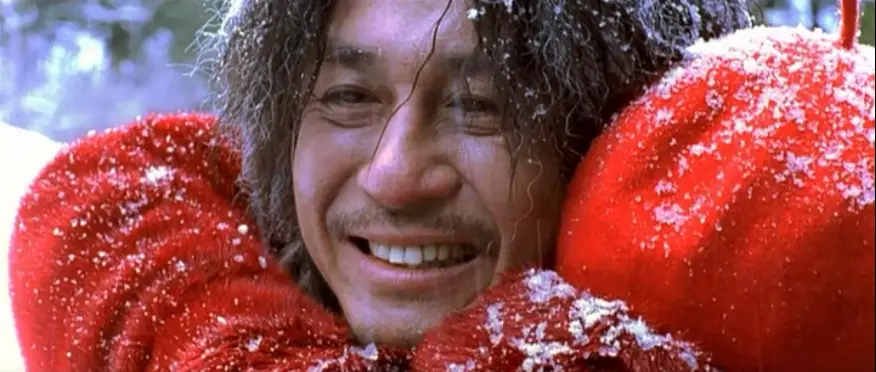
Oldboy’s final moments are both tender and terrifying. Dae-su embraces Mi-do in a winter wonderland scene. She is radiant with warmth and does not know the truth. He is holding her tight but his face betrays him: a flinch of intense agony first and then a smile flashing between relief and madness.
That shift from grimace to smile is what makes the ending of Oldboy unforgettable. The face is impossible to describe and that is the concept. Did the hypnosis work? Or is Dae-su forcing himself into denial? The indeterminacy carries the conclusion all the way into myth.
Also, read Wall to Wall Ending Explained: Noise, Neighbors and the Price of a Dream
What Does the Smile Mean?
The Oldboy ending begins and ends with a smile and fans usually interpret it in three very different ways:
1. The Hypnosis Failed
By this reading, Dae-su continues to know the truth. The hypnosis didn’t take or couldn’t repress something so horrific. The smile is a mask placed upon his face as he holds Mi-do tightly. He carries the knowledge with him under the guise of pretending for her benefit. The smile is then that of madness which is a frantic struggle to maintain the hold while being consumed from the inside out.
2. The Hypnosis Worked, but at a Cost
Or maybe the hypnosis took hold. Dae-su has erased from his consciousness that he is Mi-do’s father and silenced the “monster” inside. Perhaps his smile is genuine, the solace of oblivion. But it is a pyrrhic victory. He has chosen madness over sanity and condemned himself to a euphoric lie.
3. The Monster Survived
A more ominous explanation is that the “monster” in Dae-su is the surviving half of himself. The smile is not the result of madness or ignorance, the smile is a knowing one. He has come to terms with the monster in himself and has elected to live with the lie and sustain the relationship with Mi-do. Here, he is no longer the broken product of Woo-jin’s vendetta but something else: a man who knowingly embraces the unacceptable.
Revenge Without Winners
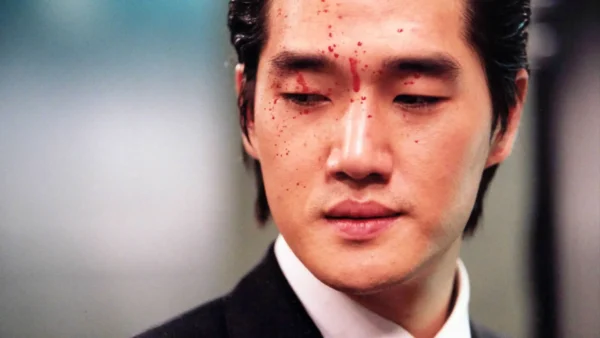
The real tragedy of Oldboy ending is that everyone loses.
Dae-su is devastated either way he does or does not remember. It is madness, delusion, or monstrosity. None of it brings tranquility.
Mi-do is left in the dark, convinced to love a person she never should’ve loved, her entire liberty constituted a falsehood.
Woo-jin “wins” because his revenge is done. But his victory is hollow. His life is still defined by the past, by grief for his sister, and by the obsessional thoughts that consumed him.
The ultimate message is chilling, in cycles of revenge, no one truly wins.
Why the Oldboy Ending Still Resonates
The Oldboy ending is effective not because of the surprise plot development but because it forces us to consider impossible questions. Would it really be happiness to live in a state of ignorance? Would you rather live a falsehood in order to escape a destructive truth? Can you achieve closure with retribution, or does it only breed monsters?
Park Chan-wook does not give us answers. Instead, he is left with one image burned into the mind: a man smiling in agony, a daughter in his arms, and a horror that is too terrible to describe.
It’s disturbing. It’s unforgettable. And it’s why Oldboy’s ending is still debated as one of the defining revenge film finales, even decades later.
Also, read As Above, So Below Ending Explained: What The Hell Just Happened
Final Thoughts
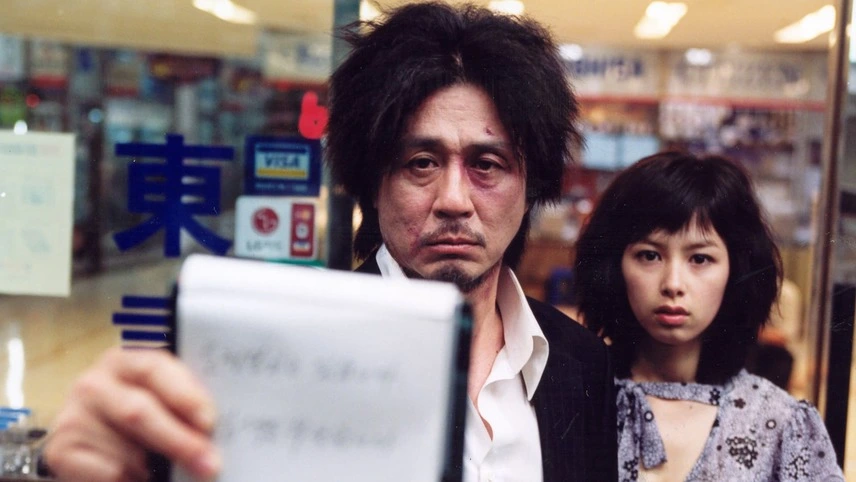
The ending of Oldboy isn’t meant to comfort you, it’s meant to disturb. Dae-su’s smile is a mirror tossed at the viewer and daring us to guess what we believe it symbolizes. Did he successfully defeat the monster within? Or is the monster all that is left?
What makes the conclusion endure is that it refuses to close the story neatly. Rather, it has us flipping pages in our minds long after the credits come up. It mirrors Dae-su himself, stuck between knowing and not knowing, between reality and illusion. That is the genius of Oldboy: in the film’s world, revenge is limitless, suffering is cyclical, and closure is a fantasy.
FAQs on the Oldboy Ending
1. What is the big surprise in the ending of Oldboy?
The astounding shock is that the woman Dae-su falls in love with is his daughter, Mi-do. Woo-jin orchestrated the relationship because it is the ultimate revenge in that it reproduces the humiliation that attended the disclosure of his incestuous affair to other individuals.
2. Why does Oh Dae-su see the hypnotist?
Dae-su is unable to tolerate the knowledge after finding out the truth. He searches for the hypnotist and implores her to delete his memory of being the father of Mi-do so that he might live with her without ruining her life.
3. What does the final smile symbolize in Oldboy?
The smile cannot be determined. It could mean the hypnosis did not work and Dae-su is forcing himself to live with the reality. It could mean the hypnosis worked and he has chosen to exist in blissful oblivion. It could also mean that the “monster” inside of him survived and he is knowingly living the lie.
4. Is the Oldboy conclusion successful for Lee Woo-jin?
Woo-jin manages to shatter Dae-su mentally but does not end up gaining in the long run. He is still consumed with sorrow and obsessiveness and realizes that revenge does not lead to peace but suffering.