The Coen brothers never like neat endings. No Country for Old Men proves that point with brutal confidence. This is not a film that rewards courage, intelligence, or even effort. It is a film that shrugs, tips its hat to chaos, and keeps walking. By the time the credits roll, viewers are left stunned, uneasy, and slightly angry. And that reaction is exactly the point.
The ending of No Country for Old Men does not give us a final showdown, a moral victory, or even closure. Instead, it quietly dismantles every expectation built by decades of crime films and Westerns. The hero does not win. The villain does not pay. And the lawman does not restore order. What we get instead is something colder and far more unsettling: a world where violence is random, morality feels outdated, and survival is no longer tied to merit.
To understand the No Country for Old Men ending, you have to stop looking for answers in gunfights and start listening to what the film is really saying about time, fate, and the exhaustion of goodness.
⚠️Spoiler Alert: Major story revelations and the film’s final moments are discussed below. If you haven’t seen No Country for Old Men and want to experience its unsettling ending firsthand, this is your cue to turn back.
The Death That Happens Offscreen and Why It Matters
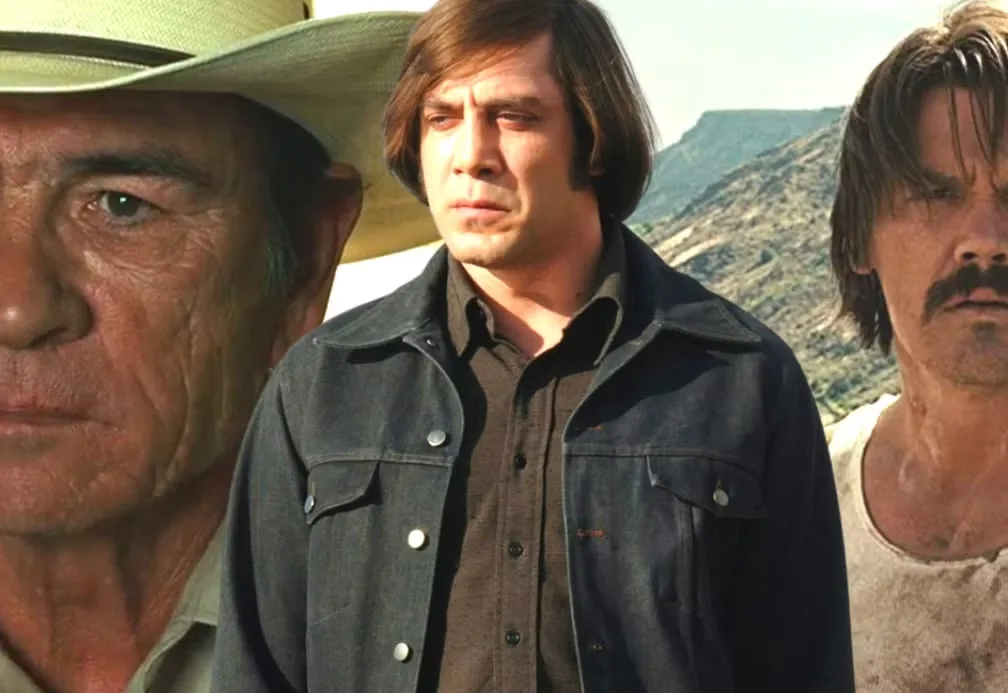
Llewelyn Moss feels like the protagonist. He finds the money. He makes clever moves. He survives longer than expected. Everything about the film trains us to believe his story will end in a face-off with Anton Chigurh. But the ending of No Country for Old Men shatters that illusion without ceremony.
Llewelyn is killed in a motel room by anonymous Mexican assassins. Not by Chigurh. Not by the law. Just erased. The murder happens offscreen. We learn about it the same way Sheriff Bell does: too late!
This choice is not accidental or lazy. It is the thesis of the film in action. The Coens strip away the romantic idea that stories revolve around central figures. In this world, chaos does not care who you are or how hard you try. Llewelyn does not lose because he is stupid. He loses because he exists in a system governed by randomness.
In No Country for Old Men, Llewelyn’s death reinforces a terrifying truth: survival is not proof of virtue, and death is not punishment. It is simply what happens.
Sheriff Bell’s Failure is the Real Climax
Sheriff Ed Tom Bell arrives at the motel moments after Llewelyn is killed. This moment is quiet. No music, no dramatic reaction. Just a tired man standing in a hallway, realizing he is no longer fast enough for the world he is meant to protect.
The No Country for Old Men ending is not about whether Bell catches Chigurh. It is about Bell realizing that he never could.
Bell represents an older moral framework. A belief that laws matter. That decency can contain violence. That evil can be identified and confronted. What he encounters instead is a kind of violence that feels alien to him. Chigurh is not greedy. He is not emotional. He is not even angry. He is an idea walking around with a cattle gun.
Bell’s failure is not tactical. It is philosophical. He cannot understand this new evil, and therefore, he cannot fight it. By the time he reaches the motel room, Bell already knows he is done. No Country for Old Men’s ending is the moment where the old sheriff quietly accepts that the badge no longer means what it used to.
Anton Chigurh and the Coin That Lies
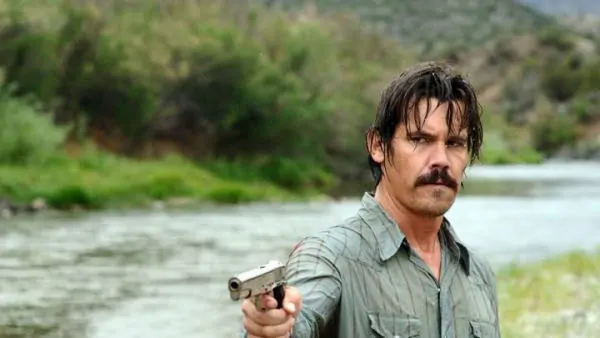
Anton Chigurh survives the film, and that alone makes the ending of No Country for Old Men feel deeply wrong. He kills without hesitation, explanation, or remorse. And he is never stopped.
After Llewelyn’s death, Chigurh tracks down Carla Jean Moss. This scene is one of the most chilling in the film. Carla Jean refuses to play his coin-flip game. She tells him the truth: the choice is his, not fate’s.
Her refusal exposes the lie at the heart of Chigurh’s philosophy. The coin is not destiny. It is an excuse. Chigurh wants to believe he is an instrument of fate, but he is simply a man choosing violence and outsourcing responsibility to chance.
The No Country for Old Men ending cuts away before we see Carla Jean’s death, but the implication is unmistakable. The sound design, Chigurh’s behaviour afterward. The silence. All of it points to the same conclusion. He kills her because his code demands it.
And then something strange happens.
Also, read On the Waterfront Ending Explained: Courage, Blood, and Redemption
The Car Accident That Changes Nothing
Shortly after killing Carla Jean, Chigurh is hit by a car in a random accident. His bone is shattered. Blood spills. For a moment, it feels like the universe might finally be intervening.
But No Country for Old Men refuses to give us satisfaction. Chigurh pays two boys for their shirts. He fashions a sling. And he walks away. The accident does not redeem him. It does not punish him. It simply proves that randomness applies to everyone. Even monsters bleed. But bleeding does not mean justice.
This moment reinforces the film’s bleak worldview. Evil is not defeated by fate. It is merely inconvenient. The ending of No Country for Old Men makes it clear that chaos does not correct itself. It just keeps moving.
Bell’s Retirement is Not Cowardice
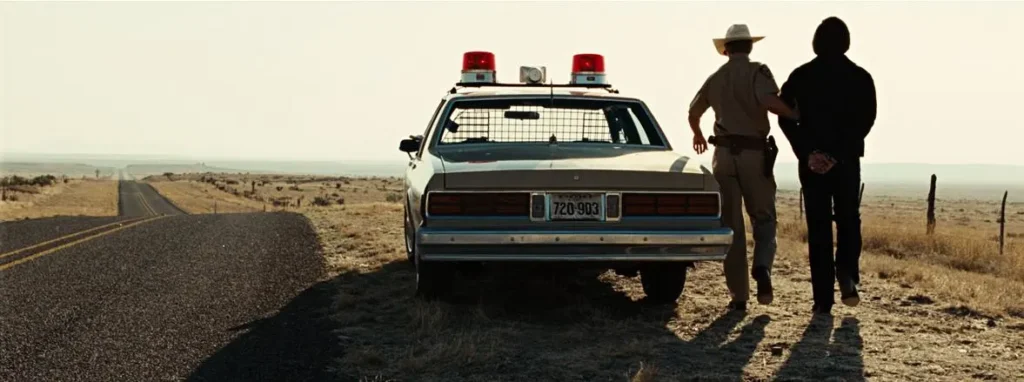
After everything he has seen, Bell retires. Not because he is afraid, but because he is tired in a way that sleep cannot fix.
The No Country for Old Men ending reframes retirement as surrender. Bell does not believe in order. Men who expect actions to have meaning. Men who assume good and evil will eventually balance out.
Bell steps aside not because he is weak, but because he understands something terrible. The world has changed faster than he can follow.
The Dream That Explains Everything
The final scene of the film is not violent. Bell tells his wife about two dreams he had about his father.
In the first dream, his father gives him money. In the second, his father rides ahead into the darkness carrying a light, preparing a fire for Bell to join later.
The father represents an older moral certainty. A time when evil could be confronted openly. When lawmen understood their enemies. When the fire of civilization burned close enough to feel warm.
In the second dream, the fire is far ahead. Bell cannot see it clearly. He is alone in the dark. The No Country for Old Men ending suggests that morality still exists, but it has moved beyond Bell’s reach. He is left waiting, unsure if he will ever catch up.
And then the film ends. No music, no resolution. Just plan silence.
What the No Country for Old Men Ending Really Says
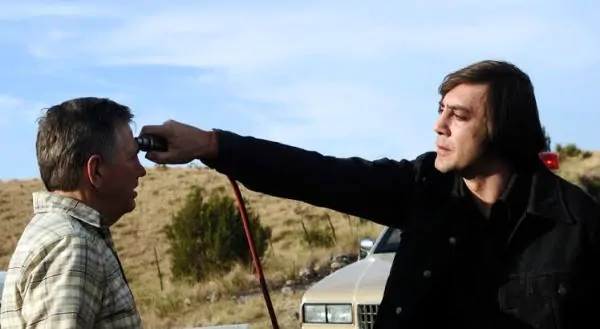
No Country for Old Men is not about pessimism. It is about honesty. The film argues that the world is not fair. That violence does not follow rules. That goodness does not guarantee survival. And that sometimes, the bravest thing a good person can do is admit they are no longer equipped for the fight.
Chigurh survives not because evil always wins, but because the systems designed to contain it are outdated. Bell retires not because he failed, but because he understands his limits.
The title is not an insult to age. It is a warning about nostalgia. About believing the past was simpler, cleaner, and more just, except it wasn’t. But it was easier to understand.
The No Country For Old Men ending leaves us with a world where meaning must be chosen, not enforced. Where morality exists quietly, like a fire in the distance, waiting for someone else to carry it forward.
Also, read American Psycho Ending Explained: Sanity, Sociopathy or Just Good Skin?
Final Thoughts on No Country for Old Men Ending
The No Country for Old Men ending refuses to comfort you. It does not reward attention or patience. It does not explain itself twice. It simply presents the truth and walks away.
Llewelyn dies without ceremony. Chigurh disappears without consequence. Bell retires without resolution. And the audience is left sitting in the dark, wondering whether the fire will ever feel close again.
This is not a story about winning or losing. It is a story about recognizing when the rules have changed. About understanding that come evils cannot be reasoned with. And about the quiet grief of realizing that the world you believed in no longer exists.
In the end, No Country for Old Men does not ask who survived.
It is asking who still understands the world they live in.
Frequently Asked Questions
1. Why does Llewelyn die offscreen in No Country for Old Men?
Because the film rejects traditional storytelling. His death emphasizes randomness and the idea that chaos does not honor narrative importance.
2. Does Anton Chigurh represent fate or evil?
He represents a twisted version of fate, but the film suggests this is a lie he tells himself to avoid responsibility for his choices.
3. Why does Sheriff Bell retire instead of continuing the fight?
Bell realizes the violence he faces is fundamentally different from what he understands. Retirement is his acknowledgment of moral and generational limits.
4. What is the meaning of Bell’s final dream in the No Country for Old Men ending?
The dream symbolizes the distance between old moral certainty and the present world. The light still exists, but Bell can no longer reach it.