Very few franchises carry as much cultural weight as Jurassic World does. Every return to dinosaurs comes with baggage. Fear, wonder, and the quiet knowledge that humans never learn the lesson the first time. Jurassic World Rebirth doesn’t try to outdo the past with nostalgia alone. Instead, it strips the story back to something more primal with survival, ethics, and consequences.
This time, the dinosaurs aren’t a theme park attraction or a global menace roaming suburbia. They’re concentrated, isolated, and weaponized by corporate ambition and medical desperation. Directed by Gareth Edwards, Jurassic World Rebirth feels leaner, meaner, and more reflective than its predecessors.
The film asks a deceptively simple question: if dinosaurs could save human lives, would we risk everything again? The Jurassic World Rebirth ending doesn’t shout the answers. It lets the dinosaurs do that for it.
⚠️Spoiler Alert: From this point on, we’re breaking down the Jurassic World Rebirth ending in full detail. If you haven’t seen the film yet, this is your last safe evacuation point. Proceed at your own risk.
The Mission That Sets Everything in Motion
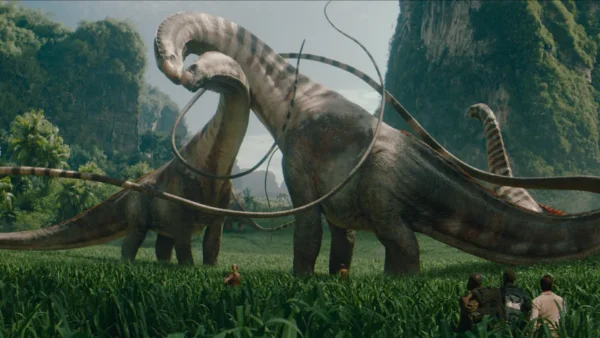
After the events of Jurassic World Dominion, dinosaurs no longer roam freely across the globe. Instead, they’ve migrated toward equatorial exclusion zones in unstable ecosystems that humans can barely control.
One such place is Île Saint-Hubert, a long-abandoned InGen research island. A pharmaceutical giant, ParkerGenix, believed dinosaur biomaterial from this island could unlock a breakthrough cure for heart disease. That belief launches the mission.
Leading the expedition is Zora Bennett (Scarlett Johansson), a no-nonsense operative with a complicated moral compass. Alongside her are paleontologist Henry Loomis, strategist Duncan Kincaid, and a rotating cast of specialists who slowly dwindle as the island reminds them who’s really in charge.
Halfway through the film, the mission collides with a shipwrecked civilian family, the Delgados, who are pulling the story away from pure science fiction and grounding it in human survival.
And then the island starts fighting back.
The Rise of Real Monster
The dinosaurs here aren’t just some resurrected animals. They’re mistakes.
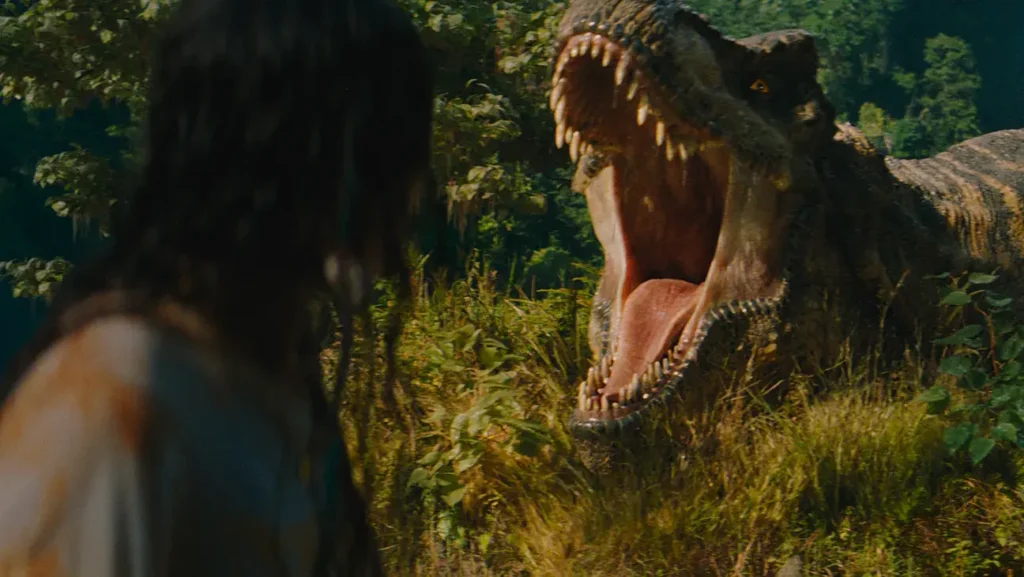
The most terrifying example is the Distortus Rex, often called the D-Rex by fans, a grotesque six-limbed mutation created during InGen’s abandoned experiments. This creature isn’t majestic. It’s wrong, and its presence hangs over the entire third act.
By the time the Jurassic World Rebirth ending approaches, it’s clear that nature isn’t punishing humanity. Human arrogance already did it.
Betrayal in the Final Act
As escape seems possible, corporate executive Martin Krebs reveals his true goal. He doesn’t care about survivors or safety. He wants the samples, all of them.
Martin steals the biomaterial, hijacks the escape plan, and attempts to leave the rest behind. It’s a familiar Jurassic sin, profit over people, but Rebirth gives it teeth.
The Distortus Rex arrives.
What follows isn’t a heroic showdown; it’s swift, brutal, and inevitable. Martin is devoured, quite literally consumed by the monster born of corporate greed. No speeches, no redemption.
The Jurassic World Rebirth ending makes its point clearly — the system that created monsters will eventually be eaten by them.
Also, read The Woman in the Yard Ending Explained: What Really Happened Beneath the Lawn
Duncan’s Choice (And Why It Matters)
As the chaos erupts, Duncan Kincaid makes a decision that defines the finale. He draws the D-Rex away, using flares and terrain to buy more time. For a moment, the film lets you believe he’s dead. But Duncan survives, not because he outsmarts the dinosaur, but because he understands it. He respects the space, he waits, and he adapts. It’s a quiet inversion of every Jurassic ego death before him.
When the survivors finally escape by boat, Duncan reappears, signaling from the shore. No music swells, just relief.
The ending of Jurassic World Rebirth doesn’t crown heroes; it rewards humility.
The Final Escape, and the Real Ending
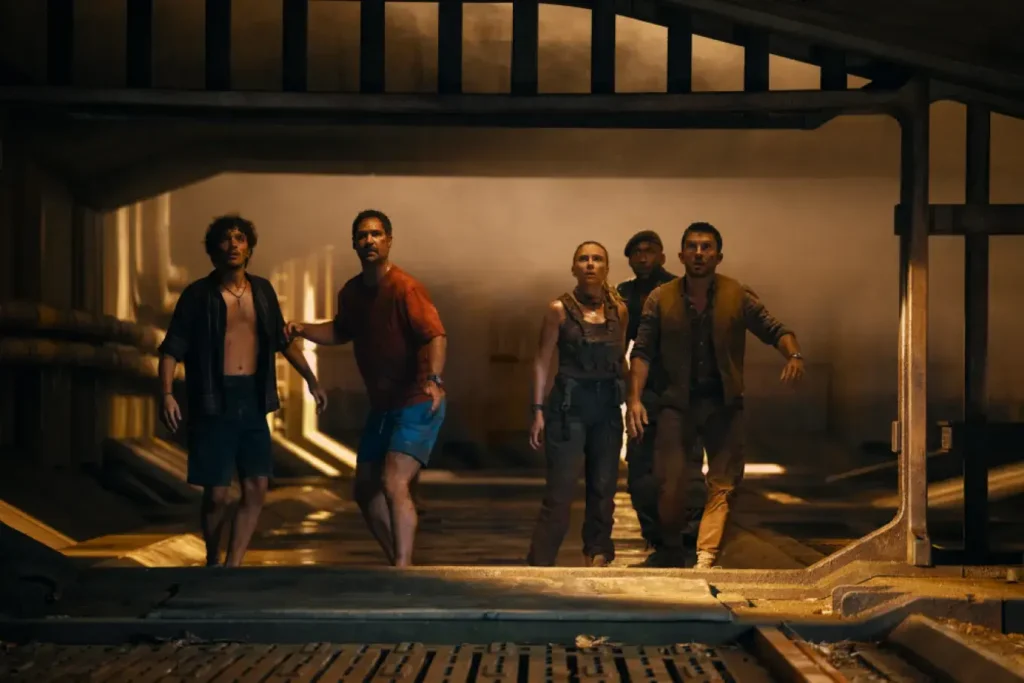
The survivors leave Île Saint-Hubert with the samples intact. But instead of selling them, Zora and Henry make a radical choice.
They release the biomaterial to the global scientific community with no patents, no ownership, and no control.
It’s the first time in the franchise that someone breaks the cycle instead of feeding it. The final shot isn’t of dinosaurs roaring or any city burning. It’s of the boat drifting away, the island shrinking behind them. The dinosaurs remain, and the danger remains.
But the lie is that humans can control all of this. And that’s the heart of the ending of Jurassic World Rebirth.
What the Jurassic World Rebirth Ending Means
At its core, Rebirth isn’t about dinosaurs at all. It’s about limits. Limits where science should stop and what happens when it doesn’t.
The film makes it painfully clear that innovation without ethics doesn’t lead to progress; it breeds monsters. Survival here isn’t about domination or firepower, but about restraint, patience, and respect for forces we don’t fully understand. That’s why Distortus rex doesn’t feel like a traditional villain.
It feels like a receipt. Proof of reckless experimentation and corporate shortcuts coming due. The D-Rex Jurassic World Rebirth arc isn’t evolution gone wrong; it’s malpractice wearing teeth. And in a franchise built on humans refusing to learn, the most surprising choice of all is this one, stepping back instead of pushing further.
Also, read Final Destination Bloodlines Ending Explained: Death’s Family Business Just Got Personal
Final Thoughts on Jurassic World Rebirth Ending
The Jurassic World Rebirth ending works because it resists spectacle. It doesn’t promise a brighter future. It promises a quieter one.
No theme world rebuild, no global takeover. Just the understanding that survival requires restraint. After thirty years, that might be the most radical idea this franchise has ever had.
Frequently Asked Questions
1. Why is Chris Pratt not in Jurassic World: Rebirth?
The film intentionally moves away from legacy characters to reset tone and focus on new ethical questions rather than familiar hero arcs.
2. Is the Distortus Rex the strongest dinosaur yet?
Physically, yes. Symbolically, it’s the franchise’s ugliest creation, a reminder of unchecked experimentation.
3. What happens to the dinosaur cure samples?
They’re released publicly, preventing corporate control and breaking the cycle of exploitation.
4. Is there going to be another Jurassic World after Rebirth?
The ending leaves room for continuation, but it doesn’t force one. The story prioritizes closure over setup.