If you’re the kind of person who craves thrillers with tidy reveals and all the answers spelled out, Hallow Road probably isn’t your ride. This eerie tale, led by Rosamund Pike as Maddie, Matthew Rhys as Frank and Megan McDonnell as Alice, refuses to hand out closure. Instead, it winds you through a fog of grief, folklore and unease, forcing you to ask whether the story is about parents unraveling under trauma or about something far darker stalking them from the woods.
The genius of the Hallow Road ending is its commitment to ambiguity. The movie presents two explanations, one based on tragic psychology and other on supernatural horror, then leaves you stranded in the middle. This uncertainty is the whole point and why the film sticks with you long after it’s over.
So let’s walk the road together and unpack the ending of Hallow Road, its plot, weigh its competing theories and see why this finale cuts so deep.
The Hallow Road Plot in a Nutshell
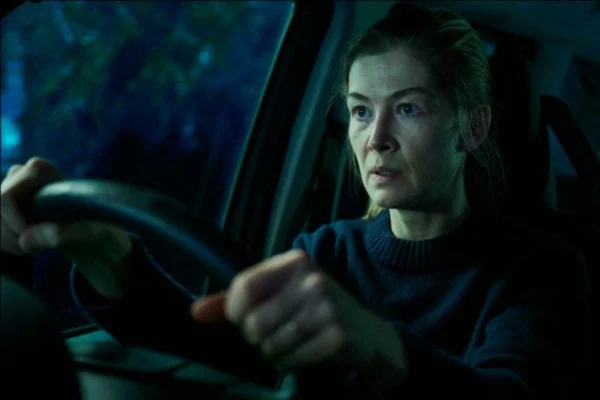
It launches with Maddie (Rosamund Pike) and Frank (Matthew Rhys) driving the desolate back roads of Wales with their young daughter Alice (Megan McDonnell) missing without any explanation. As night falls, their phones begin ringing with a voice sounding ominously just like Alice’s. Frantic and torn with guilt, they pursue the ghostly calls with fear as their compass guiding them further and further into the darkness.
Soon, an unlikely couple gets on the line and converse with threatening authority as they state knowledge of Alice’s location. Their threatening warnings imply that her disappearance is not simply an accident, but part of something older, like the ritual speaking of sacrifice and not just of crime.
With each passing mile the fear builds. Then the last act shatters the suspense and releases two macabre possibilities. One, are the parents hallucinating their daughter as part of their grieving or have they fallen for an old, folkloric trap?
Theory One: This Psychological and Traumatic Ending
This is the explanation of the detectives; the one that the Hallow Road ending scenes give as the “official” version.
What really occurred: Alice died before the film started. She argued with her parents, took Frank’s vehicle without permission, ran it off the road, and ended up being killed herself in the resulting hit-and-run. All of Maddie and Frank’s creepy interactions and calls are hallucinations caused by their traumas, defense mechanisms from not being able to confront the horrific reality.
Phone calls and characters: Alice’s voice, eccentric couple, ghostly undertones—byproducts of Maddie and Frank’s collective loss. Their minds are are creating an imaginary narrative so they won’t have to agree on Alice as dead.
Evidence: Police detectives (played by Stephen Jones and Paul Tylak) confirm Alice died the previous evening and spot inconsistencies in Maddie and Frank’s version of events. Both parents are obviously distraught very early on in the picture, before any initial call, which indicates their psychological collapse happened beforehand.
Viewed this way, the Hallow Road ending is a tragically sorrowful portrayal of parental loss and refusal. The road they’re driving on isn’t haunted with myths—it’s haunted with despair.
For those wanting their horrors served with myth on the side, this account is far scarier.
Also, read The Sixth Sense Ending Explained: Seeing What Wasn’t Said
Theory Two: The Supernatural or Folkloric Ending
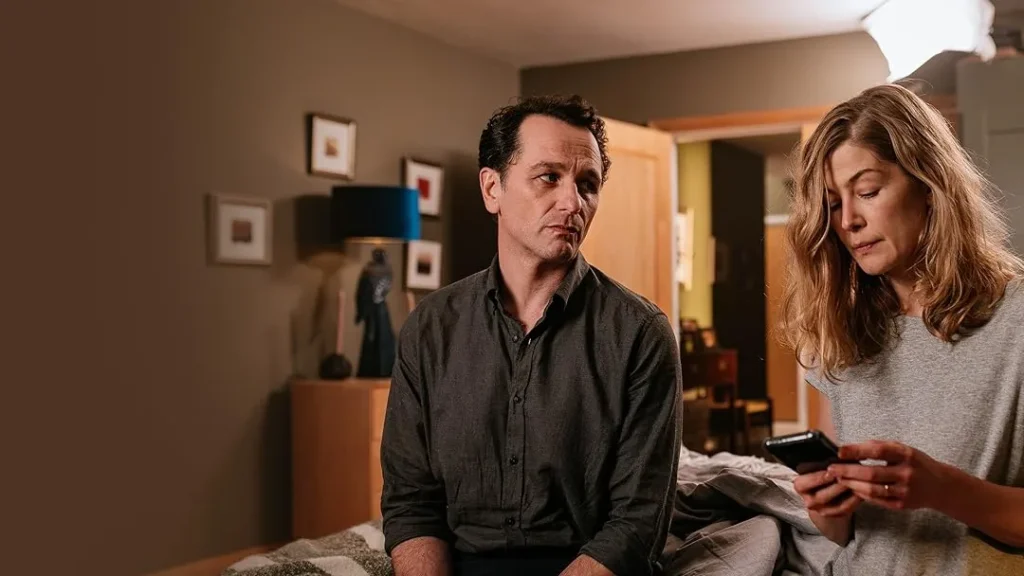
What happened: Alice did not survive the car crash but was duped further in the woods by the bizarre couple with whom she conversed. They are not humans at all and are not anything of this world—perhaps Celtic or Welsh myth creatures, for instance, changelings or fae—“collecting” innocent young ones.
The menacing couple: Their calls with Maddie and Frank are fraught with menace. The sinister talk of the woman regarding “correction” of Alice and her fetus and the husband’s unnerving behavior suggest motivations that are beyond human comprehension.
Evidence: The very title of the film, Hallow Road, evokes a haunted or liminal state, where the boundary between the human and supernatural becomes blurred. The wooded landscape of the film and folkloric vocabulary reference something älter and grimmer than a crash.
And the clincher: Alice’s body at the end doesn’t quite look fully human—it looks instead as if it might be a magic copy, a folkloric stand-in.
Viewed thus, Hallow Road’s conclusion comes to resemble a terror tale of parents who ventured too close to forces they never would understand.
The Final Ambiguity: A Haunting That Won’t Quit
The ending of Hallow Road is brilliant for not coming to any conclusion. The detectives dismiss Maddie and Frank’s encounters as bereavement hallucinations. But the folkloric cues spread all over the story keep the window for supernatural explanation very much open.
The last image resolves the loose end: Maddie and Frank hovering around their daughter’s supposed body, stunned and broken. Is it really Alice? Or a mock double abandoned there by some malign spirit? The camera lingers long enough on each idea to maintain both possibilities and leave the viewer as bereaved as the parents themselves.
Why The Hallow Road Ending Works
It operates at two levels at the same time as the conclusion of Hallow Road.
At the psychological level, it’s a tragic exploration of loss of parents and denial. Maddie and Frank’s minds collapse under the pressure of losing Alice and build illusions for themselves from which they are able to glean hope but are pushed deeper into despair.
On the supernatural side, a macabre folkloric bogey of child-conniving predatory beings which scatters broken family groups and threatening warnings in its wake.
In not deciding which lane, the film leaves you sitting with the tension of not knowing. That’s why the ending lingers—you can’t wrap it up with a bow for yourself.
Also, read Wall to Wall Ending Explained: Noise, Neighbors and the Price of a Dream
The Bigger Picture: Grief, Folklore and Fear
Beyond the frights, Hallow Road has to do with internalizing loss. In the psychological reading, Maddie and Frank make up a story because reality as it is just is too painful. In the folkloric reading, the narrative suggests that sorrow makes people vulnerable for predatory agencies.
Either reading, the point gets made: grief reorders reality. So how do you reconcile the Hallow Road ending?
It’s a Rorschach test for horror fans. In the event realism calls the shots, it’s a story of parents so overcome with guilt that they construct a narrative to support their daughter. Or, if the supernatural has your vote of approval, it’s a folkloric purgatory of spirits that prey on grieving households.
Either way, it works.
The ambiguity is the key. As with Maddie and Frank, at the end of the path, we’re left not knowing what’s real but knowing that nothing will ever quite feel the same again. And maybe that’s the scariest part.
The folklore element also reinforces group fears. Fae stories, changelings, and forest spirits have always been parental folklore horrors—threats of what will happen to your littles if you misplace them. In pairing those tropes with a modern psychological thriller, Hallow Road bridges eternal folklore and recent traumas.
Frequently Asked Questions (FAQs)
1. Was Alice really dead from the start in Hallow Road?
According to the detectives, yes, Alice died in a car accident the night before the story begins. However, the supernatural hints throughout the film suggest that might not be the full truth, leaving it ambiguous
2. What is the significance of the strange couple in Hallow Road?
They could be hallucinations of Maddie and Frank’s grief, or supernatural entities tied to Celtic folklore. Their cryptic talk about “correcting” Alice points toward a folkloric explanation, but the film never confirms.
3. Why does the Hallow Road ending remain ambiguous?
Because that’s the design. The movie is built to be a psychological thriller and a folkloric horror at the same time, forcing viewers to choose their own interpretation and leaving the mystery deliberately unsolved.