The world of Don’t Worry Darling pulls you in with pastel perfection. Gleaming homes. Martini lunches. The neat, crisp illusion of a life where nothing ever goes wrong. It feels warm at first, like a glamorous dream you wouldn’t mind stepping into. But if you’ve watched the film, you already know that the dream curdles fast. Beneath the polished surface sits something twisted. Something stubbornly wrong. And the Don’t Worry Darling ending is where every crack finally bursts open.
In this article, we’ll unpack every answer you were left searching for. What Victory really is. Why Alice is trapped. What the final scene means. And why the Don’t Worry Darling ending leaves viewers unsettled even after the credits roll.
If you are here to make sense of the Don’t Worry Darling ending, buckle up. You’re about to step right back into Victory.
Don’t Worry Darling Ending Explained: The Truth Behind Victory
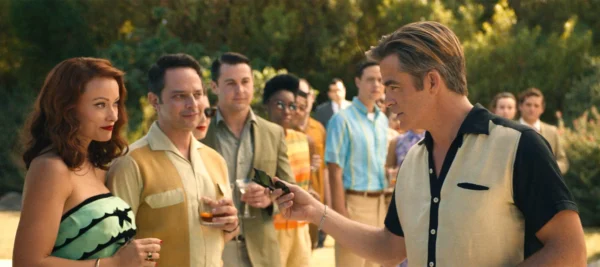
The heart of the Don’t Worry Darling ending lies in one brutal reveal. Victory isn’t real. The entire suburban paradise is a simulation created to trap women inside a 1950s fantasy they never asked for. Alice Chambers, our protagonist, spends the whole film picking at the edges of this illusion until the truth tears its way through.
Let’s break down how the ending plays out and what it means.
The Big Twist: Victory is a Virtual Cage
Don’t Worry Darling hinges on the moment Alice is cornered by Frank and her husband, Jack. The facade shatters. Victory isn’t a town. It’s a coded false reality. Every cocktail party. Every synchronized ballet class. All programmed.
Alice’s Real Life
This is the punch in the gut. In the real world, Alice is a brilliant surgeon working long shifts. She’s tired, stressed and doing everything she can to survive in a harsh economy. Jack? He’s unemployed. Insecure. Angry at the power imbalance in their real relationship.
When Jack discovers Frank’s secret project, Victory becomes his escape hatch. And Alice becomes his prisoner.
Jack’s Sinister Choice
Jack plugs Alice into the simulation without her consent. He restrains her real body on a bed, drips food and water into her, wipes her down, then logs into Victory as her loving attentive 1950s husband.
Jack doesn’t want partnership. He wants control. The Don’t Worry Darling ending shows that his “love” is actually entitlement wrapped in fantasy.
The Breaking Point: Alice Remembers Her Real Life

Alice’s unraveling in the simulation is haunting. Needle-close flashes of her real life crawl back into her mind. Her memories refuse to stay buried. And this is where the ending of Don’t Worry Darling becomes a battle of two realities.
Alice confronts Jack. He cries. He begs. He confesses everything.
But he does not apologize for taking her freedom.
Jack tries to restrain her. She stabs him with a mirror shard. And in Victory, death has consequences.
Also, read Cobweb Ending Explained: What Lurks Behind the Wall
The Aftershock: When a Man Dies in Victory
Jack’s death triggers a system-wide alarm. What happens in Victory affects the real world. If you die inside the simulation, you die outside it too.
With Jack gone, simulation tightens around Alice. Alarms echo. Lights flicker. Victory begins to collapse.
This kicks off the final chase of the Don’t Worry Darling.
Shelley’s Twist: The Queen Finally Strikes

One of the most surprising turns in the Don’t Worry Darling ending comes from Shelley, Frank’s wife. She has played the obedient, perfect partner. The classic Victory woman. But the moment Frank tries to regain control, she snaps.
She kills Frank. And her line after that? “Now it’s my turn.”
It’s ambiguous. Is she freeing herself? Taking over? Becoming worse?
The film leaves that answer hanging. Perfectly unsettling.
The Final Chase Toward Freedom
With Frank gone and the simulation failing, Alice runs. Victory’s perfect streets warp into surveillance corridors. The once-friendly neighbors become mindless enforcers. This is the moment the film abandons sunshine and jumps straight into psychological horror.
Alice sprints toward Headquarters. That’s the exit point. Reach the glass. Touch it. Wake up.
The Don’t Worry Darling ending builds tension with every step. The cars start tailing her. The chants. The music. Every part of the simulation tries to swallow her alive.
The Ending Shot: What Happens After Alice Reaches the Portal?

Alice touches the glass and the screen cuts to black, but the faint sound of her sharp gasp tells us everything about the Don’t Worry Darling ending.
She wakes up. She escapes the simulation, not into safety or comfort, but into a harsh, unfiltered reality waiting for her on the outside. Victory dissolves behind her, yet the people who built it are still out there and they won’t take her freedom lightly. The moment is hopeful, but it carries a shadow. Her fight isn’t over. It’s only leaving the dream that was the first step.
Also, read Wayward Ending Explained: Cults, Babies, and the Green Door Nobody Asked For
The Heart of It: Why The Ending of Don’t Worry Darling Matters
Strip away the glossy 1950s sheen and the Don’t Worry Darling ending becomes something far more unsettling than a simple escape scene. It’s the moment the film pulls back the curtain on a world built to shrink women into obedient silhouettes. Victory isn’t paradise. It’s a cage engineered from insecurity and dressed up as devotion.
Alice’s final choice isn’t just rebellion’s sake. It’s her reclaiming every piece of herself that was stolen while she slept. The ending lands with force because it echoes a very real fear, the danger of someone deciding your “perfect life” for you. And the brilliance of it all? Alice refuses the script. She abandons the fantasy, reaches for the truth and chooses freedom, no matter how jagged it is.
Final Thoughts on Don’t Worry Darling
The ending of Don’t Worry Darling lingers long after the screen cuts to black because it mixes sci-fi dread, psychological unraveling and sharp social critique into one relentless final push toward autonomy. It’s not just a twist. It’s a warning wrapped in retro wallpaper.
Victory looks polished, but its core is built on control, silence and the erasure of a woman’s inner world. When Alice breaks free, the film refuses to hand us a neat resolution. Instead, it leaves space for unease. What comes next for her is unclear, maybe even terrifying, but it’s finally hers. Her gasp in the darkness becomes a declaration that she has slipped past the fantasy and re-entered a world where she gets to decide who she is.
Frequently Asked Questions
1. Is Victory real in the movie?
No. Victory is a digital simulation built to trap women inside an artificial 1950s-style life. The real world is modern and far less glamorous.
2. Does Alice survive the Don’t Worry Darling ending?
Yes. Her gasp in the final seconds confirms she wakes up in the real world after escaping the simulation.
3. Why did Jack trap Alice in the simulation?
Jack resented Alice’s success and wanted control over their relationship. Victory allowed him to live out that fantasy without her consent.
4. What happens to Frank?
Shelley kills him. Her motive is unclear, leaving room for interpretation or a potential continuation of the story.