⚠️Spoiler Alert: This article contains major spoilers ahead for Der Tiger ending.
A mission, an enemy, and a conclusion. That’s the kind of clarity war films usually promise. But Der Tiger has no interest in offering any of that.
Directed by Dennis Gansel, Der Tiger (also known as The Tiger or The Tank) at first glance looks like a familiar WWII story. A Tiger tank crew sent behind enemy lines on a dangerous retrieval mission. But very quickly, the film slips into something stranger, darker, and more unsettling.
Set on the Eastern Front in 1943, the story follows five German soldiers who are trapped inside a steel monster, fuelled by methamphetamine, fear, and blind obedience. Reality bends, time loops, and guilt leaks into hallucination. By the time the final moments arrive, it becomes clear that this film was never about the mission at all.
To understand the Der Tiger ending, we need to talk about death, denial, and a tank that may never have left the bridge.
The Mission That Starts Everything
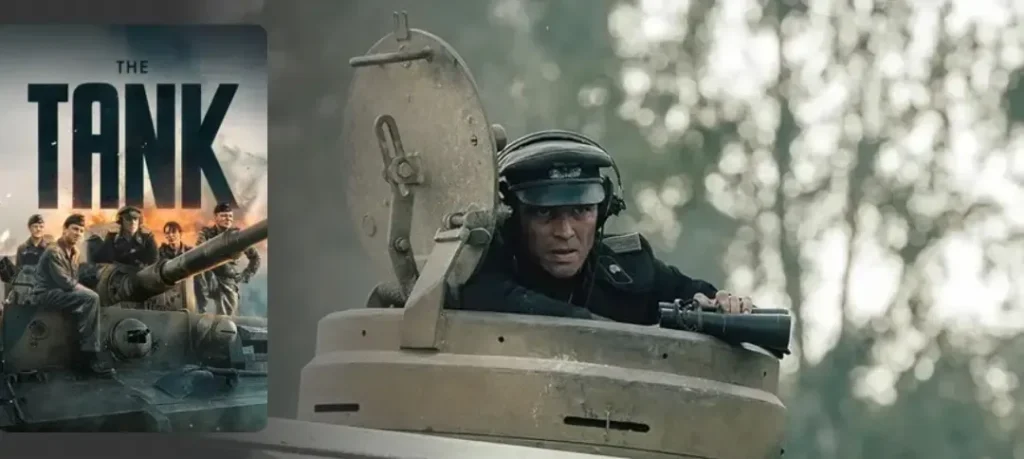
The film opens with chaos.
A Tiger tank crew barely escapes a catastrophic ambush near a bombed bridge over the Dnieper River. Commander Philip Gerkens delays retreat, whether out of pride, hesitation, or delusion is never fully clear. That decision costs lives.
Instead of relief, the crew is immediately given a new order. They have to cross deep into no man’s land and retrieve Paul Von Hardenburg, a rogue officer who has deserted with sensitive intelligence.
From that moment, Der Tiger becomes less linear and more psychological. The crew pushes forward through ruined villages, endless night, and constant attacks. They barely sleep, they survive on Pervitin, and slowly they start to crack.
The Crew’s Descent Into Madness
Each member of the tank represents a different fracture point.
- Phillip, the commander, is drowning in guilt, both from the bridge incident and a buried family tragedy.
- Christian, the gunner, begins openly questioning Philip’s leadership.
- Helmut, the driver, becomes increasingly detached from reality.
- The remaining crew members oscillate between paranoia, fear, and blind loyalty.
The tank itself becomes a coffin on tracks.
This is where Der Tiger separates itself from conventional war films. The enemy is rarely visible. Instead, the danger comes from exhaustion, drugs, and memory. Scenes repeat, sounds echo, and faces blur. The mission feels endless and almost cursed.
Which leads directly into The Tank ending interpretation.
Meeting Von Hardenburg: The War’s Mirror

When the crew finally reaches von Hardenburg’s bunker, expectations collapse. He isn’t a traitor selling secrets. He isn’t a villain waiting to be executed. He’s something worse, lucid.
Von Hardenburg openly rejects Nazi ideology. He calls the war meaningless. He tells Phillip that the real enemy isn’t the Soviets, it’s the system that turned them all into machines.
This confrontation is pivotal to the Der Tiger ending.
Von Hardenberg isn’t there to be reduced. He’s there to force the crew and the audience to confront what they’ve become.
The tank crew sees themselves reflected in him. Men stripped of humanity, reduced to orders and obedience.
From here on, the film fully dissolves into psychological horror.
Also, read Jojo Rabbit Ending Explained: Healing Through Humor And Heartbreak
The Der Tiger Ending Explained: Are They Already Dead?
The final act reveals the truth in fragments. Radio transmissions shift into Latin funeral rites. Time stops behaving logically. The tank feels like a vehicle and more like purgatory.
The implication becomes clear that the crew never survived the opening bridge explosion. Everything we’ve watched, the mission, the retrieval, the conversions, all exist inside Phillip’s dying mind, or worse, inside a shared limbo. The crew is trapped, reliving a version of events shaped by guilt, regret, and denial.
This revelation defines the Der Tiger ending.
The retrieval mission is not real. Von Hardenburg may not be real in this context. The tank is not moving forward. They are already dead.
The Tank Ending: A Coffin That Keeps Rolling
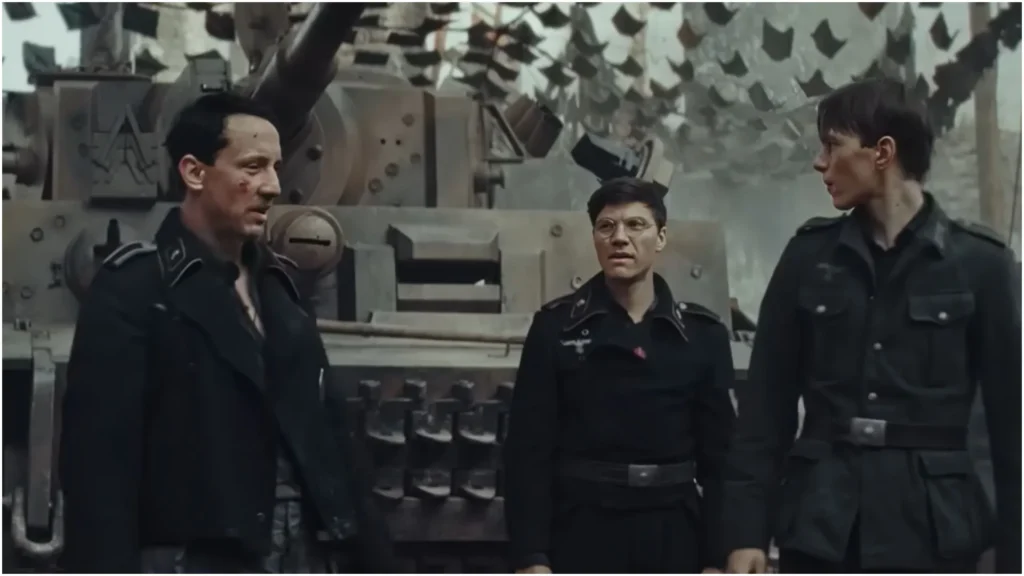
The reason The Tank ending resonated so deeply is that the tank never truly escapes. Whether it sinks, burns, or simply fades doesn’t matter. What matters is that there is no release, no victory, and no absolution.
Philip is confronted with the question that haunts him: Why didn’t you retreat? And there is no answer that saves him.
The tank becomes a symbol of war itself. It’s heavy, indestructible, inescapable, and a machine that outlives the men inside it.
And that’s why The Tank ending feels cyclical rather than final. The war doesn’t end. It consumes.
Is Von Hardenburg Real or Symbolic?
One of the most debated aspects of the Der Tiger ending is whether von Hardenburg actually exists.
There are two readings:
- He is real, and the crew’s failure to retrieve him represents the moral collapse of obedience.
- He is symbolic, a manifestation of Phillip’s conscience, asking the questions Philip avoided when it mattered.
Both interpretations work fine, and Der Tiger deliberately refuses to clarify.
That ambiguity is the whole point!
What Der Tiger Ending is Saying About War
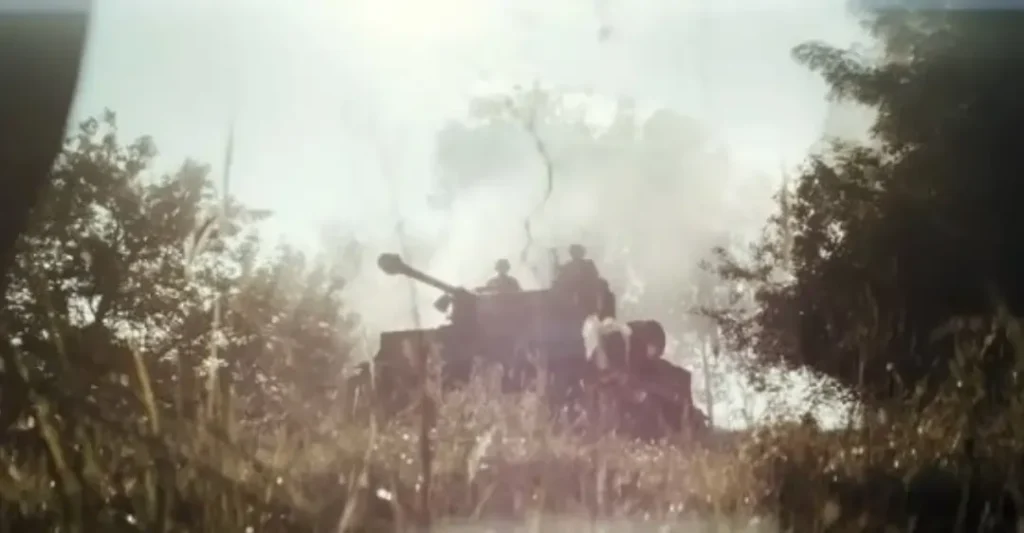
This is not a film about battles. It’s about the aftermath.
Der Tiger ending strips war of heroism. There are no noble sacrifices here. Only consequences. The soldiers are not glorified; they are broken. The ending argues that blind obedience does not absolve guilt. Being “just a soldier” is not enough. The psychological cost follows you, even beyond death.
This is why the ending feels so heavy, because there is no escape hatch.
Also, read ‘Outrageous’ Ending Explained: When Loyalty, Love, and Politics Explode
Final Thoughts on The Ending of Der Tiger
Der Tiger ending is not meant to shock. It’s meant to haunt.
The crew never completes the mission. The tank never escapes. Philip never finds forgiveness. War consumes everything and leaves nothing behind, not even a memory that makes sense.
Der Tiger doesn’t ask whether these men deserved their fate. It asks whether war allows anyone to deserve anything at all.
There is no triumph here. Only steel, silence, and a tank that keeps moving long after the men inside are gone!
Frequently Asked Questions
1. Are the tank crew already dead in Der Tiger?
The film strongly implies they died in the opening bridge explosion, and the rest unfolds as a hallucination or purgatory.
2. What does The Tank ending symbolize?
The tank represents war as inescapable, dehumanizing, and indifferent to individual lives.
3. Is von Hardenburg real?
Possibly. He can also be read as a symbolic figure representing moral clarity and conscience.
4. Is Der Tiger an anti-war film?
Absolutely. It rejects heroism and focuses on psychological destruction rather than combat glory.