Some movies entertain you for as long as they are playing. Others linger after the credits, unsettling something you didn’t know could move. Dead Poets Society belongs firmly to the second kind. Set in 1959 inside the rigid walls of Welton Academy, the story opens in a world built on certainty with pressed uniforms, strict schedules, inherited expectations, and boys whose lives have already been decided for them. Doctors, Lawyers, Proper men. Not dreams, not questions, just futures handed down like family heirlooms.
And then John Keating walks into the classroom.
He doesn’t lecture. He doesn’t punish. He whistles. He tears pages out of textbooks. He asks students to stand on desks. And suddenly, poetry stops being homework and starts feeling dangerous. What follows isn’t a rebellion in the loud sense, no riots, no grand speeches, but something smaller and more powerful: teenagers beginning to think for themselves.
By the time the Dead Poets Society ending arrives, the story stops being about school entirely. It becomes about freedom, grief, and the terrifying cost of becoming your own person.
⚠️Spoiler Alert: This article discusses the full ending of Dead Poets Society (1989), including Neil’s fate, Keating’s dismissal, and the final classroom scene. If you haven’t watched it yet, consider seeing it first. The Dead Poets Society ending hits hardest when you experience it unprepared.
The Story Before the Tragedy
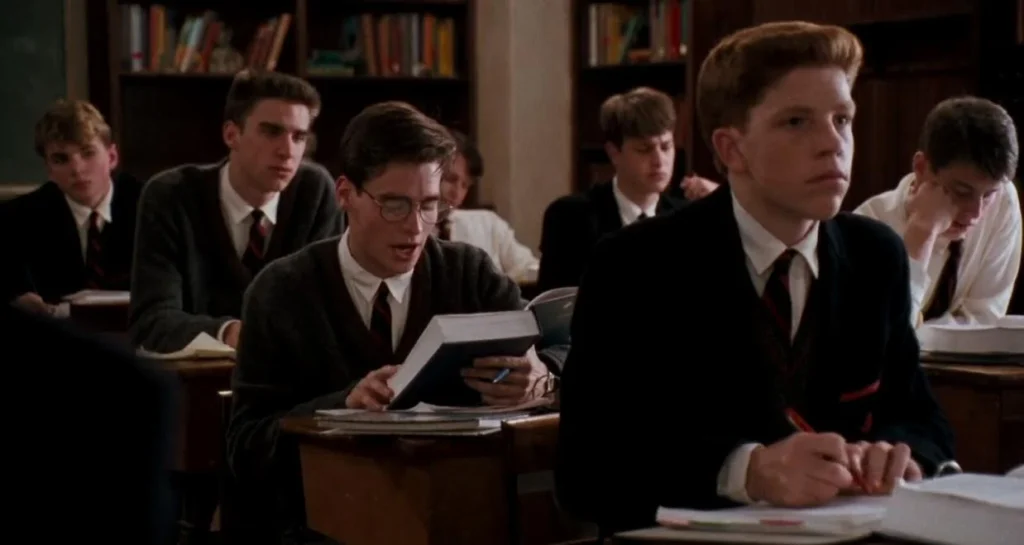
Welton Academy runs on four pillars: Tradition, Honor, Discipline, and Excellence. Students don’t question them. Parents don’t question them. Even the teachers barely question them.
John Keating does.
He teaches English, but what he actually teaches is perspective. He makes the boys call him “O Captain! My Captain!” He encourages them to read poetry not for grades, but for meaning. His famous message, Carpe Diem (seize the day), lands differently on each student.
Knox pursues a girl he never would have spoken to.
Charlie embraces reckless individuality.
Todd slowly finds his voice.
And Neil Perry discovers acting.
Neil is the heart of the film. He has a gift for performance and, for the first time in his life, he’s excited about something that belongs to him, not his father.
And that’s the problem.
Neil Perry and the Breaking Point
Neil’s father already planned his life. Medical school, a stable career, a respectable future. Acting, however, isn’t a part of it. To Mr. Perry, passion is childish. Obedience is maturity.
Neil joins a stage production of Midsummer Night’s Dream anyway. For one night, on stage, he isn’t trapped. He’s confident, alive, glowing. The audience applauds. His friends beam with pride.
Then his father finds out. Mr. Perry pulls him out of school and announces he’ll be sent to a military academy before medical training. There’s no conversation, no compromise. Only decision.
That night, Neil sits at his desk in silence.
The film doesn’t dramatize it. No music swells. No speech is given. He simply removes his crown from the play, puts it down, and takes his own life.
Everything after that moment shapes the Dead Poets Society ending.
Blame and Betrayal
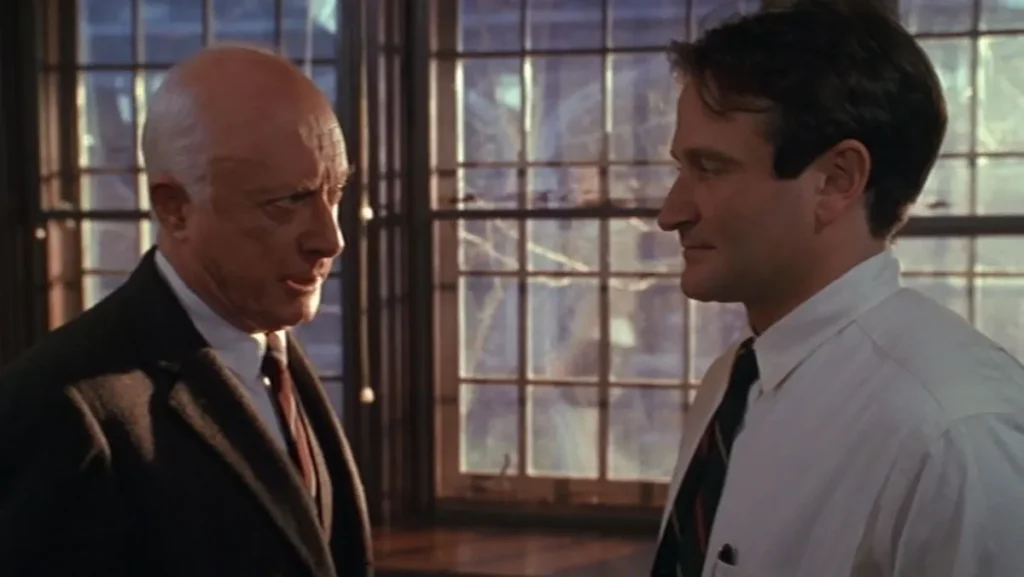
Welton Academy reacts not with grief but with damage control. The school cannot accept that pressure, repression, and emotional isolation contributed to Neil’s death. Instead, they search for a cause.
They choose Keating.
Headmaster Nolan forces the boys to sign a statement blaming their teacher for influencing them. Some refuse at first. But they are children facing parents, authority, and fear. Eventually, most of the boys sign.
Todd signs too. And it breaks him.
Charlie refuses entirely and is expelled after punching a classmate who cooperates eagerly. The Dead Poets Society meetings end. The cave goes silent. The boys retreat into the lives they were assigned.
Keating is fired. And this leads us directly into the Dead Poets Society ending.
The Final Classroom Scene
Keating steps back into the classroom one last time to gather his things while Headmaster Nolan continues the lesson as if nothing has happened. The room feels suffocatingly quiet. The books were open, pens moving, eyes carefully avoiding the man who changed them.
Todd couldn’t hold it in anymore. His voice cracks as he confesses they were forced to sign the statement. Keating doesn’t argue, doesn’t protest, doesn’t even try to clear his name. He just offers a small, understanding smile and turns toward the door.
And then, in the silence, a desk creaks.
Todd climbs onto it. “O Captain! My Captain!” One by one, students rise with him. Not all; some stay seated. But enough. Each desk creaks under the weight of defiance.
Nolan orders them down. They refuse. Keating turns back. His eyes fill. He smiles.
The Dead Poets Society ends not with victory, but recognition. The system remains. The school continues. But something irreversible has happened.
They learned to think.
What The Dead Poets Society Ending Really Means
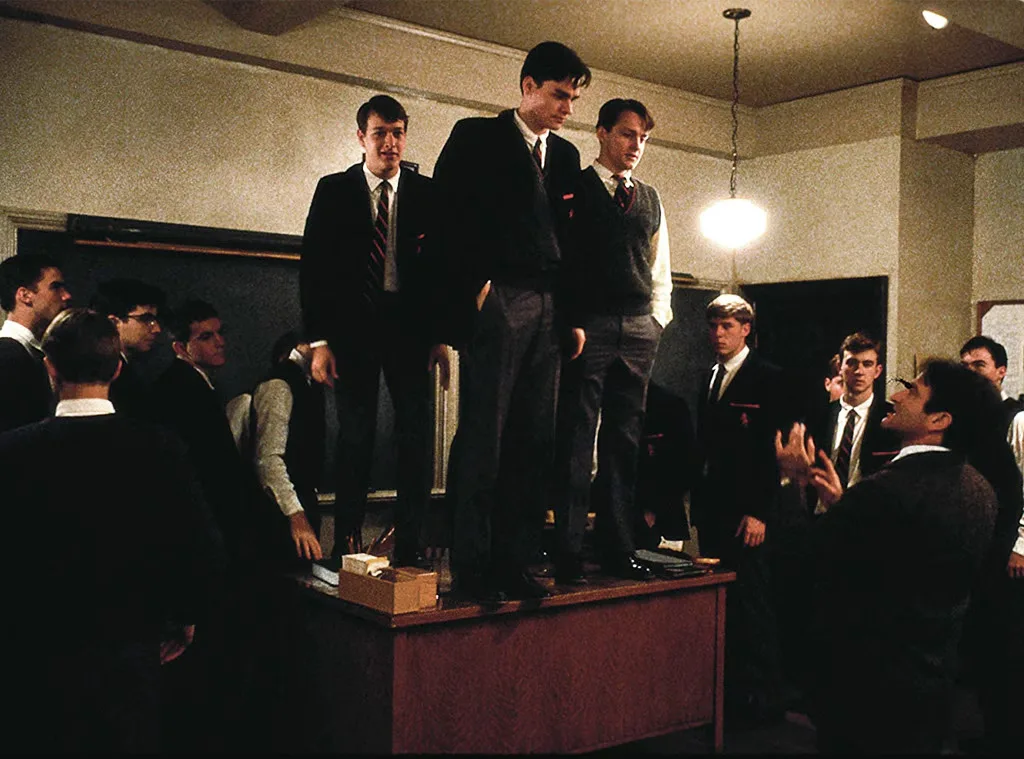
Majorly, the ending looks triumphant. Students stand up to authority. They honor their teacher. The audience gets teary-eyed.
But it’s actually bittersweet.
Keating loses his job. Neil is gone. The institution doesn’t collapse. No grand reform happens. The boys still live in the same world of expectations and pressure.
So why is the Dead Poets Society ending so powerful?
Because Keating’s goal was never to overthrow Welton. His goal was internal. He wanted them to form identities independent of fear. Todd standing on the desk isn’t rebellion against a school; it’s rebellion against silence.
For the first time, he chooses his own action despite the consequences.
Neil could never live freely. Todd learns to, finally.
Why Neil’s Death Matters
The film never romanticizes Neil’s suicide. It’s not portrayed as poetic. It’s devastating and abrupt. The tragedy emphasized what happens when a young person’s voice is completely denied.
The Dead Poets Society ending uses Neil as a contrast. He embodied passion but lacked support. Todd lacked confidence but eventually found courage.
Keating’s teachings didn’t cause Neil’s death. They showed him a life he wasn’t allowed to have.
And that difference is everything.
The Meaning of “O Captain! My Captain!”
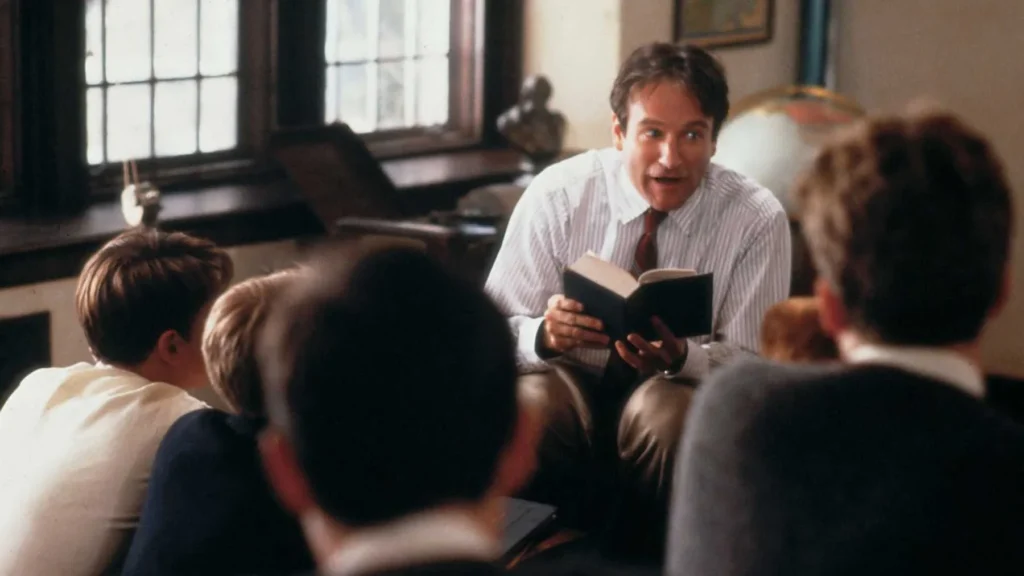
The phrase comes from Walt Whitman’s poem mourning Abraham Lincoln. In the film, it becomes a declaration of graduation. Keating wasn’t perfect. He didn’t save everyone. But he changed how they saw themselves.
Standing on the desks mirrors Keating’s first lesson that perspective changes understanding.
But physically changing their viewpoint, they symbolically reject passive obedience.
That’s the emotional core of the Dead Poets Society ending.
Final Thoughts on Dead Poets Society Ending
The ending of Dead Poets Society leaves a quiet realization behind. Adulthood arrives faster than people admit and sometimes before you’re ready.
The ending isn’t about winning. It’s about awakening. The boys don’t overthrow authority, but they stop surrendering their inner lives to it. Keating loses his position, yet succeeds in his purpose.
Schools teach subjects. Keating taught permission, permission to question, to care, to imagine a life that is not chosen for you.
And that final image matters because it’s fragile. They might still become doctors and lawyers. But they’ll choose it, not inherit it.
That’s why the ending hurts.
It reminds us how many people never had a teacher who told them to stand up.
More Endings Worth Decoding
- The Marksman Ending Explained: Liam Neeson’s Grittiest Goodbye
- Train Dreams Ending Explained: How a Quiet Life Finds Its Peace
- Eternal Sunshine of a Spotless Mind Ending Explained: Love, Memory, and the Courage to Say “Okay”
Frequently Asked Questions
1. Why did the students stand on their desks?
They were honoring Keating and his lesson about perspective. It was their way of saying they understood him and weren’t ashamed of what he taught them, even under pressure.
2. Was Keating responsible for Neil’s death?
No. The film suggests the opposite. Neil’s tragedy comes from overwhelming parental control and lack of emotional freedom, not from Keating encouraging him to think independently.
3. What happens to the boys afterward?
The movie doesn’t say, and that’s intentional. The Dead Poets Society ending focuses on a moment of growth, not future careers. The important change is internal, not visible.
4. Why is the ending considered bittersweet?
Even though Keating loses his job and Neil is gone, the boys finally act with courage. They didn’t change the system, but they changed themselves, and that’s what the story was always about.