All the Bright Places is the kind of film that slips under your skin quietly and refuses to leave. It starts as a simple story about two teenagers trying to navigate their pain, but it slowly grows into something far deeper, like a meditation on grief, mental health, connection, and the fragile ways people save each other without even realizing it.
If you’re here, you too want clarity. You want to understand what All the Bright Places ending really means. You want the emotional threads untangled, the symbolism decoded, and the film’s last message fully illuminated.
This article walks through the ending of All the Bright Places with care and honesty. We explain what happens, why it matters, and what the final scenes say about love, loss, and healing. No spoilers yet, just a promise that by the end, the ending will feel clearer, richer, and even more heartbreaking.
⚠️Spoiler Alert: From here on, keep your heart steady. Every line ahead contains spoilers.
Finch’s Final Spiral: The Breaking Point No One Saw Clearly

Theodore Finch is vibrant, perceptive, charming, and tender, but beneath every bright moment is an undertow he can’t escape.
Throughout the final act, Finch slips into the darkest cycle of his mental illness. He shuts people out. He withdraws. He disappears emotionally long before he disappears physically.
Despite his love for Violet, despite the connection they’ve built, Finch’s internal storm intensifies. His outburst at school, his panic, the moments where he vanishes without explanation, these are signs of a mind exhausted from fighting itself.
All the Bright Places ending begins with this quiet unraveling.
The Blue Hole: The Last Message and the Last Place
Finch sends Violet an email. It is simple. It is gentle. It is almost peaceful. He wants to meet her at the Blue Hole, one of the places they discovered together. But when Violet arrives, she doesn’t find Finch waiting. She finds his clothes. His belongings and the silent water.
The moment is slow, unbearable, and horror-filled without any violence. The film understands that the absence of someone you love can be more violent than any on-screen event.
The ending of All the Bright Places confirms that Finch drowned himself. Not as a dramatic gesture. Not as a message to Violet. But because his illness overwhelmed him.
This tragedy is in the quiet. The finality. The stillness.
Violet’s realization: The Grief She wasn’t Ready for
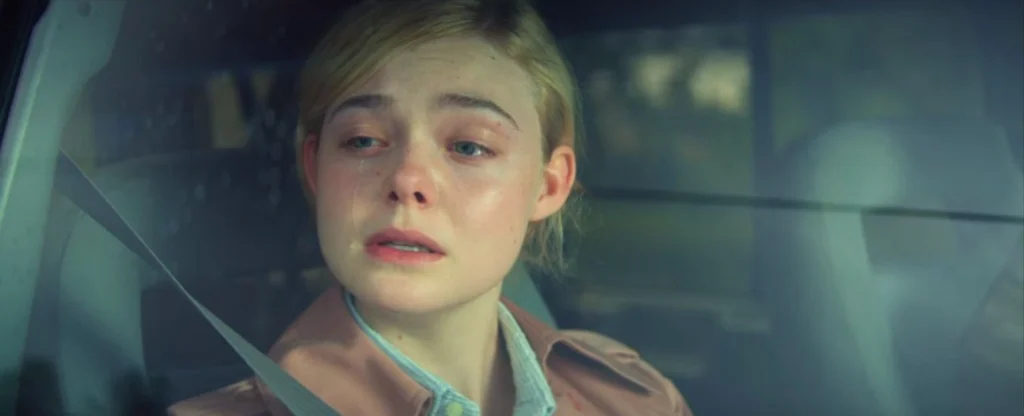
All the Bright Places ending shifts its weight from Finch to Violet, and that change hits like a tidal wave. What began as Finch pulling Violet out of the shadows becomes a haunting reversal, with Violet now forced to face the unbearable truth of losing the very person who helped her breathe again.
Her grief becomes the final proof of how deeply Finch changed her. He didn’t offer her a brief escape; he rerouted the entire direction of her life. All the Bright Places ending reveals that Finch didn’t disappear because she failed him or wasn’t enough; he disappeared because he was fighting a storm she could never see, let alone cure. This isn’t a fairy-tale romance where love saves the hero. It’s a raw, human story where the heart breaks, grows, and somehow keeps beating.
Also, read Last Christmas Ending Explained: The Gift You Never Saw Coming
The Final Project: Understanding Finch’s Last Gift
After Finch’s death, Violet discovers his final note, a message filled with calm and devastating clarity. It stops her in her tracks. It reshaped everything she thought she knew about him or understood about him, about herself, and about what their time together really meant.
Finch never believed she could really save him. He knew his illness lived in places no one could reach. What he wanted was simpler and somehow braver, for Violet to remember the world again. The bright places. The odd little stops on the map. The quiet corners of Indiana that stitched their broken pieces together.
The final revelation hits the hardest. Their last “wander”, the one they never finished, was Violet herself. She was the place worth finding. She was the light he had been chasing. His note isn’t farewell, it’s a handoff. Like a gentle responsibility to keep searching for brightness long after he’s gone.
The Final Visit: Violet Finds the Last Place Alone

Violet finishes the wander project alone, carrying both grief and clarity with her. She returns to the bridge where her sister died, a place she couldn’t bring herself to face until Funch cracked her world open. Standing there, she finally lets her grief move, not to bury it, but to acknowledge it. It becomes her first real moment of acceptance.
Then she travels to the last place Finch chose, a quiet stretch of sun and stillness she never would have found on her own. As she reads their final entry, her voice is softer, steadier, forever changed. The ending of All the Bright Places shifts into a promise. Violet will move through the world with Finch’s light beside her, not as a shadow to drown in, but as a guide toward the bright places he wanted her to keep finding.
What All the Bright Places Ending Really Means
All the Bright Places ends with the kind of honesty most stories avoid. It doesn’t pretend that love can undo an illness as deep and consuming as Finch’s. Violet was never meant to be his cure, and he was never written as a magical boy whose only purpose was to fix her. He was real. He struggles. And his pain didn’t disappear because he loved someone.
The film refuses to dress that truth in romance. Instead, it shows that Violet’s healing and Finch’s suffering exist side by side, connected, but not dependent. His absence hurts, but his influence remains woven through every step she takes. It reminds us that the world is filled with bright places, but it is also full of shadows.
The story doesn’t soften this contrast or promise that everything will be okay. What it offers instead is something more human: the understanding that grief and growth can coexist. Violet learns to move forward with Finch’s memory as a steady light, not a weight. The ending doesn’t try to comfort us with easy answers. It asks us to sit in the truth that some lives burn briefly, some love stories ache, and yet the world keeps offering small sparks worth searching for.
Also, read The Notebook Ending Explained: Love, Memory, and the Final Goodbye
Final Thoughts on All the Bright Places Ending
All the Bright Places ending lingers because it balances beauty with heartbreak in a way that feels painfully real. It refuses to exaggerate or soften the truth. Finch transforms Violet’s world, yet Violet is powerless to save him. That contrast stays with you long after the credits.
The ending shows how grief reshapes a person instead of destroying them. It shows how love can illuminate the path ahead, even when it cannot mend every wound. It reminds us that bright places exist, but we must choose to seek them, even when the journey feels heavy.
More than anything, it teaches that people we love don’t disappear when they’re gone. They live on in memory, in moments, in the places they led us to and the ones we still haven’t reached. Finch remains with Violent not as a shadow, but as a quiet guide, a reminder that even the briefest connections can leave lifelong light.
Frequently Asked Questions
1. Why does Finch die at the end of All the Bright Places?
Finch dies because he loses his battle with severe, untreated mental illness. His death is not caused by Violet or their relationship. It reflects the reality that love cannot cure clinical conditions.
2. Why does Violet finish the wander project alone?
She completes it to honor Finch. It becomes her way of processing her grief and acknowledging the bright places Finch showed her, both in the world and within herself.
3. Is Violet responsible for Finch’s death?
No. The film makes it clear Violet isn’t to blame. Finch’s illness existed long before she met him. His death is a tragedy, not a failure on her part.
4. What is the final message of All the Bright Places ending?
The message is that healing is possible, even after deep loss. Life has bright places worth searching for, and the people we love can guide us toward the light even after they’re gone.