⚠️This article contains full spoilers for Eko. If you haven’t seen the film yet, turn back now because the Eko ending depends entirely on its final revelations.
Before anyone disappears, before anyone searches, Eko begins with a voice carried through the hills, a sound that shouldn’t really have a source. In the mist-covered hills of Kerala, people talk about a call that travels through the forest at night. It’s not quite human, not quite animal. Hunters hear it, villagers avoid it. Dogs react to it before anyone else does, and then a man disappears.
The 2026 Malayalam mystery thriller unfolds slowly, almost patiently. Instead of rushing toward answers, it lets the unease grow. A wounded Kuriachan vanishes into the jungle. Search parties enter the forest. None return the same. Every clue feels slightly delayed, as if the truth itself is echoing through time.
The deeper the search goes, the clearer it becomes that this isn’t a missing person case. Something has been waiting here for years. And it has already decided how the story ends.
Plot Recap: A Disappearance That Doesn’t Behave Like One
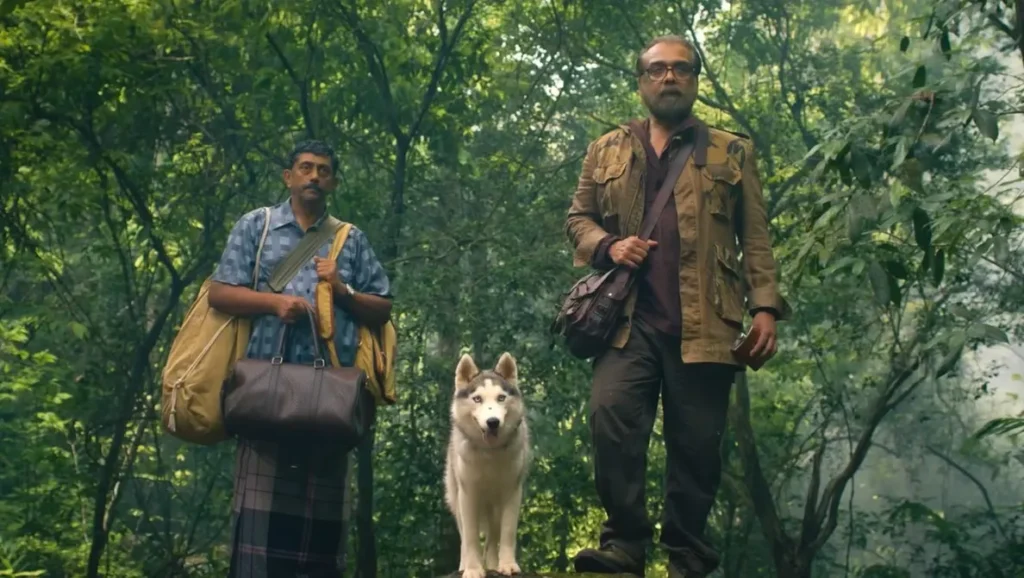
The story opens with Kuriachan, a wealthy but deeply disliked man, being stabbed during a confrontation. Injured but alive, he flees into the forested hills. A search begins almost immediately.
But the case turns strange quickly. No body is found, no blood trail continues far enough, and strangely, the dogs in the area begin behaving as if they are guarding something.
The search team includes Peeyos, a loyal associate of Kuriachan who refuses to believe his employer is dead. Police officers join the hunt, but they treat it like a routine disappearance. Peeyos does not. He senses something deliberate.
As the investigation expands, a woman named Malaathi becomes important. She appears harmless, quiet, almost invisible in the village. But the forest seems to respond to her presence. Dogs gather around her without command. They obey without training.
The film never rushes this reveal. Instead, it lets viewers slowly notice a disturbing pattern where the dogs are not wild; they are waiting.
The story flashed back to years earlier, when Kuriachan and his associate Mohan had traveled abroad, where they acquired a rare breed of highly intelligent dogs. During that time, a man named Yosiah, Malaathi’s husband, died under suspicious circumstances.
Kuriachan told everyone it was an accident. But Eko is not interested in accidents.
From Victim to Judge: The Reveal That Changes Everything
The truth arrives quietly. Malaathis is not who she claims to be. She is Soyi, Yosiah’s widow. And she has been waiting for decades. Here is the central revelation of the ending of Eko — Kuriachan did not merely lie about Yosiah’s death; he orchestrated it. He betrayed his partner, killed him, and then manipulated Soyi’s life, effectively trapping her under his control by bringing her back to Kerala under false pretenses.
She lived near him for years. Not helplessly, patiently.
The dogs Kuriachan believed he owned were never really loyal to him. They were loyal to her.
This completely reverses the film’s perspective. Throughout the story, Kuriachan appears to be the powerful man being hunted by an unseen threat. The Eko ending reveals the opposite: he has been living inside a carefully constructed trap for years.
The stabbing that opens the film was never a failed attempt to kill him. It was the first step of judgment.
Also, read Daldal Ending Explained: Trauma, Revenge, and Emotional Collapse
The Punishment: The Cave and the Prison of Time
Soyi leads Kuriachan into the forest. Search teams believe he escaped into the wilderness. He didn’t. He was taken.
Deep inside the hills, Soyi hides Kuriachan in a concealed cave and chooses something far more unsettling than murder — she keeps him alive. This is the most disturbing aspect of the Eko ending. Death would have been an end. Instead, Soyi mirrors what he once did to her. He had trapped her life inside lies and control; she traps his body inside isolation.
The dogs stand guard. They feed him, prevent escape, and ensure he lives long enough to understand. Kuriachan does not face a moment of revenge. He faces years of awareness. He becomes dependent, powerless, and forgotten, a man removed from the world but forced to remain in it. The forest does not swallow him. It holds him. Kuriachan is no longer a fugitive. He’s a prisoner of time.
The Role of the Dogs
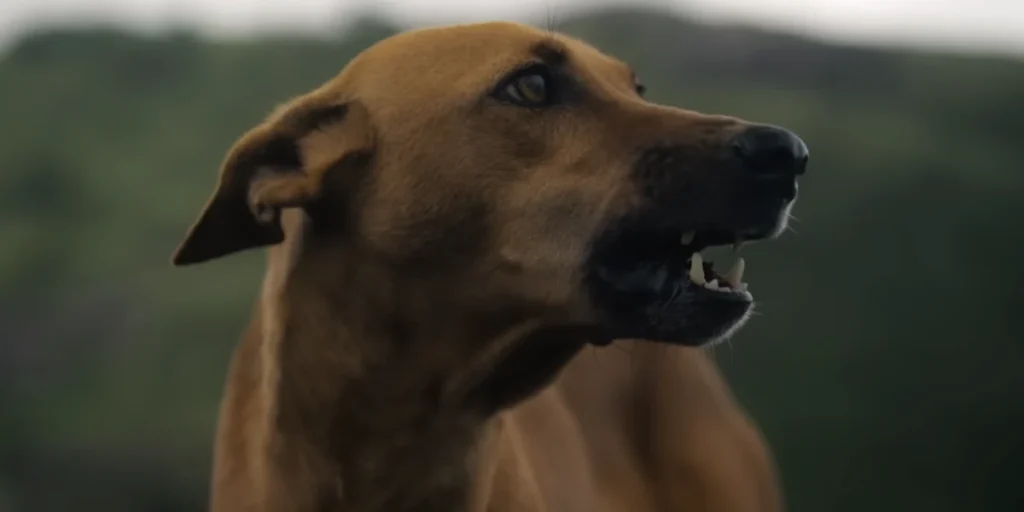
The dogs are not just a plot device. They are the emotional language of the film. Throughout Eko, humans lie constantly. Kuriachan lies about Yosiah’s death. Police lie to calm the public. Villagers hide fear. Even Peeyos hides doubt.
Only the animals behave honestly. They obey Soyi because she never betrayed them. She raised them, trained them, and bonded with them. The forest responds to loyalty, not power. Kuriachan had ownership, Soyi had trust.
In the Eko ending, the dogs represent justice without law. They do not judge morality. They simply enforce balance. Juriachan, who once controlled lives like property, now lives dependent on creatures he thought inferior.
It is not revenge through violence, but revenge through helplessness.
Peeyos and the Failed Rescue
Peeyos becomes the closest character to discovering the truth. He suspects Malaathi long before others do. He tracks the dogs and follows the patterns in the forest.
Eventually, he realizes Kuriachan may still be alive. But here the Eko ending makes its bleak statement that truth is not always enough to change outcomes. Peeyos reaches near the cave but never successfully rescues him. Whether through misdirection, fear, or Soyi’s careful planning, he cannot stop what has already been decided.
The forest is no longer a location. It is her territory. The police investigation collapses into confusion. The official conclusion becomes disappearance, another unsolved case swallowed by nature.
But the audience knows the truth. Kuriachan is alive, and that’s worse.
Why Soyi Doesn’t Kill Him
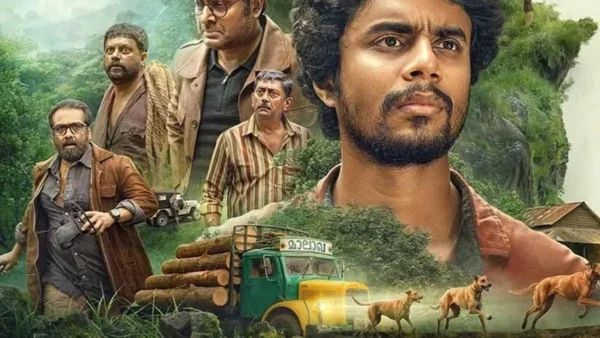
This is the emotional heart of the ending of Eko. Killing Kuriachan would end the story. Soyi wants him to understand it. Her life was stolen slowly, through lies, manipulation, and dependency. So she gives him the same experience. Every day he lives in the cave, he experiences fear, isolation, and waiting. He becomes a man forced to rely on mercy that never comes.
She does not want his death; she wants his awareness. It is a punishment measured in time rather than violence.
The Meaning of the Title “Eko”
The title refers to an echo, a sound that returns long after it was first made. Kuriachan’s betrayal did not end when Yosiah died. It echoed into Soyi’s life for years. Her revenge is not sudden; it is a delayed answer to an old action.
The Eko ending suggests that actions never truly disappear. They travel quietly through the years and return when least expected. The forest amplifies this idea. Every sound repeats, every step feels remembered. The hills act almost like memory itself, storing the past until it resurfaces.
Soyi is not simply a villain. She is the echo of a crime that was never punished.
Justice Without a Courtroom
In the final moments, life in the village resumes. People move on, the search stops, and the case fades from public attention. But the film does not show closure. Instead, it shows us routine.
Soyi continues living peacefully while the dog remains nearby and the forest still stands. And somewhere inside it, Kuriachan remains alive.
The Eko ending deliberately avoids moral judgment. It does not celebrate Soyi. It does not condemn her loudly; it simply shows the consequence.
Since the law never punished Kuriachan, time did.
Final Thoughts On Eko Ending
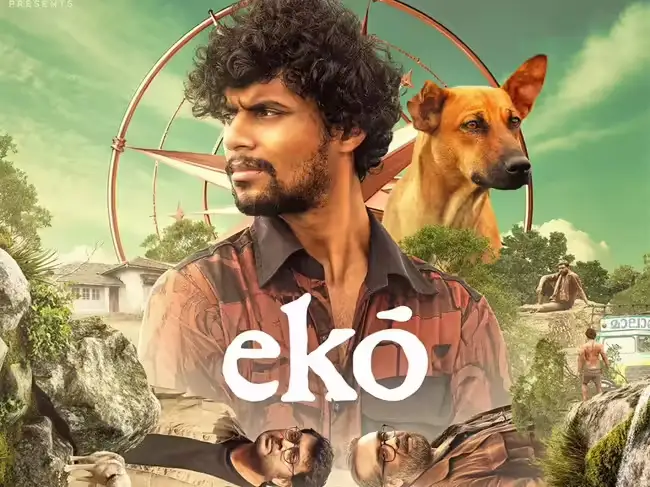
The power of Eko ending lies in restraint. The story resolves in silence. The film quietly argues something unsettling: justice and legality are not always the same thing.
Kuriachan escapes legal punishment for decades. Soyi escapes emotional peace for decades. When revolution finally arrives, it does not restore order; it restores balance. But balance is not comfort.
The ending leaves viewers uneasy because no one is truly free. Kuriachan is physically imprisoned. Soyi is emotionally tied forever to the man she punishes. Even the audience becomes complicit, understanding her reasons while fearing her actions.
The echo never stops. And that is why the ending of Eko lingers. Not because of shock, but because it feels inevitable. A choice made years ago returns, unchanged, demanding acknowledgment.
Some stories end with closure. Eko ends with memory.
Frequently Asked Questions
1. Is Kuriachan dead in the Eko ending?
No. The ending of Eko reveals Kuriachan is alive inside a hidden cave in the forest. Soyi intentionally keeps him alive as punishment rather than killing him.
2. Why did Soyi plan revenge for so long?
Kuriachan murdered her husband and manipulated her life for years. The Eko ending shows that her revenge is not impulsive but carefully planned, reflecting the long-term damage caused by his betrayal.
3. What do the dogs symbolize in Eko?
The dogs represent loyalty and natural justice. In the Eko ending, they enforce Soyi’s will and contrast human deception; they follow trust, not authority.
4. Is Soyi a villain or a victim?
Eko intentionally blurs this line. She is both a victim of past cruelty and a person who chooses morally troubling revenge. The film leaves the judgment to viewers rather than giving a simple answer.