⚠️Spoiler Alert: We’re diving headfirst into the Eternal Sunshine of a Spotless Mind ending. If you’re still emotionally unprepared, now is your chance to walk away with your memories intact. Still here? Okay.
Eternal Sunshine of a Spotless Mind hurts you, rewinds, and hurts you time and again until you realize the ache is the point. It somehow makes you thank it for the experience.
Released in 2004 and directed by Michel Gondry, with a script by Charlie Kaufman, this film looks like a quirky sci-fi romance on the surface. There’s a machine that deletes memories. There’s blue hair, there’s snow, awkward silences, and Jim Carrey being painfully vulnerable. But beneath all that, the movie asks a brutal, beautiful question: if you knew love would hurt you again, would you still choose it?
The answer lives in the final moments. And the ending of Eternal Sunshine of a Spotless Mind is less about closure and more about acceptance of pain, of imperfection, and of choosing someone anyway.
A Quick Recap (Without Erasing Your Brain)
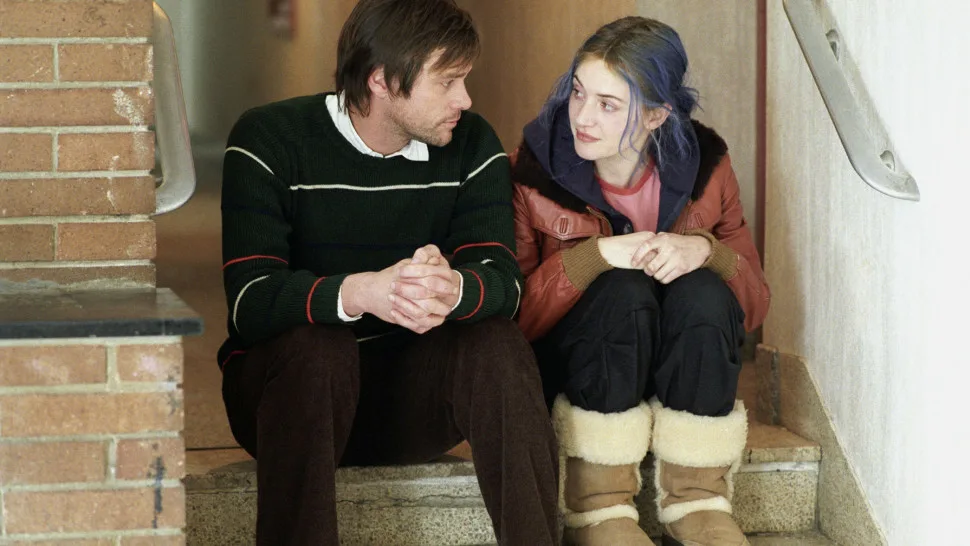
Joel Barish is quiet, introverted, and emotionally guarded. Clementine Kruczynski is impulsive, expressive, and changes her hair color like moods. They fall in love, and then they fall apart. Badly.
After their breakup, Clementine undergoes a procedure at Lacuna Inc. to erase Joel from her memory. Devastated, Joel does the same. What follows is the bulk of the film, Joel reliving their relationship in reverse as the memories are systematically deleted.
But somewhere between beach fights and bookstore flirtation, Joel realized something terrifying. He doesn’t want to forget her.
Inside his own collapsing mind, he tries to hide Clementine in unrelated memories, childhood, humiliation, fear, anywhere Lacuna’s technicians won’t look. As the memories crumble, Clementine becomes more real, more tender, and more essential.
And then, she’s gone!
The Quiet Reset: Montauk, Again
After the procedure, Joel wakes up with no memory of Clementine. On a whim, he takes a train to Montauk. Clementine, freshly erased too, ends up on the same beach,
They meet again. It feels familiar. Not déjà vu exactly, more like emotional muscle memory. They talk and connect. They’re drawn to each other without knowing why. This matters deeply.
The Eternal Sunshine of a Spotless Mind ending isn’t about fate in a mystical sense. It’s about attraction surviving logic. Even without memories, these two orbit each other. Something deeper than recollection pulls them back together.
Love, apparently, doesn’t live only in the hippocampus.
The Tapes that Tear the Illusion Apart

Just when things seem gently hopeful, the truth crashes in.
Mary, a Lacuna employee, mails recorded confession tapes to every former patient. Joel and Clementine listen to themselves talking, raw, unfiltered, and even cruel at times.
Joel hears himself call Clementine exhausting. Clementine hears herself mock Joel’s emotional withdrawal.
It’s ugly, honest, and painful. This is the moment where most romantic movies would probably pivot to a grand apology or a sweeping speech.
Eternal Sunshine of a Spotless Mind does something braver. Clementine listens, winces, and says she’s going to mess up things again. That she’ll get bored and that she’ll hurt him.
Joel listens and doesn’t argue. And then comes the line that defines the entire film.
Also, read The Notebook Ending Explained: Love, Memory, and the Final Goodbye
“Okay.” The Two-Word Ending That Says Everything
Joel’s response to Clementine’s warning isn’t reassurance. It isn’t denial, it isn’t optimism. It’s just “okay”.
This is the heart of the Eternal Sunshine of a Spotless Mind ending. Joel isn’t promising forever. He isn’t pretending things will be different. He’s acknowledging the pattern and choosing it anyway.
The film ends with Joel and Clementine running through the snow, looping in playful repetition, like a scratched record of joy. Not because everything will be fine, but because this moment is real.
What the Eternal Sunshine of a Spotless Mind Ending Really Means

Before the film settles on its final choice, it shifts the focus. The ending isn’t about memory or technology anymore. It’s about what love demands and why people keep choosing it, even when they know it will hurt.
Love isn’t About Avoiding Pain
The entire Lacuna experiment is built on the idea that pain is a glitch to be removed. The ending dismantles that logic completely. The ending of Eternal Sunshine of a Spotless Mind argues that pain isn’t a bug in love. It’s part of the operating system. Erase the hurt, and you erase the growth. Erase the conflict, and you erase intimacy.
Memory isn’t the Point, Choice is
Joel and Clementine don’t end up together because of destiny. They end up together because they choose to, again.
This time, they’re informed, not by memories, but by honesty. They know who they are, they know the risks, and they still step forward. That’s not some naïve romance. That’s radical acceptance.
Cycles aren’t Always Traps
Yes, the film implies they may repeat the same mistakes. But repetition isn’t automatically a failure. Sometimes it’s practice. Sometimes it’s learning the same lesson with slightly more awareness each time.
Also, read All the Bright Places Ending Explained: Why the Film’s Final Moments Stay With You
Why the Ending Still Hurts and Heals
The Eternal Sunshine of a Spotless Mind ending refuses to comfort you with certainty. There’s no promise that Joel and Clementine will last. There’s no implication that they’ll grow old together.
What it offers instead is something quieter and more honest: Love isn’t about guarantees. It’s about consent, to joy, and to risk. And that’s why the ending lingers. It doesn’t resolve the story. It hands it back to life.
The ending of Eternal Sunshine of a Spotless Mind doesn’t tell you that love will save you or rescue you. It tells you that love will hurt and asks whether you are still up for it or not.
Joel does, Clementine does. And maybe, that’s the most romantic thing the film ever says.
Frequently Asked Questions
1. Do Joel and Clementine end up together?
Yes, but not in a traditional “happily ever after” sense. The Eternal Sunshine of a Spotless Mind ending shows them choosing to try again, fully aware of the risks.
2. Does the ending mean they’re doomed to repeat the cycle?
Possibly. But the film suggests repetition doesn’t equal failure. Awareness changes the meaning of the cycle.
3. Why doesn’t the movie give a clear resolution?
Because certainty would undermine the message. The ending is about choice, not outcome.
4. What does “Okay” really mean?
It means acceptance. Of flaws, of pain, of love without illusions.