Train Dreams is the kind of movie that demands your attention without noise and spectacle. It earns it by lowering its voice and trusting you to listen.
Adapted from Denis Johnson’s novella, Train Dreams follows the long, unremarkable, deeply human life of Robert Grainier. He’s a logger, husband, father, and witness to a rapidly changing America. There are no grand speeches here, no dramatic twists designed to impress. Instead, the film moves like memory itself: fragmented, tender, and sometimes cruel in how suddenly it takes things away.
By the time the story reaches its final moments, the Train Dreams ending doesn’t feel like a conclusion so much as a soft landing. It asks us to sit with loss, perspective, and the strange grace of having lived at all.
⚠️Spoiler Alert: The following article contains major spoilers for the ending ofTrain Dreams. If you haven’t seen it yet, this is a good place to pause.
Robin Grainier’s Life After the Fire
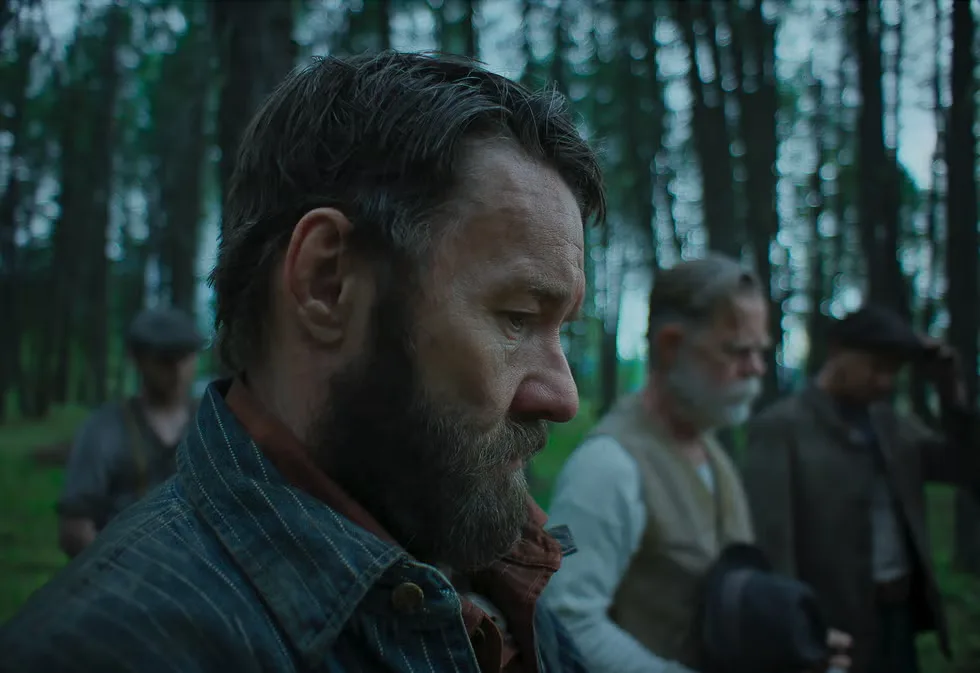
The defining tragedy of Robert Grainier’s life is the wildfire that takes his wife Gladys and young daughter Katie. The film never sensationalizes this loss. It simply happens brutally and unfairly, and Robert is left to carry it.
In the years that follow, Robert rebuilds his cabin in the Idaho wilderness and continues working where he can: logging camps, railroads, odd jobs that keep his hands busy and his heart quiet. He grows old alone, not bitter, just emptied. The world modernizes around him, but Robert seems slightly out of step with time, like someone living on borrowed hours.
This long stretch of solitude is essential to understanding the Train Dreams ending. Robert doesn’t “move on” from grief. He lives beside it.
The Arrival of the Wolf Girl
Late in the film, something unexpected happens.
An injured, feral girl often referred to as the “wolf girl” stumbles into Robert’s cabin. She barely speaks, moves cautiously, and feels more animal than human. Robert takes her in, feeds her, and tends to her wounds.
For a fleeting moment, Robert allows himself an impossible thought: could this be Katie? The film doesn’t pretend this is logical at all. Robert himself knows it isn’t. And that’s the point.
Most interpretations of the Train Dreams ending agree that the wolf girl is not literally his daughter. She may be a real feral child, or she may be something shaped by grief, like a vision that allows Robert to finally express the care, love, and protection he was denied when Katie died.
Through her, Robert gets to be a father again, even if it is for a brief span of time. And then, she leaves.
Why the Wolf Girl Matters
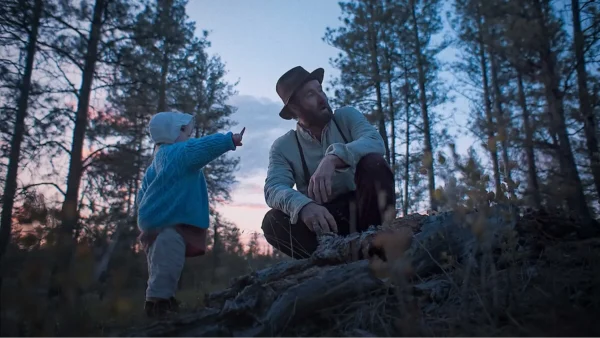
The wolf girl isn’t a twist. She’s a release. For decades, Robert has carried love with nowhere to put it. He never spoke his grief aloud. He never dramatized it. The wolf girl gives him a final, wordless chance to act on that love, to feed, shelter, and protect.
In the Train Dreams ending, this encounter functions less as a plot and more as emotional permission. Robert doesn’t reclaim his past. He honors it. And that makes all the difference.
Also, read Osiris Ending Explained: Escaping the Ship was Never the Victory
Death Without Announcement
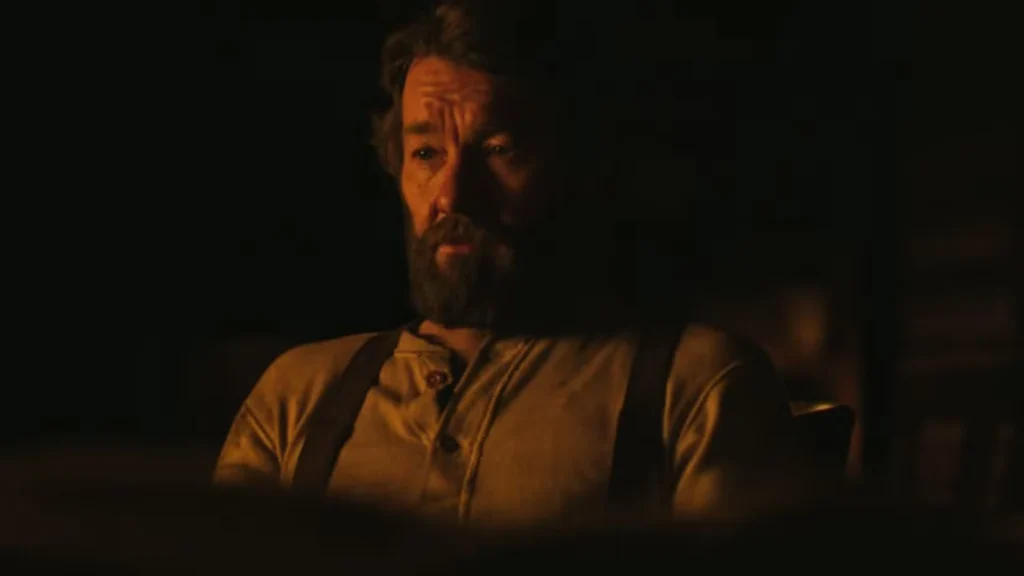
After the wolf girl’s departure, the film grows quieter still. The implication is clear that Robert dies alone in his cabin. There’s no dramatic death scene, no farewell. The film simply moves forward, the way time always does.
What follows is Robert flying in a biplane over the land, and is not meant to be taken literally. Instead, it plays like a final dream or a posthumous vision. From above, Robert looks down at the valley where he worked, loved, built a home, and lost everything.
The narrator tells us that he feels, at last, connected to all. This moment anchors the Train Dreams ending. It’s not about escape. It’s about perspective.
The Astronaut and the Shop Window
One of the film’s most quietly powerful scenes comes near the end, when an elderly Robert wanders through Spokane and stops at a shop window. Inside, a television plays footage of an astronaut orbiting Earth.
A woman beside him says, “That’s us”.
The line lands softly but meaningfully. Robert’s life was so small, isolated, and suddenly exists within a vast, shared human story. Technology has leapt forward. The world has changed beyond recognition. And yet, Robert’s life still belongs to it.
In the Train Dreams ending, this moment offers a final reconciliation between the personal and the universal.
What the Train Dreams Ending is Really About
The ending of Train Dreams isn’t about solving grief. It’s about living alongside it. Robert’s life doesn’t “add up” in a traditional narrative sense. It’s made of fragments: logging camps, a brief marriage, a devastating fire, a feral girl, a city street, a dream of flight. But the film suggests that meaning doesn’t require a neat structure.
What matters is that he loved, that he worked, and that he witnessed.
The wolf girl, the biplane, the astronaut, and all of them point toward the same idea: even the quietest lives are part of something vast.
Also, read A Lot of Nothing Ending Explained: When Doing The Right Thing Goes Horribly Wrong
Final Thoughts on the Train Dreams Ending
Train Dreams ending is devastating in its restraint.
It doesn’t promise healing. It doesn’t rewrite loss. Instead, it offers a gentler truth: a life can be small, broken, and unfinished and still be complete.
Robert Grainier never becomes famous. He never leaves a legacy anyone will remember. But he experiences love, grief, labor, and wonder. And in the end, he finds a sliver of peace, not by reclaiming what he lost but by understanding where he fits.
It’s a beautiful ending because it refuses spectacle. It trusts stillness. And it lingers long after the screen fades to black.
Frequently Asked Questions
1. Is the wolf girl really Robert’s daughter, Katie?
No, not literally. Most interpretations see her as a symbolic figure, either a feral child or a grief-shaped vision that allows Robert to process his loss.
2. Does Robert actually fly in the biplane?
The film strongly suggests this is a poetic or posthumous vision rather than a literal event, representing perspective and closure.
3. What does the astronaut scene mean?
It highlights how small individual lives fit into a vast, shared human story, giving Robert a final sense of connection.
4. Is the ending of Train Dreams meant to be sad or hopeful?
Both. The Train Dreams ending acknowledges deep loss while offering quiet peace, suggesting that meaning can exist even without happiness.