⚠️Spoiler Alert: This article discusses major plot points and the Ballad of a Small Player ending. If you haven’t seen the film yet and want to experience it unspoiled, you may want to stop reading!
Some films announce their endings with noise, explosions, confessions, or carefully staged tears. Others prefer to linger, letting the mood speak louder than the moment itself. Ballad of a Small Player belongs firmly in the second category. Edward Berger’s atmospheric gambling drama moves at its own measured pace, trading spectacle for introspection. It isn’t interested in flashy wins or cinematic heroics. Instead, it watches a deeply flawed man drift through casinos, borrowed identities, and quiet desperation, chasing a sense of control he can never quite hold onto.
What makes the film stand out is its restraint. Every glance, every pause, every half-spoken line carries weight. The world feels haunted long before any ghosts appear, shaped by regret, chance, and the uneasy feeling that luck always comes at a price. The story unfolds less like a thriller and more like a slow, melancholy ballad, fitting for a film that treats gambling not as a game, but as a state of mind.
By the time the credits approach, Ballad of a Small Player has already made its intentions clear. This isn’t a story about beating the odds. It’s about what happens when a person finally starts questioning why they keep playing at all.
Who is the Small Player Really?
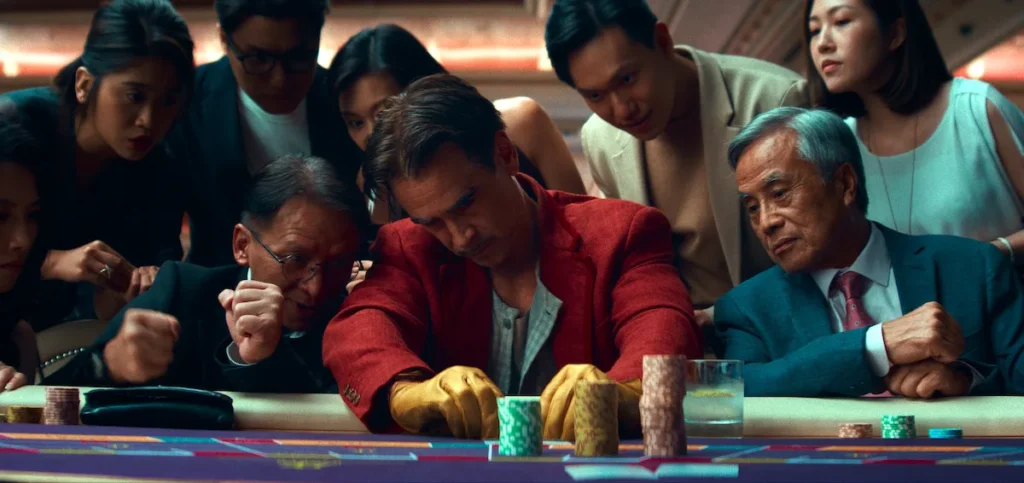
Colin Farrell’s character enters the film under the borrowed name Lord Doyle. But that identity is just another bluff. His real name is Brendan Reilly, a disgraced Irish gambler running from debt, crime, and himself.
Macau in the 1950s became his hiding place. Neon lights, baccarat tables, and the promise that one good hand could fix everything. Doyle isn’t chasing wealth anymore; he’s chasing erasure. He wants the past to stop knocking.
That’s what makes the Ballad of a Small Player ending so powerful. It isn’t about winning money. It’s about winning silence.
The Haunting Presence of Dao Ming
Doyle’s luck changes when he meets Dao Ming (Fala Chen), a gentle casino worker who extends him credit when no one else would. Their bond is quiet, almost tender. No big romance, just plain understanding.
Throughout the film, Doyle is also haunted by visions of Hungry Ghosts, spirits from Chinese folklore, cursed by greed and endless hunger. These apparitions aren’t jump scared, they’re reminders. Warnings of what happens when desire goes unchecked.
By the time we reach the ending of Ballad of a Small Player, it becomes clear that Dao may not be what she seems and that matters more than whether she’s alive or dead.
The Winning Streak That Changed Nothing
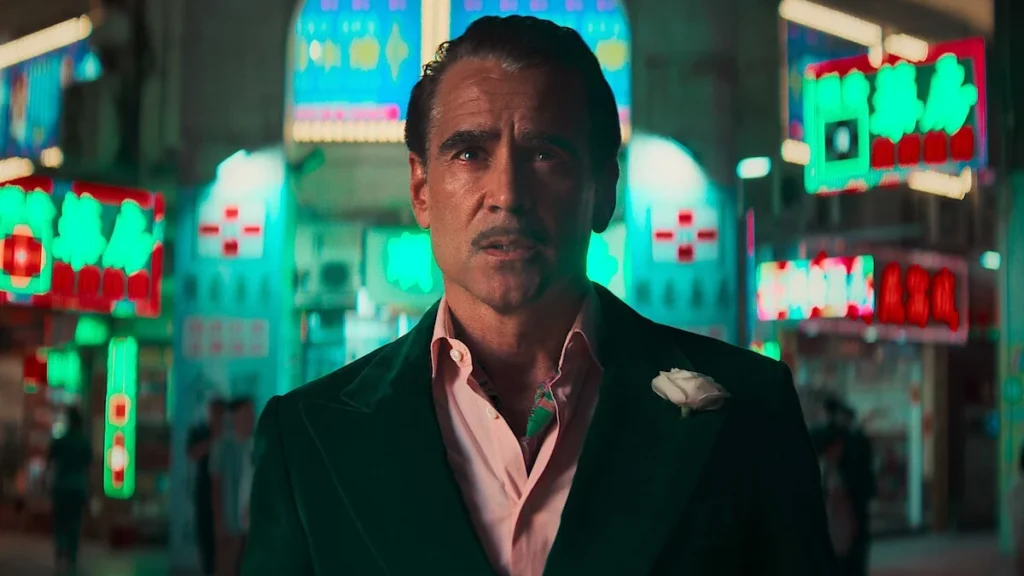
In the final act, Doyle does what gamblers always dream of. He wins big, massive baccarat victories fueled by Dao’s “lucky” number, whispered through the simple gesture of her hand.
He pays off his hotel debts, the private investigator Cythia (Tilda Swinton), who’s been hunting him, and every obligation tying him to his old life.
For a moment, it looks like a classic gambling fantasy ending.
But casinos don’t celebrate him. They ban him, whispers follow. Dealers mutter that he’s possessed.
The Ballad of a Small Player ending makes one thing clear: luck without control is just another curse.
One Last Bet, The Lie Every Addict Tells
Even after everything, Doyle promises himself one last hand.
Not because he needs the money, but because quitting without a final win feels like losing. It’s the most honest portrayal of addiction in the film, that you need to leave on your own terms.
He wins again. And this time, he actually stops. That choice, not the winnings, is where the Ballad of a Small Player ending truly begins.
The Truth About Dao Ming
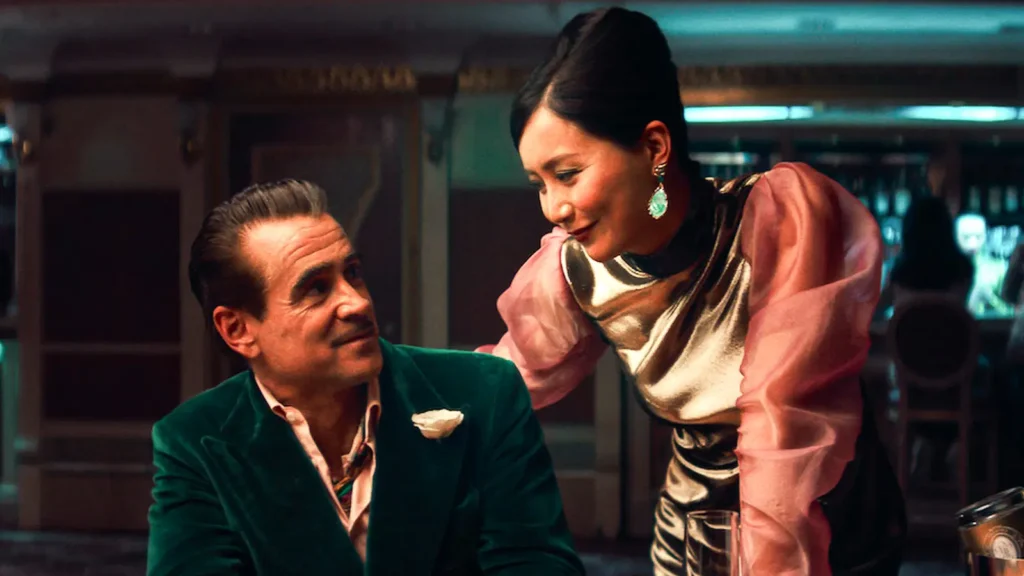
Doyle goes looking for Dao at the Rainbow Room, only to learn the devastating truth: Dao Ming drowned during the Hungry Ghost Festival. A suicide, driven by guilt over gamblers she believed she’d ruined by extending credit.
The revelation reframes everything. Her kindness, her timing, her presence when Doyle needed guidance, not luck.
Many viewers interpret Dao as a ghost or spirit guide, something the film subtly supports without spelling it out. Director Edward Berger has confirmed that the supernatural is real in this world, not metaphorical.
In the Ballad of a Small Player ending, Dao isn’t there to help Doyle win. She’s there to help him stop.
Also, read Osiris Ending Explained: Escaping the Ship was Never the Victory
Burning the Money: The Film’s Quietest, Bravest Moment
Instead of cashing out his new life, Doyle does the unthinkable.
He burns all of his winnings as an offering during the Hungry Ghost Festival. Every bill goes up in smoke.
For a gambler, money is power, identity. Burning it isn’t charity, it’s release. It’s Doyle choosing freedom over control, peace over pride.
This is the emotional core of the Ballad of a Small Player ending. The moment he breaks the cycle not by escaping debt, but by rejecting the system that trapped him.
The Shoreline and the Fireworks
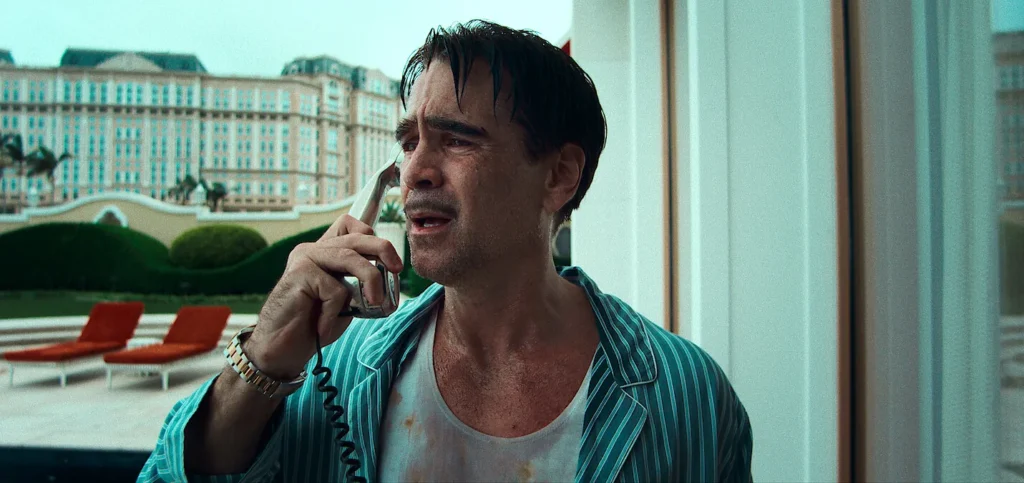
After the offering, Doyle sits by the shore as fireworks light up the sky. No narration, no big declaration of change, just stillness.
For the first time in the film, he isn’t running, gambling, or hiding. He’s present.
The Ballad of a Small Player ending doesn’t promise happiness. It offers something more believable, a fragile peace earned through loss.
The Mid-Credits Dance: Joy Without Stakes
And then comes the surprise. In a mid-credits scene, Doyle and Cynthia, once hunter and prey, dance together, laughing freely without debts, no chase, and no game.
It’s playful, almost weightless.
Some read it as a fantasy. Others as proof that Doyle has truly let go. Either way, it reinforces the ending’s central idea, that life is lighter when nothing is on the line.
Is Dao Ming Real or a Ghost? Does It Matter?
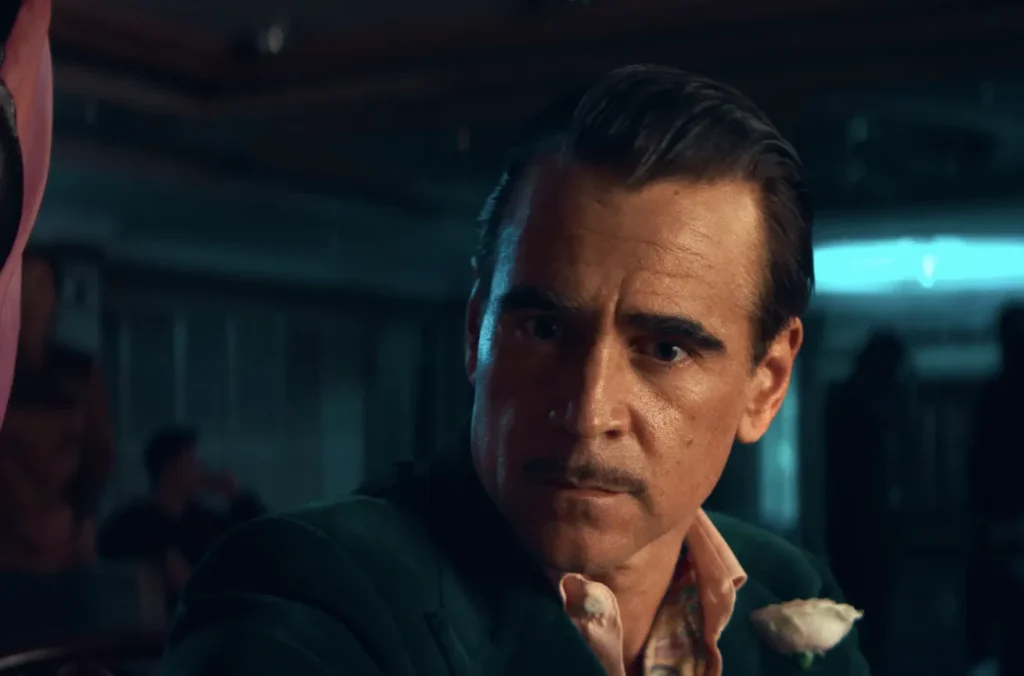
The film leaves room for ambiguity, but the emotional truth stays the same. Whether Dao is a ghost, a memory, or a spiritual guide, her role is clear. She leads Doyle toward healing and not fortune. The Hungry Ghost Festival backdrop blurs the line between the living and the dead, fitting for a man haunted by who he used to be.
The Ballad of a Small Player ending understands that sometimes, meaning matters more than answers.
Also, read Jay Kelly Ending Explained: When Silence Speaks Louder Than Fame
Final Thoughts: A Win That Feels Like a Goodbye
Ballad of a Small Player doesn’t romanticize gambling, nor does it punish its lead for his sins. Instead, it watched a broken man choose to stop breaking himself.
The Ballad of a Small Player ending works because it’s quiet, human, and honest. No speeches, no miracles, just a man burning what one controlled him and walking away lighter.
In a world obsessed with winning, this film dares to suggest that the bravest move might be leaving the table.
And that’s a bet worth believing in!
Frequently Asked Questions
1. Is Ballad of a Small Player based on a book?
Yes. The film is adapted from Lawrence Osborne’s novel of the same name. While the movie stays faithful to the book’s core themes of addiction, identity, and exile, it takes a more visual and atmospheric approach to the story’s emotional beats.
2. Is Dao Ming meant to be a real person or a ghost?
The film intentionally leaves this open to interpretation. Many viewers read Dao as a spiritual presence or guide, especially given the Hungry Ghost Festival backdrop. Director Edward Berger has suggested that the supernatural does exist in the film’s world, but her emotional purpose matters more than a definitive answer.
3. What is the meaning of the Hungry Ghost imagery?
The Hungry Ghosts symbolize endless craving, greed, addiction, and desire that can never be satisfied. They mirror the protagonist’s gambling addiction and serve as a warning about what happens when someone is consumed by want without release.
4. Is the ending meant to be hopeful or tragic?
It’s intentionally bittersweet. The ending doesn’t erase the past or promise happiness, but it offers something quieter: acceptance. Rather than winning or losing, the story closes on the idea that walking away can be its own form of peace.