There are movie endings that crash and explode, and then there’s the Jay Kelly ending, a whisper that hits like a punch. Noah Baumbach’s latest introspective slow burn turns the chaos of modern success into something eerily still. It’s not about destruction or scandal. It’s about what happens when the applause stops echoing, and the man left standing on the stage finally hears himself think.
Played with devastating restraint by George Clooney, Jay Kelly is more than he initially seems. He’s the man who has everything: fame, fortune, critics who adore him, and ad campaigns that practically hum his name. But success, in Jay Kelly, doesn’t feel like triumph. It feels loud, constant, and impossible to shut off.
The Jay Kelly ending doesn’t deliver redemption on a velvet platter. It gives us something rarer, and that’s recognition. That small, painful moment when a man stops chasing meaning and stands still long enough to find it.
The Spotlight That Blinds
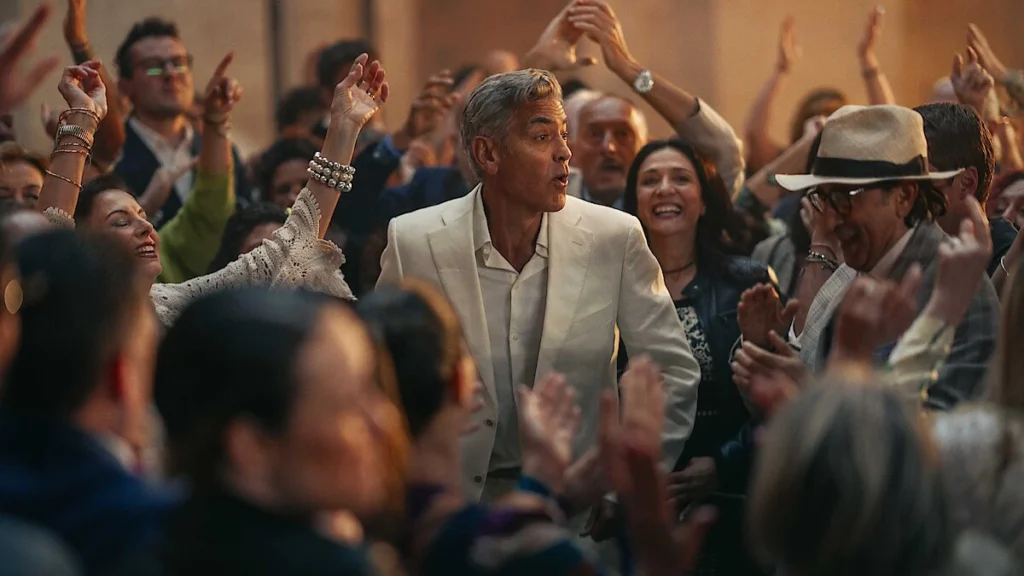
From the opening scene, Jay Kelly lives life on a schedule, not a heartbeat. Red carpets, charity galas, magazine covers, he’s everywhere except where he actually is.
His manager, Ron Sukenick (played brilliantly by Adam Sandler), orchestrates his days like a chessboard, moving his star client around Europe with the precision of a military operation. Every city blends into the next, every interview feels rehearsed, and every smile feels manufactured.
Even with his busy schedule, Ron fields calls from his wife and daughter back home and reads bedtime stories via FaceTime. He even flies home weekends during shoots, like his other client, the slightly less famous Ben Alcock (played delightfully by Patrick Wilson).
Jay, on the other hand, blinded by fame and disconnected from his family, brushes it off, “I was exhausted, kids are difficult. What are you getting at?” Ron’s point lands anyway that balance is possible. “These are the decisions we make”.
The Jay Kelly ending works because even though nothing bad happens to Jay, no scandal, no downfall, the endless success still feels like failure in disguise.
The Slow Unravel: When Legacy Becomes Loneliness
Baumbach has always loved dismantling people who define themselves by labels, and Jay Kelly is his most surgical strike yet. The film turns “legacy” into its villain. Not because it’s evil, but because it’s seductive, a drug disguised as duty. Jay’s call with his daughter lands with a soft, practiced politeness. They’re kind, but distant as if they’ve been speaking to a version of him that lives on posters and press quotes, not in their daily lives.
Jay hears it in his own voice, too. It sounds unfamiliar, over-rehearsed, empties out by years of playing a role that looked impressive but felt increasingly unreal. Behind every laugh, every handshake, there’s panic. He’s been living someone else’s life and calling it success.
When his acting mentor Peter dies mid-tour, the cracks finally show. Then comes the real blow: Jay’s father steps out of a cab before the Tuscany tribute and leaves, even as Jay begs him to stay. Jay runs after the car down an empty road, chasing something that’s already gone.
Moments later, he’s nearly run over, not by monsters, but by life continuing without him. Ben Alcock’s enormous, chaotic family pile out of three vans. He’s winning and present. When he casually asks Jay for extra tickets, Jay can only say, hollowly, “I can spare all of them”.
That’s the quiet heartbreak of the ending of Jay Kelly. The applause fades, the noise drops. And what’s left is the echo Jay can no longer ignore!
Ghosts of Pride: The Past Comes Swinging
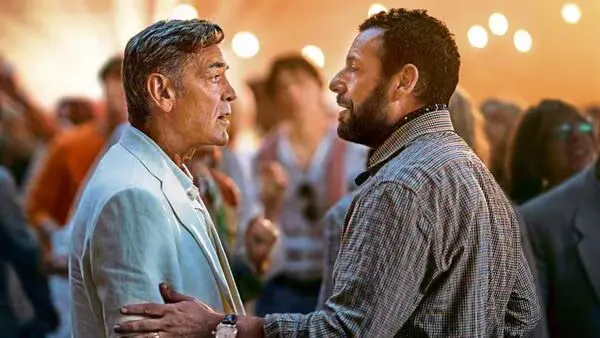
If fame is a mirror, Jay Kelly smashes it piece by piece. The film’s emotional collision arrives not from betrayal, but confrontation. In one unforgettable scene, Jay confronts his old friend and rival Timothy (Billy Crudup), a man he once stole both a role and a girlfriend from.
Decades of resentment spill into a barroom fight that’s more sorrow than rage, two egos punching their own reflections. Timothy’s fury isn’t jealousy, it’s disappointment. “You were supposed to make it mean something,” he tells him, echoing an accusation that lingers and haunts Jay Kelly ending.
Also, read Happy Gilmore 2 Ending Explained: When Golf, Grief and Glory Collide
The Offer That Tests His Soul
The buildup to the ending isn’t about scandal or revenge; it’s an offer. The kind of career-defining role that every actor dreams about. A sweeping biopic that promises prestige, awards buzz, and eternal cinematic reverence. The entire team celebrates. Ron celebrates with champagne. Studios line up. The PR headlines write themselves. It’s a dream.
But to Jay, it feels like a warning. Another round of flights, press tours, and hotel rooms. More performance, more absence. A life where exhaustion keeps getting dressed up as “art”. And then Jessica calls. The conversation is short, sharp, and final. “You’re too late,” she tells him. “You’ll never really be part of my life”. Whatever hope Jay was holding onto collapses right there.
Ron even quits as his manager, though he can’t quite walk away and still shows up, a sign that their friendship isn’t as cleanly cut as the paperwork suggests. And for the first time, Jay Kelly does something completely out of character. He stops, and he says no.
His team doesn’t understand. The industry won’t either. But Jay does, and that’s the whole point!
The Tribute: Applause That Feels Like Grief
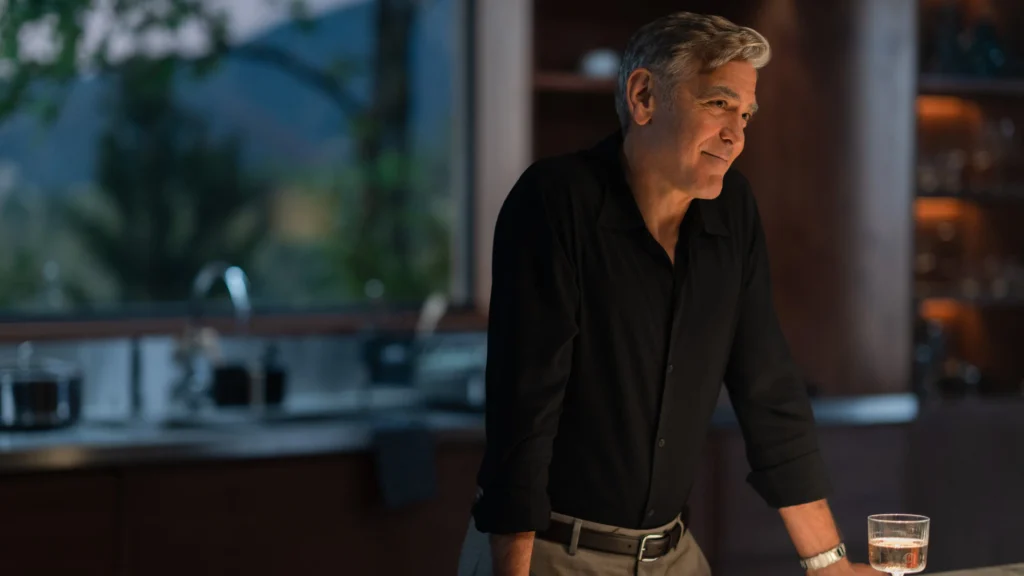
Jay doesn’t get a quiet exit. Instead, he’s seated at his own Tuscany retrospective, watching a lifetime of success play out on the screen. The applause is thunderous, but the images blur, career highs collide with memories of his daughters, their disappointment cutting through the celebration.
In the Jay Kelly ending, nostalgia and reality fold into each other until it’s impossible to tell where one ends and the other begins.
Then comes the moment that hurts the most. Jay imagines a life where he stayed, where he chose his daughter’s awkward little cabaret show over another project. The realization is simple and devastating, like acting, life offered him different takes. He just never chose them.
He looks straight into the camera, stripped of ego and armor, and asks quietly, “Can I go again? I’d like another one.”
The light rises, and he smiles. It’s acceptance without peace, clarity mixed with regret. A final, human beat beneath all the legend.
What Jay Kelly Ending is Really Saying: Thematic Breakdown
The Jay Kelly ending isn’t anti-success. It’s anti-substitution. Baumbach uses stardom like a funhouse mirror reflecting a universal truth: we all perform. We all edit ourselves to be liked, understood marketable. Jay’s tragedy isn’t that he aged; it’s that he built a life that couldn’t survive silence.
By saying no to the prestige project, Jay stops equating validation with existence. He doesn’t retire; he reclaims attention for himself. Every quiet breath after that feels like an act of rebellion against the noise.
It’s philosophical without preaching, modern without moralizing. The Jay Kelly ending is Baumbach’s love letter to imperfection and a brutal breakup text to perfection.
Also, read The Substance Ending Explained: Beauty, Blood, and the Brutal Cost of Perfection
Final Thoughts on Jay Kelly Ending
Noah Baumbach has always been cinema’s quiet psychologist, dissecting people with too much success and too little awareness. In Jay Kelly, he cuts deeper than ever.
The Jay Kelly ending doesn’t play a victory song. It plays something closer to silence, the hum of a man finally unplugged from his own myth.
It’s haunting, humorous, and oddly hopeful. The applause fades, the credits roll, and somewhere between fame and anonymity, a new kind of life begins, which is unbranded, unfiltered, and beautifully unfinished.
Jay Kelly doesn’t conquer the world by walking away from it. He just decides to live in it. And honestly, that’s rarer than any encore.
Frequently Asked Questions
1. Why does Jay turn down the career-defining role in the Jay Kelly Ending?
Because accepting it would repeat the same emotional avoidance that defined his past. He chooses presence over prestige.
2. Does Jay quit acting at the end of the film?
The film leaves this ambiguous. What matters is that acting no longer defines his identity.
3. What does Mickey represent in the Jay Kelly ending?
Mickey embodies the industry’s transactional nature. He understands success, but not the emotional cost of sustaining it.
4. Is the Jay Kelly ending meant to be sad or hopeful?
Both. It acknowledges regret while offering the possibility of an authentic future.