There’s something quietly terrifying about John and the Hole. It’s a film that doesn’t really scream horror, but whispers it through stillness. Directed by Pascual Sisto and starring Charlie Shotwell, it’s the kind of psychological thriller that takes suburbia, polishes it until it gleams, and then drops you into its cold, echoing emptiness.
The story follows young John, an eerily calm teenager who discovers a deep concrete pit in the woods near his house and decides to put his parents and sister in it. What begins as a childish experiment slowly matures into a meditation on control, boredom, and the void between comfort and chaos.
If you’ve ever watched a movie that made your skin crawl, not because of what you saw, but because of what you didn’t, John and the Hole will feel familiar to you. It’s patient, clinical, and unnervingly quiet. It’s a story about privilege, detachment, and the strange ways we seek meaning when everything in life already feels too easy. In this article, we’ll unravel its surreal final act, decode its eerie stillness, and explore what the John and the Hole ending really leaves us with when the credits roll.
⚠️Spoiler Alert: The hole gets deeper from here. If you haven’t seen the movie yet, this is your warning. What follows digs straight into the truth of John and the Hole ending. Once you go down, you’ll see why some questions are better left unanswered.
The Climax: Freedom Without Feeling
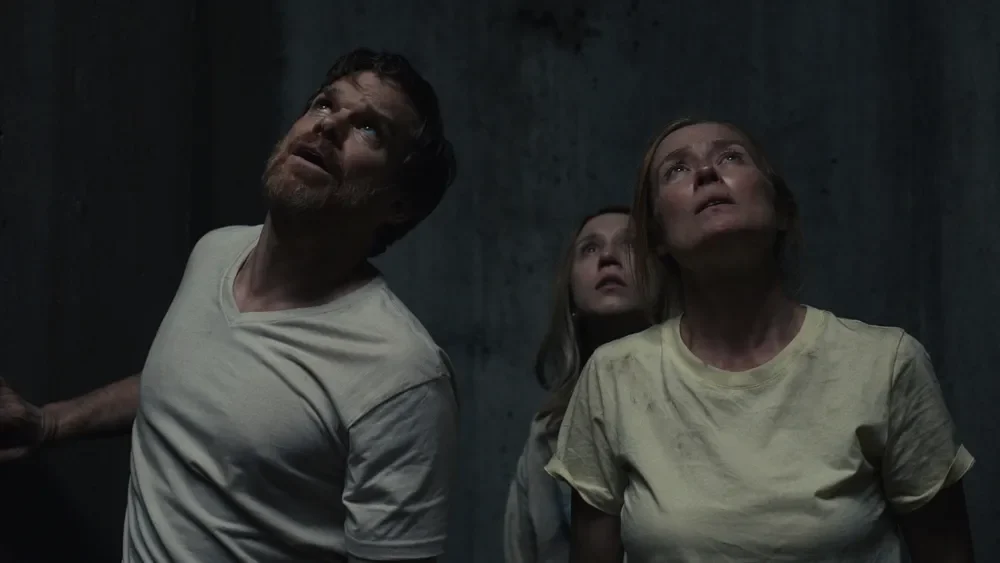
The final act of the movie begins not with chaos, but with fatigue. After weeks of keeping his family trapped in the underground bunker, John starts to feel bored. The thrill has worn off.
He visits the hole daily, drops down food, keeps checking on them, staring down at the trembling, confused figures of his parents and his sister. But there’s absolutely no emotional connection. Just curiosity. It’s like a child watching ants in a jar.
Then, in one of the film’s most hauntingly casual moments, John decides to let them go. There’s no big speech. No tearful regret. He simply lowers a rope ladder. They climb out, and he walks away.
The John and the Hole ending delivers this release not as a relief, but as a quiet horror. The family’s freedom feels mechanical, almost meaningless, as if nothing happened at all.
The Return Home: The Quiet That Hurts More Than Violence
Once they return home, it is expected that there’s going to be screaming, therapy, or sirens. But no! The family doesn’t react like survivors. They behave like sleepwalkers.
Suzanne (Jennifer Ehle) starts cooking. Brad (Michael C. Hall) reads his paper. Laurie just sits there. No one mentions the hole. No one looks at John differently.
This is where the ending of John and the Hole hits hardest. Their silence says everything. They’ve chosen denial over confrontation. It’s easier to pretend nothing happened than to face what John did or what they failed to see in him before.
For John, this is the final cruelty. He expected something: anger, fear, love, anything. Instead, life resumes with the same cold politeness as before. His act of rebellion, meant to make him feel alive, only confirms his isolation.
The Side Story: Lilly and the Mother’s Tale
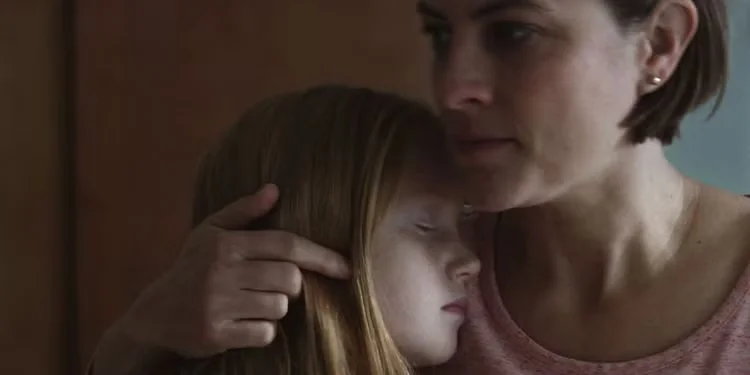
Throughout the film, there’s an odd side narrative. A mother tells a bedtime story to her daughter, Lilly, about a boy who trapped his family in a hole.
It seems disconnected at first, like a strange framing device that interrupts the main story. But in the John and the Hole ending, this subplot becomes the emotional decoder ring.
Maybe John’s story isn’t real at all. Maybe it’s a parable, a myth parents tell to warn children about detachment, cruelty, or the loss of innocence. Or maybe it’s the other way around, maybe the story is actually true, and the mother’s retelling is how the world remembers it, stripped of its raw horror and reshaped into something safe enough to tell a child.
The ending of John and the Hole deliberately blurs these lines. The story of John becomes a story about how trauma turns into myth and society hides its darkness in the language of bedtime tales.
Also, read The Woman in the Yard Ending Explained: What Really Happened Beneath the Lawn
The Final Scene: Dinner and Denial
The movie ends with the family seated at the dinner table. Everything looks normal again. The clinking of forks, the sterile lighting, the unspoken dread hanging between them.
John sits quietly. The power dynamics haven’t changed, or maybe they have changed completely. He’s back at the table, but he’s the only one who truly understands what happened. The rest are too scared to admit it.
John and the Hole ending closes with this terrifying stillness. No justice, no closure, no catharsis. Just a family, pretending, desperately, that normal life has resumed.
John’s eyes give away the truth; he’s still bored. Still empty. Still searching for meaning in a world that offers him nothing but silence.
The Meaning of John and the Hole Ending
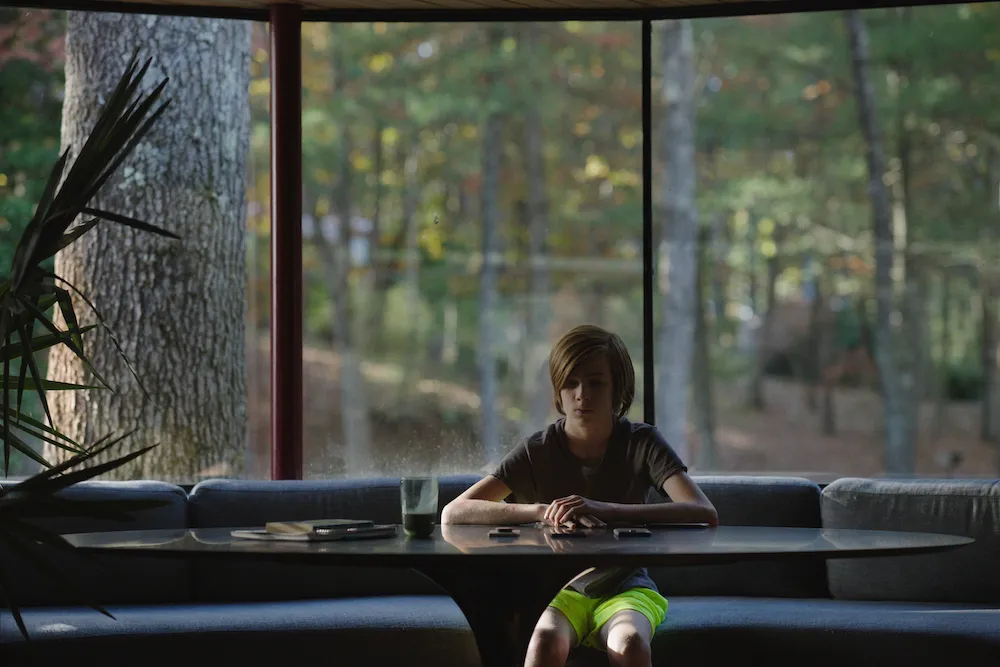
John and the Hole ending lands its final blow by showing us that the real horror isn’t the bunker, it’s the emptiness that lives above it. John’s decision to trap his family isn’t born from rage or cruelty. It’s a curiosity. A detached, clinical experiment from a boy testing the limits of consequence and control, the way someone might flip a light switch just to see what goes dark.
But control doesn’t grant him meaning. It doesn’t spark a connection. After he frees them, the world snaps back to normal like a rubber band. His parents cook. His sister retreats into routine. No one screams or demands answers. They slip into the same numb rhythm that pushed John into the experiment in the first place.
The hole becomes more than a pit in the ground. It turns into a metaphor for the emotional void each member of the family is trapped in, a place built from silence, unspoken tension, and the eerie weight of lives lived side by side but not together.
When the credits roll, it hits you. The ladder out of the hole didn’t save anyone. The family is still down there, just in a different shape. And John? He’s staring into the same emptiness he started with, only now he understands how bottomless it really is.
The Psychology of Boredom and Control
Most thrillers build tension through violence or fear. John and the Hole does it through stillness. It’s a movie about what happens when boredom turns into something darker, when a child realizes the world around him is numb and tries to break it open.
John doesn’t want to destroy his family; he wants to see them. He wants to prove they’re real, to spark a reaction. But all he gets is silence. And so that film’s final truth emerges. That emotional absence that we all see, it’s a cruelty all on its own.
The ending of John and the Hole captures that truth perfectly. It’s not about what John does, but about what no one says after.
The Horror Of Normalcy
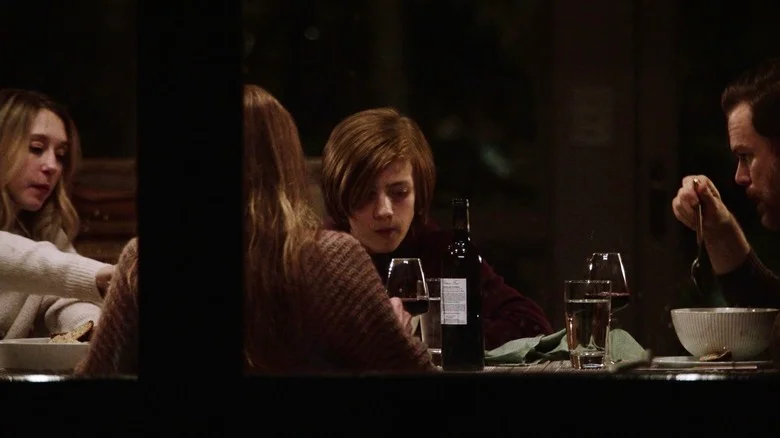
By the time the credits roll, the most terrifying thing isn’t that John trapped his family underground; it’s that they went back to breakfast afterward.
The John and the Hole ending reveals the quiet horror of suburban life. Of how families can live together without really seeing one another, how routine becomes a mask for emptiness. John’s rebellion wasn’t against authority. It was against the unbearable silence of normalcy.
And when the silence returns unchanged, that’s the real tragedy.
Also, read Don’t Worry Darling Ending Explained: Untangling Victory’s Perfect Lie
The Hole Inside Everyone
In the final shot, the camera lingers on John’s expressionless face. There’s no guilt, no satisfaction, no enlightenment. Just vacancy.
John and the Hole ending refuses to comfort you. It doesn’t tie anything up. It just sits there, staring back, daring you to admit that the hole isn’t just in the ground, it’s in all of them. Maybe even us.
The film doesn’t ask for understanding. It asks for recognition. Because sometimes the scariest thing about growing up isn’t what you do to others, it’s realizing how easy it is to feel nothing at all.
The ending of John and the Hole is less about answers and more about atmosphere. It leaves you in the silence it creates. It’s tense, uncomfortable, and painfully aware of what isn’t being said.
No resolution. No growth. Just the sound of cutlery clinking over the memory of a hole that was never really filled.
Frequently Asked Questions
1. Why did John trap his family?
John’s motivation isn’t rooted in anger but in curiosity and boredom. He wants to see what happens when he upends the order of his world, to feel control in a life that feels empty.
2. Why doesn’t the family confront him afterward?
Their silence shows deep denial and emotional paralysis. Confronting John would mean acknowledging how disconnected they’ve become, and they’d rather pretend nothing happened.
3. What’s the purpose of the story-within-a-story about Lilly?
It frames John’s actions as a myth or a cautionary tale, suggesting that this story exists beyond one family as a parable about power, isolation, and emotional detachment.
4. What’s the main takeaway from the John and the Hole ending?
That control isn’t connected. John’s experiment proves that power changes nothing when empathy is missing. The hole isn’t just physical; it’s emotional, and it was there long before he dug it.