There are endings that shock you, and then there’s the ending of Hedda. Nia DaCosta’s 2025 adaptation of Ibsen’s classic play reimagines one of literature’s most fascinating women with modern flair and suffocating intimacy. Tessa Thompson’s Hedda is not just tragic, she’s precise, defiant, and devastatingly self-aware.
In this article, we’re unpacking the Hedda ending, what it means, why it still stings 130 years after Ibsen wrote it, and how DaCosta’s version reframes the original as a contemporary feminist thriller. Don’t worry, this introduction is spoiler-free. But soon, we’ll be diving into dueling pistols, emotional blackmail, and the kind of existential mic drop only a character like Hedda Gabler could pull off.
⚠️ Spoiler Alert: If you haven’t seen Hedda yet, this is where the drawing room doors close. Someone’s about to play a piano piece you won’t forget, and it’s not ending in applause.
The Failure of the Beautiful Act
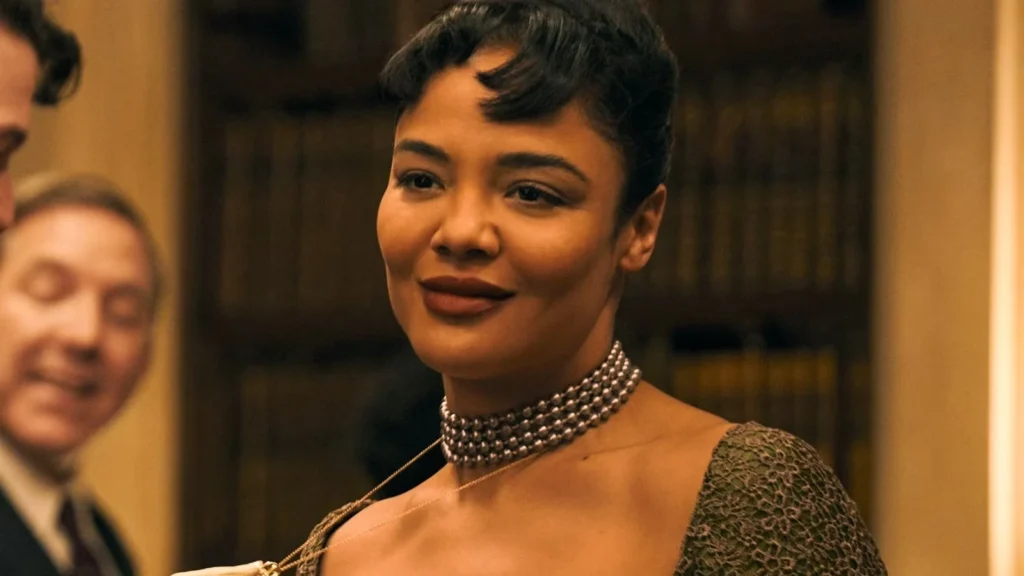
At the heart of the ending of Hedda lies her obsession with beauty, control, and perfection, three forces that never coexist peacefully.
When Hedda gives Eilert Løvborg (Nicholas Pinnock) one of her father’s pistols, it’s not out of compassion. It’s art direction. She instructs him to die beautifully, a grand, self-authored tragedy instead of another sordid spiral. But reality, as always, refuses to follow Hedda’s script.
When Judge Brack (Tom Bateman) later reveals that Løvborg’s death wasn’t noble at all, that he shot himself by accident in a chaotic brawl, the illusion collapses. The “beautiful death” she imagined becomes a grotesque parody. For Hedda, this is the first real fracture. If even death refuses to obey her sense of order, what hope does life have?
That moment puts the Hedda ending in motion.
The Trap Behind the Curtain
Enter Judge Brack, equal parts confidant, opportunist, and predator. He knows more than he should, and worse, he enjoys it. When he reveals that Løvborg used one of Hedda’s pistols, it’s subjugation. A lifetime spent as Brack’s hidden plaything, forced to exist under the illusion of safety.
DaCosta modernizes this brilliantly. In her version, exposure isn’t just social ruin, it’s virtual humiliation. The whisper of scandal would spread online in seconds, reducing Hedda’s carefully curated identity to shreds. For a woman obsessed with control, that’s hell on Earth.
By this point, the Hedda ending feels inevitable; every path she built folds back into the same suffocating room.
The Final Act of Control
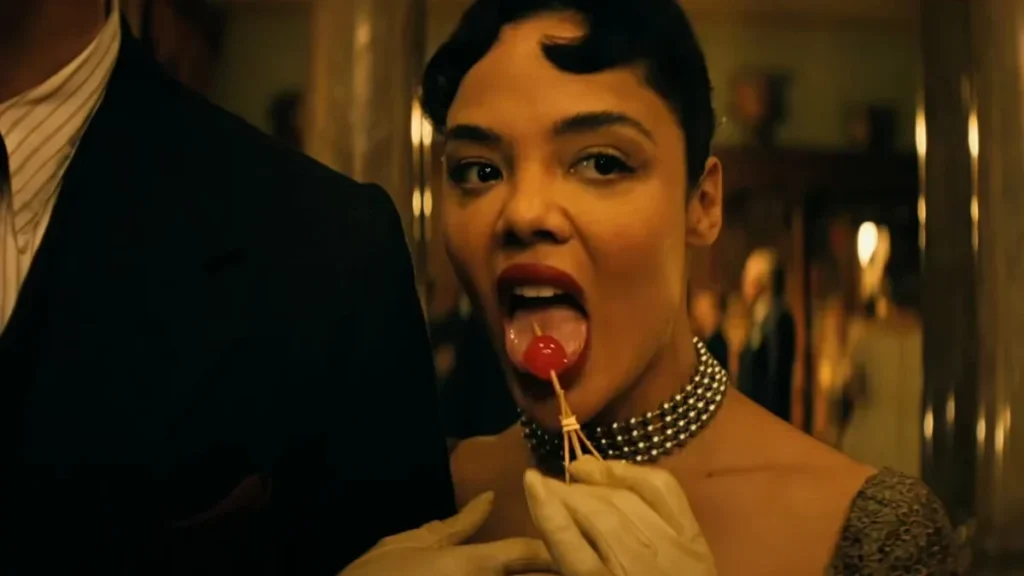
Hedda Gabler was never meant to grow old politely. When she sits at the piano for the last time, pounding out a jagged piece that sounds more like protest than melody, you can feel her desperation. It’s art as rebellion, control as eulogy.
And then comes the final gesture, which is simple, shocking, and terrifyingly beautiful. She takes her father’s second pistol and shoots herself.
This is the moment that defines the Hedda ending. For the first time, she acts entirely on her own terms. The death she demanded of others became her own masterpiece, the only act she could fully design. Her suicide is not surrender but authorship.
The scene is quiet. The sound lingers. And then comes Judge Brack’s infamous final line:
“But good God! People don’t do such things!’
It’s both horrified and bewildered, the perfect epitaph for a woman who dared to live and die beyond what society permitted.
Also, read ‘Outrageous’ Ending Explained: When Loyalty, Love, and Politics Explode
Control, Agency, and the Beauty of Self-Destruction
So what does the ending of Hedda really mean? It’s less about death than authorship. Hedda’s life was a painting constantly retouched by men, her husband, her admirers, her so-called friends. When every brushstroke of her existence belonged to someone else, her final act became the only unaltered signature.
In a world obsessed with control, marriages, reputations, even curated online selves, DeCosta’s Hedda feels terrifyingly modern. The pistol becomes a symbol not just of rebellion, but of clarity. If society refuses to give her space, she’ll take it in the most permanent way possible.
It’s haunting, yes. But it’s also chillingly logical. The Hedda ending doesn’t glorify her death; it confronts us with the truth that she saw no other exit. The tragedy isn’t that she died, it’s that she was never allowed to love freely.
Why the Ending of Hedda Still Matters
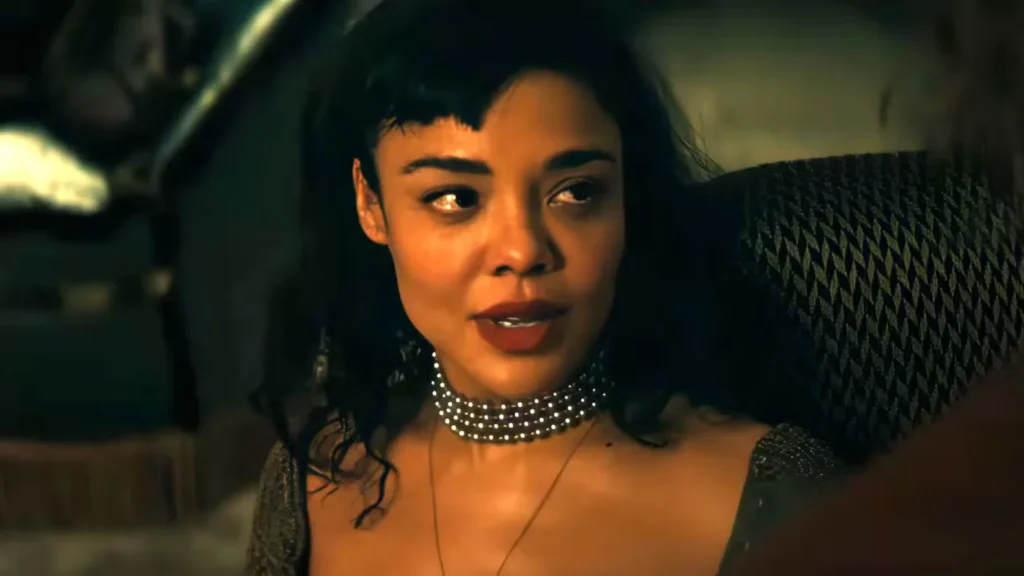
You can update the costumes, add smartphones, change the décor, but the Hedda ending remains timeless because the cage hasn’t changed much. Women are still expected to be perfect, poised, and polite, even as they burn inside their own stillness.
DaCosta’s film asks the same question Ibsen did over a century ago: what happens when intelligence and imagination have nowhere to go? The answer is the same: implosion. The explosion of the gunshot is just the echo of a mind that’s been cornered too long.
The brilliance of the ending of Hedda is that it refuses catharsis. You don’t walk away satisfied, you walk away unsettled. Because somewhere deep down, we recognize the pressure cooker she lived in.
FAQs About Hedda Ending
1. Is the film Hedda faithful to Ibsen’s original play?
Yes, but with a modern twist. The structure and dialogue stay close to Ibsen’s text, while the setting and social context are updated to reflect modern power dynamics and gender expectations.
2. Why does Hedda give Eilert the pistol?
She sees his death as a form of art, a way to create something “beautiful” out of chaos. In her mind, controlling someone else’s death is the closest she can come to controlling life itself.
3. What does Judge Brack represent in Hedda?
He’s the embodiment of societal control, charming, manipulative, and self-serving. In modern terms, he’s the patriarchy in a tailored suit, reminding Hedda that her freedom always comes at a price.
4. What makes the Hedda ending so iconic?
Because it’s a paradox, both tragic and triumphant. Hedda’s final act is horrifying, but it’s also the only moment where she truly owns herself. It’s the ultimate refusal to be tamed.